
The special Roads Policing Operation, which began at 7am last Thursday, will continue until 7am on Wednesday March 18
Search


17 Mar 2026

Please allow ads as they help fund our trusted local news content.
Kindly add us to your ad blocker whitelist.
If you want further access to Ireland's best local journalism, consider contributing and/or subscribing to our free daily Newsletter .
Support our mission and join our community now.
To continue reading this article, you can subscribe for as little as €0.50 per week which will also give you access to all of our premium content and archived articles!
Alternatively, you can pay €0.50 per article, capped at €1 per day.
Thank you for supporting Ireland's best local journalism!


Holyrood faces a “significant moment” when it votes on whether to legalise assisted dying for terminally ill Scots, MSPs have heard.
Liam McArthur, the Liberal Democrat behind legislation that seeks to ensure that those who are dying can get help to end their life, said he understood MSPs were “conflicted” about the change.
As MSPs prepared to vote on his Assisted Dying for Terminally Ill Adults (Scotland) Bill later on Tuesday night, he told them voting the proposals down would have “consequences”.
Speaking at the start of the debate, Mr McArthur said if the legislation was rejected the “issue won’t go away”.
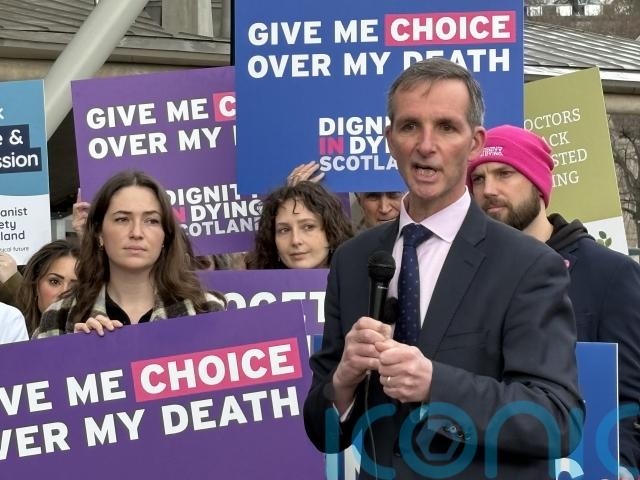
He added: “All we do by putting off changing the law is push decisions overseas and behind closed doors.”
Mr McArthur told MSPs to “have the voices of dying Scots at the front of their mind when they come to vote”, stressing the need for Holyrood to give them “more choice, more dignity, more compassion”.
He has already said his Bill, if it passes, would be the “most heavily safeguarded assisted dying law anywhere in the world”.
The final vote – which is due at about 10pm on Tuesday – is a “significant moment for the Parliament”, Mr McArthur said.
The debate comes after Holyrood spent several lengthy sessions last week amending the proposed legislation, inserting a clause which means a person would have to reasonably be expected to die within six months before they could request an assisted death.
Only people who have lived in Scotland for at least a year would be eligible and people would need to have two doctors certify they have a terminal illness and the mental capacity to request help to die.
With 175 amendments to the Bill passed last week, Mr McArthur said MSPs had worked to make the legislation “the best it can be”.
He added: “I may have introduced this Bill, but it is very much Parliament’s Bill now.”
Great turnout at the parliament today – cross section of society speaking up for the vulnerable… pic.twitter.com/j0R4ePNmvx
— Care Not Killing Scotland (@CNKScotland) March 17, 2026
Opponents of the legislation have raised concerns about the impact the legislation could have on vulnerable people, such as the disabled, and about the risks of coercion.
Others have also raised concerns about a lack of safeguards for medical professionals in the Bill, which cannot be included as employment issues are reserved to Westminster.
An agreement with the UK Government, however, means that these protections would be put in to the legislation before it comes into force.
Despite that, groups in the medical profession, including the Royal College of Psychiatrists (RCS) and Royal Pharmaceutical Society, have made clear their opposition the Bill.
Dr Gordon McDonald, chief executive of the campaign group Care Not Killing, insisted the Bill is “dangerous” as well as “inconsistent and too risky”.
He told the Press Association: “If MSPs have any doubts at all, then they should vote against this Bill.
“People who are vulnerable will be put at risk, perhaps because of coercion or because they’re depressed, or they feel they’re a burden on their friends and their family and their carers.
“That’s why this Bill is so dangerous.”
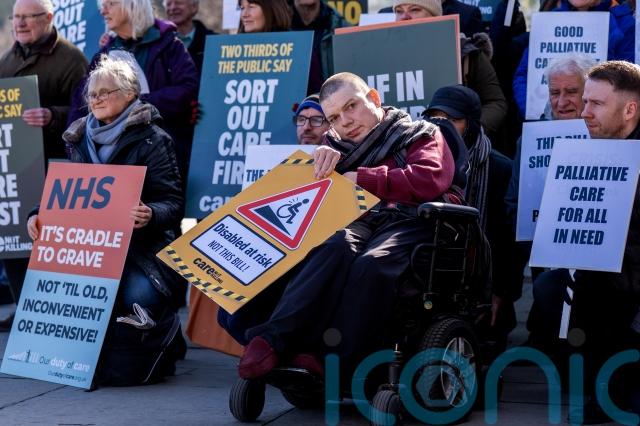
He added: “There were lots of amendments about scrutiny and review that were rejected last week, which gives us no confidence that this Bill, if ever implemented, would be a safe Bill.”
Mark McManus, a supporter of Care Not Killing, said he was concerned about wider ramifications if the Bill passes.
The 41-year-old, who has had cerebral palsy from birth, said he feared it would affect the relationship between clinicians and disabled people.
He told the Press Association: “I’m very concerned about the funding ramifications for things like accessible housing, care, support – all these unintended consequences that perhaps legislators haven’t thought about.”
This is the third time MSPs have considered legislation on assisted dying, with two previous attempts having failed at their first vote.
If the vote passes, Scotland will be the first part of the UK to legislate for assisted dying, though two Crown dependencies have already done so.
In February, Jersey passed its draft assisted dying law and the legislation is awaiting royal assent so it can formally become law on the island.
The move follows the passage of legislation in the Isle of Man, where the Tynwald became the first parliament in the British Isles to agree a framework for assisted dying in March 2025.

Subscribe or register today to discover more from DonegalLive.ie
Buy the e-paper of the Donegal Democrat, Donegal People's Press, Donegal Post and Inish Times here for instant access to Donegal's premier news titles.
Keep up with the latest news from Donegal with our daily newsletter featuring the most important stories of the day delivered to your inbox every evening at 5pm.

This publication supports the work of the Press Council of Ireland and Office of the Press Ombudsman, and our staff operate within the Code of Practice of the Press Council. You can obtain a copy of the Code, or contact the Council, at www.presscouncil.ie, Lo-call 1800 208 080 or email: info@presscouncil.ie.