'Literally put a sock in it!'- NCT centre gobsmacked by customers DIY cover-up fail
Search


13 Apr 2026

Please allow ads as they help fund our trusted local news content.
Kindly add us to your ad blocker whitelist.
If you want further access to Ireland's best local journalism, consider contributing and/or subscribing to our free daily Newsletter .
Support our mission and join our community now.
To continue reading this article, you can subscribe for as little as €0.50 per week which will also give you access to all of our premium content and archived articles!
Alternatively, you can pay €0.50 per article, capped at €1 per day.
Thank you for supporting Ireland's best local journalism!


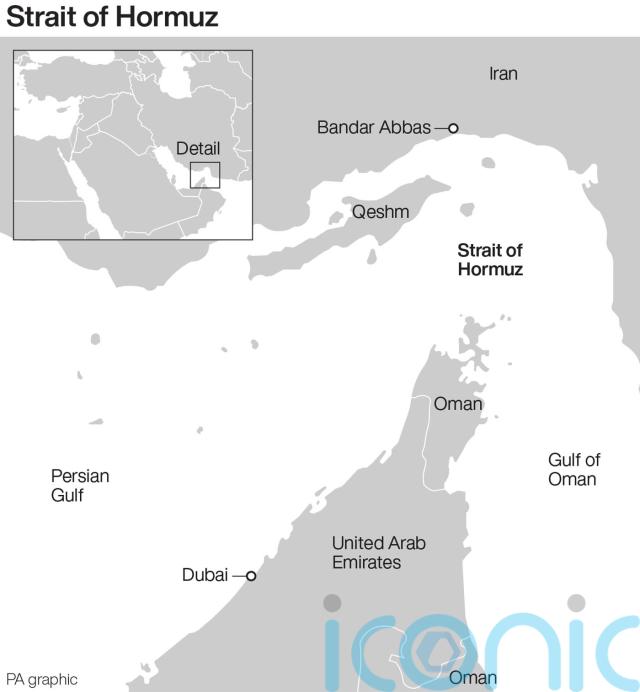
Donald Trump’s blockade of Iranian ports has begun, deepening the global economic impact from the Middle East crisis.
Oil prices spiked back to more than 100 US dollars (£74) a barrel after US talks with Iran broke down and the US president made his threat to prevent ships leaving from 3pm on Monday.
Sir Keir Starmer refused to support the blockade and said he would not allow the UK to be dragged into the war.
“The United States to Blockade Ships Entering or Exiting Iranian Ports on April 13 at 10:00 A.M. ET. Thank you for your attention to this matter!” – President Donald J. Trump pic.twitter.com/gUBqyUGs1G
— The White House (@WhiteHouse) April 13, 2026
The UK and France will lead an international effort to restore freedom of navigation in the crucial oil and gas shipping route, although any mission would not begin until after hostilities end.
A conference later this week will involve countries willing to contribute to a “peaceful multinational mission” to restore freedom of navigation in the strait, Emmanuel Macron said.
The French president said: “This strictly defensive mission, separate from the warring parties to the conflict, is intended to be deployed as soon as circumstances permit.”
No effort must be spared to swiftly reach, through diplomatic means, a strong and lasting settlement to the conflict in the Middle East.
Such a settlement must provide the region with a robust framework enabling all to live in peace and security.…
— Emmanuel Macron (@EmmanuelMacron) April 13, 2026
The Prime Minister said the summit would “advance work on a co-ordinated, independent, multinational plan to safeguard shipping when the conflict ends”.
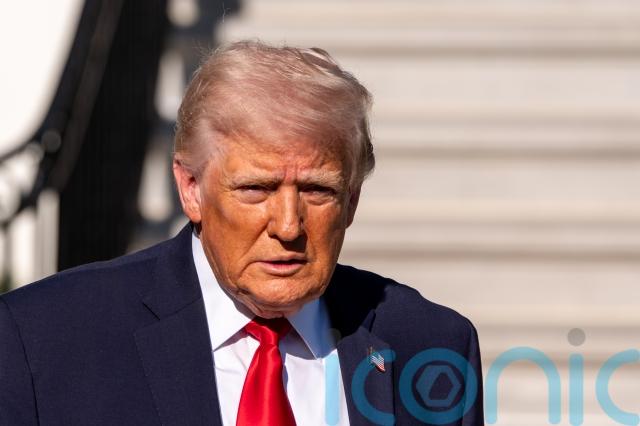
Mr Trump said on his Truth Social platform that the US military would start “blockading any and all ships trying to enter, or leave, the Strait of Hormuz”.
Mr Trump said “other countries will be involved with this blockade” and he told Fox News “the UK and a couple of other countries are sending mine sweepers” to the strait, and “it won’t take long to clean it out”.
But Sir Keir told BBC Radio 5 Live: “We’re not supporting the blockade.”
He said: “What we’ve been doing over the last few weeks – and this was part of what I was discussing with the Gulf states last week – is bringing countries together to keep the strait open, not shut.”
The Prime Minister said despite “some considerable pressure”, the UK was “not getting dragged into the war”.
He said: “That’s not in our national interest, because I’m not going to act unless there’s a clear, lawful basis and a clear thought-through plan.”
Iran has selectively let through some vessels but Mr Trump’s blockade is intended to stop that in order to prevent Tehran from benefiting from tolls levied on shipping and the revenues from oil exports.
Mr Trump said “no-one who pays an illegal toll will have safe passage on the high seas”.
The US military will blockade Iran’s ports and coastal waters under the policy but Tehran has vowed to retaliate.
Mohammad Bagher Qalibaf, the parliamentary speaker who led Iran’s side in the talks, said: “If you fight, we will fight.”
Oil benchmark Brent crude jumped back past 100 US dollars a barrel, rising by more than 7% to 102 dollars in Monday morning trading and sparking fears of a worsening global energy crisis.
Stock markets also fell on Monday on fading hopes of a resolution to the Middle East conflict, with the FTSE 100 Index down 0.5% or 47.3 points lower at 10553.2 in early trading and the Dax in Germany and France’s Cac 40 both more than 1% lower.
The rising cost of oil has already pushed up forecourt prices for motorists and added expense to businesses, while households face a nervous wait to see what impact the turbulence will have on domestic electricity and gas bills when the price cap expires at the end of June.
The Resolution Foundation think tank has suggested the average working-age household could be £480 worse off this year as a result of the war.
Sir Keir said: “I’m very concerned about the impact that this war is having on people back in the United Kingdom who’ve obviously played no part in the war, but I don’t want them paying the price. So that’s my primary focus.”
Asked if Mr Trump was to blame for the economic hit caused by the war, Sir Keir said: “In terms of where the blame lies, it’s Iran that has caused the restriction on traffic and vessels through the Gulf, and they’re doing that in breach of international law.”

Subscribe or register today to discover more from DonegalLive.ie
Buy the e-paper of the Donegal Democrat, Donegal People's Press, Donegal Post and Inish Times here for instant access to Donegal's premier news titles.
Keep up with the latest news from Donegal with our daily newsletter featuring the most important stories of the day delivered to your inbox every evening at 5pm.

This publication supports the work of the Press Council of Ireland and Office of the Press Ombudsman, and our staff operate within the Code of Practice of the Press Council. You can obtain a copy of the Code, or contact the Council, at www.presscouncil.ie, Lo-call 1800 208 080 or email: info@presscouncil.ie.