Search


10 Mar 2026
Search
10 Mar 2026

Please allow ads as they help fund our trusted local news content.
Kindly add us to your ad blocker whitelist.
If you want further access to Ireland's best local journalism, consider contributing and/or subscribing to our free daily Newsletter .
Support our mission and join our community now.
To continue reading this article, you can subscribe for as little as €0.50 per week which will also give you access to all of our premium content and archived articles!
Alternatively, you can pay €0.50 per article, capped at €1 per day.
Thank you for supporting Ireland's best local journalism!


Iran’s attacks on regional oil infrastructure and pledges to choke off maritime traffic left markets on edge on Tuesday as the United States promised blistering new strikes.
The war entered its 11th day with no end in sight as its effects were felt across the region and beyond.
Both sides sharpened their rhetoric as they dug in, with US defence secretary Pete Hegseth again promising the most intense strikes yet, while Iran’s leaders ruled out talks and directly threatened US President Donald Trump.
Iran launched new attacks at Israel and Gulf Arab countries, and Israel – America’s key ally in the fight – launched more air strikes on Tehran and in Lebanon, where it is battling the Iran-backed Hezbollah.
The United Arab Emirates reported two more deaths as nine drones struck the country, while nearly three dozen other drones and missiles were intercepted.
Firefighters battled a blaze in the industrial city of Ruwais – home to petrochemical plants – after an Iranian drone strike, officials said.
No injuries were reported there.
Attacks on the wealthy Gulf country – home to the business and travel hub of Dubai – have killed six people and wounded 122 others since the US and Israel launched attacks on Iran on February 28, triggering a shatter-shot response by Tehran across the region.
In Bahrain, authorities said an Iranian attack hit a residential building in the capital Manama, killing a 29-year-old woman and wounding eight people.
Saudi Arabia said it destroyed two drones over its oil-rich eastern region, and Kuwait’s National Guard said it shot down six drones.
Sirens also sounded in Jerusalem, and sounds of explosions could be heard in Tel Aviv as Israel’s air defences worked to intercept barrages from Iran.
Hezbollah, which began firing on Israel after the start of the war, launched missiles into Israel.
At the Pentagon, Mr Hegseth warned that Tuesday “will be yet again our most intense day of strikes inside Iran: The most fighters, the most bombers, the most strikes, intelligence more refined and better than ever”.
He said “the last 24 hours have seen Iran fire the lowest amount of missiles they have fired yet”.
General Dan Caine, chairman of the Joint Chiefs of Staff, said US forces hit more than 5,000 targets, and that their objectives included striking “deeper into Iran’s military and industrial base”.
The Pentagon later said that about 140 US service members have been wounded since the start of the war.
“The vast majority of these injuries have been minor, and 108 service members have already returned to duty,” Pentagon spokesman Sean Parnell said in an emailed statement.
Eight US service members are currently “severely injured”, Mr Parnell added.
The new figure is the first insight into the broader toll of injuries that have been sustained by US troops in the conflict.
Seven soldiers have been killed in Kuwait and Saudi Arabia.
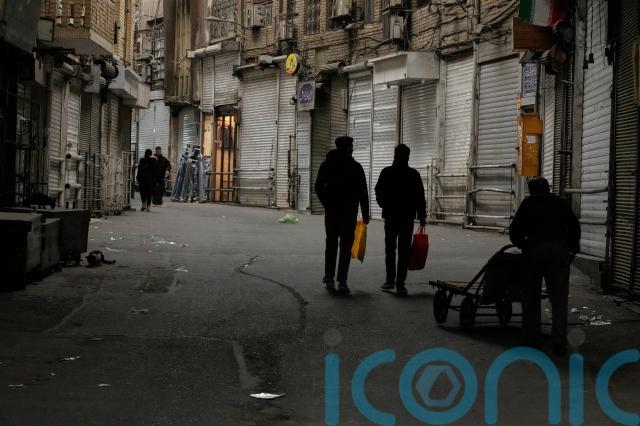
Witnesses reported hearing several explosions in Tehran in the afternoon as Israel commenced a new wave of air strikes.
Many shops were shut.
Iran’s leaders have remained defiant after days of heavy strikes targeting the country’s leadership, military, ballistic missiles and disputed nuclear programme.
Iran’s parliament speaker Mohammad Bagher Qalibaf said on X that Iran was “definitely not looking for a ceasefire”.
“We believe that the aggressor should be punched in the mouth so that he learns a lesson so that he will never think of attacking our beloved Iran again,” he said.
A top Iranian security official, Ali Larijani, appeared to threaten Mr Trump himself, writing on X that “Iran doesn’t fear your empty threats. Even those bigger than you couldn’t eliminate Iran. Be careful not to get eliminated yourself”.
Iran has been accused of plotting attempts to kill Mr Trump in the past.
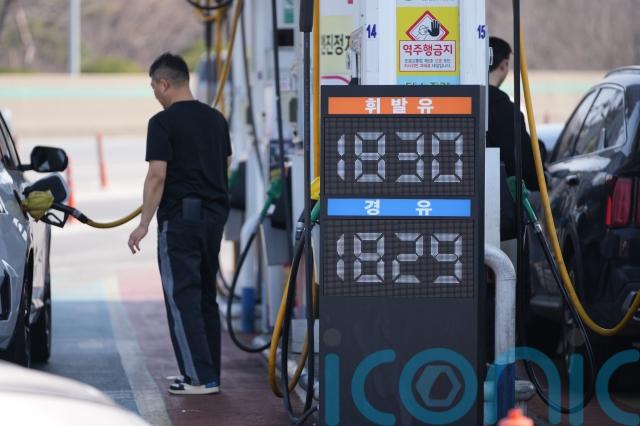
Along with firing missiles and drones at Israel and at American bases in the region, Iran has targeted energy infrastructure, attacks that appear aimed at generating enough global economic pain to pressure the US and Israel to end their strikes.
Brent crude, the international standard, spiked to nearly 120 US dollars on Monday before falling back but was still at around 90 dollars a barrel on Tuesday, nearly 24% higher than when the war started on February 28.
The Dow Jones Industrial Average drifted lower at the open on Tuesday.
Iran has effectively stopped tankers from using the Strait of Hormuz, through which 20% of the world’s oil is carried.
Attacks on merchant ships near the strait have killed at least seven sailors, according to the International Maritime Organisation.
Mr Larijani tweeted that the strait, which is 33 kilometres (21 miles) wide at its narrowest point between Iran and Oman, would “either be a Strait of peace and prosperity for all or will be a Strait of defeat and suffering for warmongers”.
Mr Trump wrote on social media: “If Iran does anything that stops the flow of Oil within the Strait of Hormuz, they will be hit by the United States of America TWENTY TIMES HARDER than they have been hit thus far.”
Iran’s paramilitary Revolutionary Guard said it “will not allow the export of even a single litre of oil from the region to the hostile side and its partners until further notice”.
A bulk carrier likely came under attack on Tuesday off the coast of the United Arab Emirates, with the captain reporting a splash and a loud bang nearby, according to a monitoring centre run by the British military.
Amin Nasser, the president and chief executive of Saudi Arabia’s oil giant Aramco, said tankers were being rerouted to avoid the strait, and that its East-West pipeline would reach its full capacity of seven million barrels a day being brought to the Red Sea port of the Yanbu this week.
“The situation at the Strait of Hormuz is blocking sizable volumes of oil from the whole region,” he said.
“If this takes a long time, that will have serious impact on the global economy,” Mr Nasser said.
Iran-backed militias in Iraq have launched attacks at US bases in the country since the beginning of the conflict.
Early on Tuesday, an air strike killed at least five militiamen of the 40th Brigade of the Popular Mobilisation Forces in the city of Kirkuk.
Four were wounded, according to officials.
It was not immediately clear who was behind the strikes.
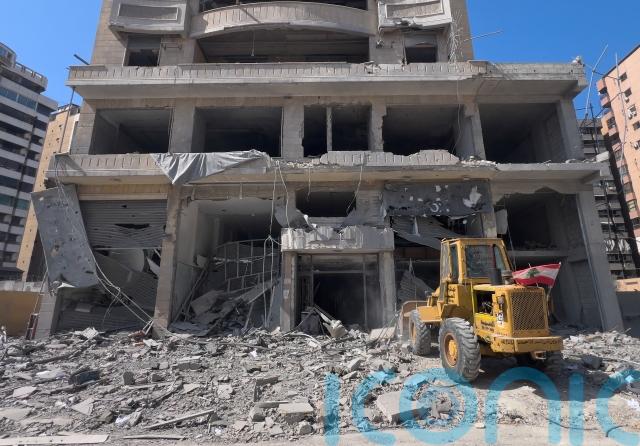
Israel’s military meanwhile reiterated a call for all residents of southern Lebanon to evacuate their homes, saying it planned to “operate forcefully” there against Hezbollah.
Since the war began, at least 1,230 people have been killed in Iran, at least 397 in Lebanon and 11 in Israel, according to officials.
Seven US service members have been killed.

Subscribe or register today to discover more from DonegalLive.ie
Buy the e-paper of the Donegal Democrat, Donegal People's Press, Donegal Post and Inish Times here for instant access to Donegal's premier news titles.
Keep up with the latest news from Donegal with our daily newsletter featuring the most important stories of the day delivered to your inbox every evening at 5pm.

This publication supports the work of the Press Council of Ireland and Office of the Press Ombudsman, and our staff operate within the Code of Practice of the Press Council. You can obtain a copy of the Code, or contact the Council, at www.presscouncil.ie, Lo-call 1800 208 080 or email: info@presscouncil.ie.