
Innovative photographic exhibition premieres in Derry

Exciting installation a collaboration with the Willie Carson Collection
An innovative photographic exhibition with its roots in the Willie Carson Collection is to premiere in Derry, hometown of the instantly recognisable photojournalist and author.
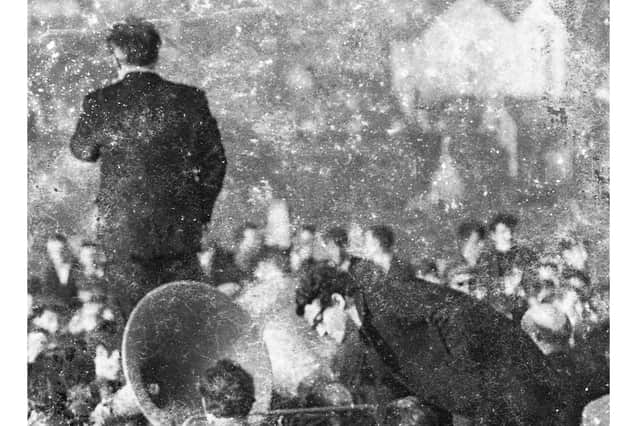
Willie Carson’s lens documented the social and political upheavals of the early 1970s in the city.
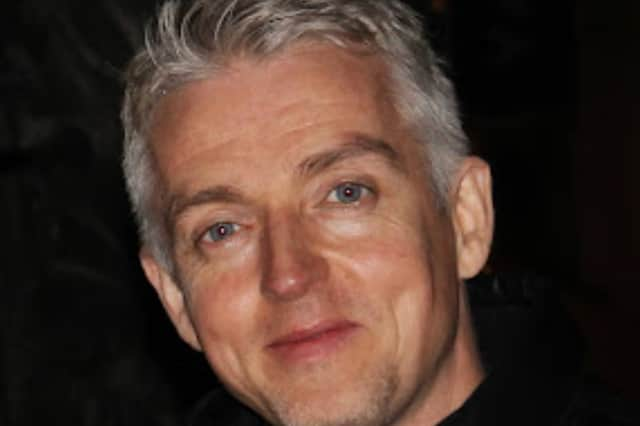
Produced by Mary Carson, Willie’s daughter, ‘If It Hadn’t Rained’ is a one-off exhibition by Derry-born artist Michael McGinley, Willie’s nephew.
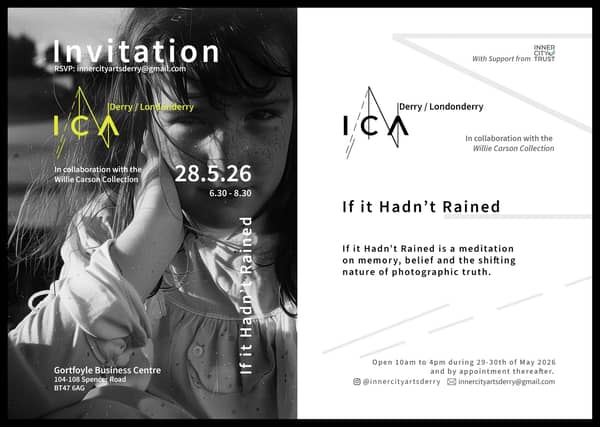
A fitting tribute to Willie, marking his 100th birthday in July; the 30th anniversary of his death in October; and the 20th anniversary in August of the publication of his ground-breaking book ‘Derry through the Lens: Refocus’, ‘If It Hadn’t Rained’ opens on Thursday (May 28, 2026) from 6.30pm to 8.30pm, in Gortfoyle Business Centre, 104-108, Spencer Road, with viewings from 10.00am to 4.00pm on May 29 and 30.
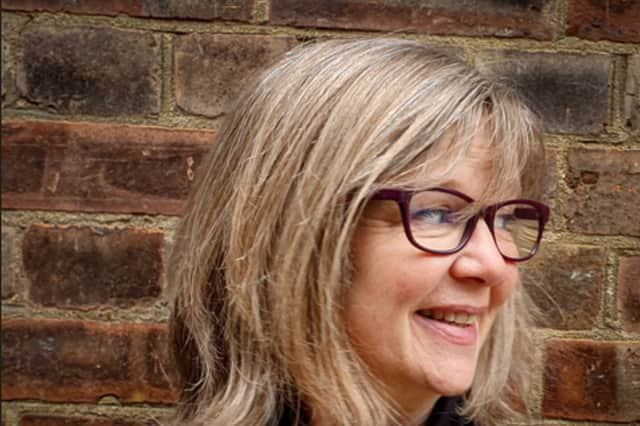
Mary described ‘If It Hadn’t Rained’ as “a meditation on memory, belief and the shifting nature of photographic truth”.
Explaining the genesis of the installation, Michael cited Declan Kiberd’s 1995 book ‘Inventing Ireland’ which analysed Irish identity through literature.
“Kiberd looked across the generation coming out of Ireland and looked at how identity was formed,” said Michael.
“For me that was a bit of a kick-start into thinking about my own identity and relationship back to Ireland,” he added.
Michael’s mother, Patricia, and father, James, moved from Derry to Manchester when he was five.
He vividly recalled the childhood visits back to the city every summer, Easter and Christmas.
“We, my brother Karl and my sister Tara, hated when we would have to go back to Manchester. There were tears as we waved my Auntie Mary off. It was awful. We spent all of our young summers here and we longed to come back,” said Michael.
“But, of course, eventually life takes over and you get into a routine, and suddenly Manchester is where you live,” he added.
“But the notion of return is always [present]. I would suspect, for most people who are part of that Irish Diaspora, the idea of return is huge, but it is a complex idea.
“Kiberd spoke about the mirror as a metaphor for the idea that within this act of trying to unify an Irish identity, you are only ever going to end up with a sense of a fractured mirror image, almost like the impossibility of unifying this traditional sense of what it was to be Irish.
“For me there was something about exploring my birthplace through the lens of photography. That is really where I returned to my Uncle Willie’s work. As you know, he was a photojournalist in Derry, and a very important person within our family.
“As somebody who was very interested in photography, I wanted to take that journey, using photography as a means to re-examine the notion of return to Derry,” said Michael.
Mary traced the origins of ‘If It Hadn’t Rained’ to a conversation Michael and she had about three years ago, about how photography could be employed.
“We both have a love of photography and I was searching for some way to reactivate my dad's archive, and at base level, to raise enough money to allow me the time to clean [my father’s] negatives and annotate it and log it,” she explained.
We’ll hold on to it for now but when we move on, where will that go? I don’t want it to be forgotten.
“I am also completely fascinated, I am a nerd about Artificial Intelligence (AI), any tech really. I have been reading about that end of things, the evolution and the thinking around AI, for the past 10 years.
“Then Michael started sending me different stuff on AI, and we realised there was a sort of a synergy happening. Then he said, ‘What do you think of this as an idea [a Willie Carson Collection - AI collaboration]? I thought, ‘I’ve never done this before, yeah, I’ll have a go.
“I liked the way we were combining genuine works from both and the thinking and also the challenge of trying to understand the artistic practice and the artistic process and what this meant,” said Mary.
“For me there was something about exploring my birthplace through the lens of photography. That is really where I returned to my Uncle Willie’s work.
“So that opened up a conversation which turned into the work - ‘If It Hadn’t Rained’, she added.
“What we were keen to do was not just return to the notion of an archive, which predominantly, inevitably, was represented through the lens of the Troubles - a well-documented and complex area,” said Michael.
“It was more to do with what we could do with the notion of developing it into a future,” he added.
“That is where our conversation became more engaged around how do we use an archive, particularly the material that was perhaps forgotten?
“When I did a bit of research, I found a lot of Uncle Willie’s negatives in his attic in bin bags,” said Michael. “My father’s ‘archiving’,” quipped Mary.
“I was none too impressed,” laughed Michael, “however, I selected a whole bunch, took them to Manchester and began rescaling them. Then I discovered they were not his iconic shots, they were small details around life.
“So starting with that premise, the other angle for me was the 1977 book ‘Evidence’ by American artists, Mike Mandel and Larry Sultan, took defunct archival material from national institutions and simply put them side by side in odd conjunctions, disrupting the normal narrative you would associate with the photographs,” said Michael.
‘We want the archive to come alive again and for it to exist’
“Mary and I agreed this would be a really interesting way of working with the negatives.
“Things developed further when the artist I share a studio with in Manchester, Mishka Henner, introduced me to Midjourney, an AI generative imaging programme at the cutting-edge of the condition of photography.
“The process looked really interesting and I was discussing it with Mary, and we looked at the idea of using Uncle Willie’s negatives, with the permission of the whole family - Catherine, Oonagh, and William,” said Michael.
“They are the same as me,” said Mary, “we want the archive to come alive again and for it to exist.”
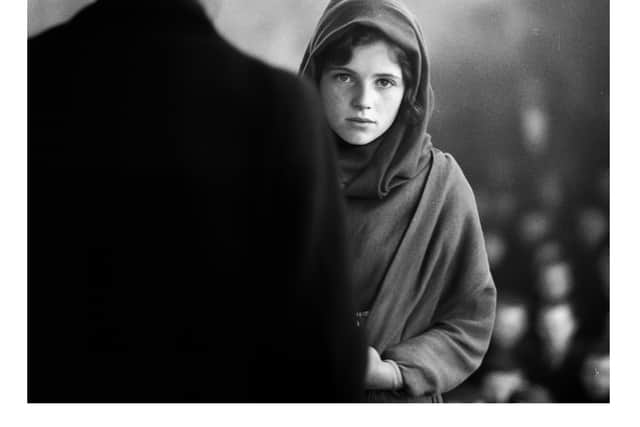
But we've come into a new era and the image now has a different use value,” said Michael.
“Image is now being employed in so many different ways. ‘If It Hadn’t Rained’ is an open-ended piece of research into the condition of photography, using AI, but starting from an analogue basis.”
“It is not about nostalgia,” cautioned Mary, “it is about new artistic work. I feel Willie’s work in there and it will be interesting to see how people respond to it. I would also like to acknowledge the Inner City Trust for its help in staging ‘If It Hadn’t Rained’.