
Macabre hstory and witch trials set for Derry's Tower Museum this Halloween

Award-winning historian Dr Robyn Atcheson brings two dark history talks to the city on Tuesday, October 27
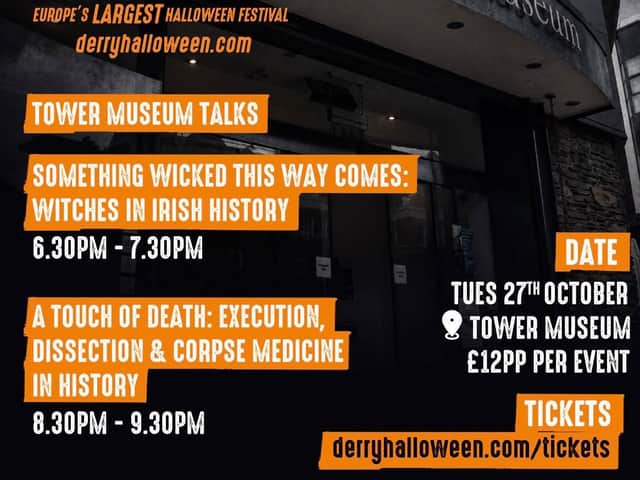
Award-winning historian and broadcaster Dr Robyn Atcheson will host a captivating double-bill of macabre history talks at the Tower Museum in Derry on Tuesday, October 27 2026. Formally programmed as part of Derry’s world-renowned Halloween festival, the consecutive evening lectures will delve into the bizarre realities of Irish witch trials, historic public executions, and the dark trade of 19th-century bodysnatching.
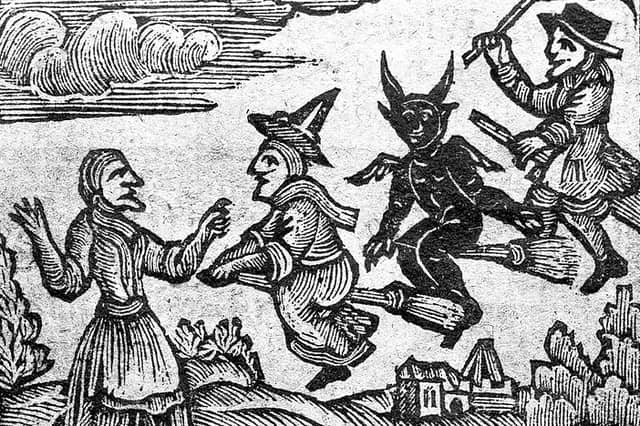
The evening commences at 6.30pm with "Something Wicked This Way Comes": Witches in Irish History, a look at the history of witch trials and accusations in Ireland.
Ireland had far fewer witch trials than any other European country because how people understood magic was fundamentally different. Across Europe, the witch hunting craze spread from the 15th century as the church and society sought to lay blame for bad harvests, outbreaks of disease and misfortune.
Women made up over 80% of those accused of being witches. In Britain, King James I was convinced that witches were out to get him and pursued the cruellest methods of torture in order to root out covens of supposed witches. Yet Ireland only had a handful of trials.
This talk will take you through the trials for witchcraft through Irish history by looking at the women who were accused and what led to them being identified as "wicked". From medieval murderesses to wise women, from Cork to Islandmagee, this entertaining talk explores who these women were and what was happening around them.
This talk has sold out in Belfast and in Dublin but now it is coming to Derry as part of the Halloween festival. This is a talk on witches from a women's historian who focuses on the women at the centre of these stories.
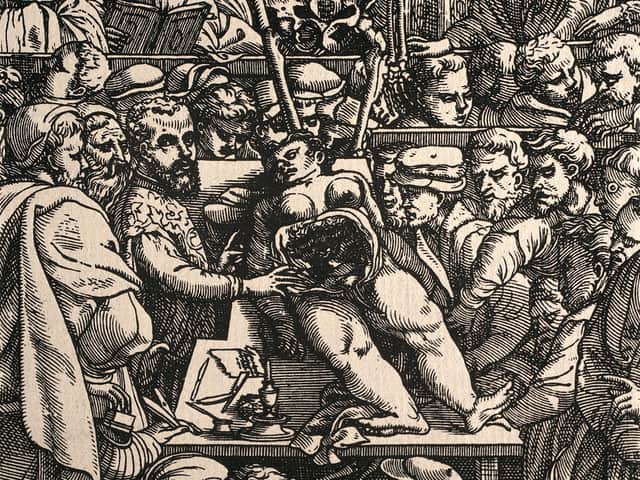
At 8.30pm, the focus shifts to medical history with A Touch of Death: Execution, Dissection and Corpse Medicine in History, a talk for adults only looking at all the ways in which the human body has been treated after death.
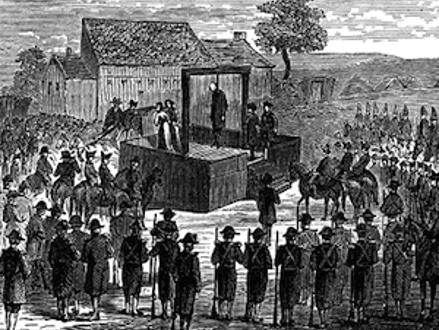
Public executions used to be an ordinary part of life and an important way to maintain law and order. However, the real punishment for the executed was what happened next. For centuries, people believed that in order to get into heaven, people had to be buried whole.
After death, the executed criminal's body would be given to the anatomist and used to further medical knowledge and to teach students of medicine. Dissections were considered taboo but were a necessary part of medical understanding.
Being sentenced to dissection after death was seen as a way of making it impossible for that person's soul to get into heaven. This talk covers what public executions were like in the 18th and 19th centuries and how dissections took place, aided by the dreaded bodysnatchers.
When the laws changed and there weren't as many crimes which carried the death sentence, how were medical students supposed to learn their trade? With the help of enterprising gangs of resurrection men who sold bodies to medical schools in exchange for money.
Coastal parts of Ireland in particular helped to supply the teaching schools of Scotland who were in constant need of a fresh supply of bodies.
Aside from medical knowledge, there were other ways in which the human body was used after death. Many cures and treatments for different conditions used parts of real human bodies. Egyptian mummies were crushed into a powder that could be ingested or snorted, gladiator's blood was thought to cure epilepsy and human fat was widely available as a popular cream to cure everything from toothache to gout.
Historian Dr Robyn Atcheson has studied all the ways in which the human body was viewed, used and consumed after death for this macabre exploration through history.
Event Details:
Date: Tuesday, 27th October 2026
Venue: Tower Museum, Union Hall Place, Derry BT48 6LU
6:30 PM – 7:30 PM: "Something Wicked This Way Comes": Witches in Irish History (Ages 12+) - Tickets can be booked here: https://shorturl.at/yukAZ
8:30 PM – 9:30 PM: A Touch of Death: Execution, Dissection and Corpse Medicine (Adults only) - Tickets are available here: https://shorturl.at/EMxvs
Tickets for both talks are £12 and more information can be found on robynatcheson.com/events.