
Third of County Derry primary schools at risk of closure


The Education Authority have published their latest round of Area Planning consultation.
Over a third of primary schools in County Derry's local government districts are below the minimum pupil number threshold, according to the latest Education Authority (EA) data.
A draft Strategic Area Plan produced by the EA last week revealed that a total of 90 primary schools across Causeway Coast and Glens, Derry City and Strabane, and Mid Ulster were below the minimum pupil numbers of 105 (rural schools) and 140 (urban schools).
The figure represents 38% of the 240 schools in the three districts, with a further 12% (28) operating at a deficit of more than 5%.
Of the post primary schools across the three areas, 34% (17) of schools providing Y8-12 provision are below the threshold, set at 500 pupils.

Causeway Coast and Glens Borough has 37 primary schools below the threshold, representing 47% of the area's total number of primary schools. 13 (16%) are operating at over 5% deficit.
Five (31%) of the area's 16 post primary schools are also operating below threshold with more than a 5% deficit.
In Mid Ulster, 36 of its 96 primary schools (38%) are below the pupil number threshold, while 9 (9%) of those are also operating a deficit of more than 5%.
Three schools in the district (15%) are currently operating above the deficit bracket of 5%.
17 of Derry City and Strabane's primary schools (26%) are below the pupil number threshold, with six (9%) operating at more than a 5% deficit.
Just two of the area's 14 post primary schools (14%) are below the threshold with a deficit of more than 5%.
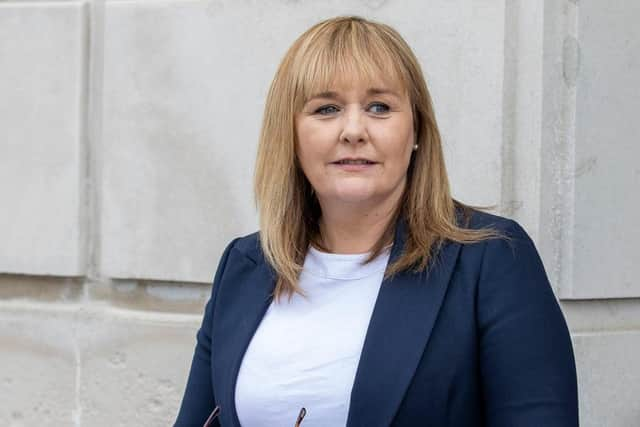
Minister for Education, the DUP's Michelle McIlveen, has set out three priorities for Area Planning over the next five years.
Primary schools being taught in composite classes of more than two year groups, post primary schools failing to provide a broad and balanced curriculum in Y8-12, and sixth forms with fewer than 100 pupils that cannot offer a full range of courses are set to be the plan's focus.
The scheme is set to be phased over three 'Operational Plans', the first ranging from 2022 to 2024, the second from 2024-2026 and the final plan for 2027.
The draft plan says that plans will be taken forward through 'discussion, engagement and consultation with schools and partners'.
“However, where rationalisation/change to status (amalgamation, discontinuance, transformation) has been identified as the outcome for the work stream, a Development Proposal is required,” it reads.
“There is a responsibility on each school community, governors, principals, staff and parents/pupils and key stakeholders to influence and engage in the Area Planning process.”
A number of local representatives have called on the EA to be mindful of the contribution rural schools make, with East Derry MLA Claire Sugden saying a 'purely cost-driven approach' should be avoided.
“The Department of Education’s Sustainable Schools policy has created these thresholds – which are rightly lower than for urban schools,” she said.

“What also needs to be considered is the role that these schools play in rural communities, the quality of education and the nurturing environment which make these schools vital community assets.
“These schools contribute so much to the local community in terms of things like events and fundraising, provide a hub for locals and create community cohesion.
“We have already lost Bellarena and Ballyhackett Primary Schools in recent years. These were devastating for these communities and not just for those with a direct link to them. We cannot afford to lose any more.”
“If a small community loses its school, families are less likely to move into the area and more likely to move out.
“This has inevitable knock-on effects for other local businesses and services, effectively eroding these communities from within. The Executive does not do enough for rural communities as it is,” she added.
Teacher and East Derry Aontú candidate for the upcoming Assembly election, Gemma Brolly, said this was not the time to be 'talking about school closures'.
“Our children deserve a high quality standard of education. They deserve a force of government bodies behind them moving heaven and earth to achieve this,” she said.
“We all know that students in small classes, with a smaller student / teacher ratio, tend to perform better in the education system. Small classes with smaller numbers of pupils are not a problem.
“We need to support our existing schools - particularly regarding provision of permanent learning support, given the fact that we are seeing an increase in the number of children with special needs in the North, year on year and especially given how appallingly children with special needs and their families have been treated throughout the Covid-19 pandemic.

Farming lobby group Farmers For Action (FFA) said the scheme should be 'halted' and have requested an urgent meeting on what they called the 'purge' of rural schools.
“The EA Statement has caused outrage across rural Northern Ireland,” said Sean McAuley of FFA.
“FFA argue there is no additional cost in keeping well respected rural schools open and preventing a further close down of rural services, where rural dwellers now being treated as second-class citizens.
“The time has come for Minister McIlveen to stand tall and champion rural schools and common sense.
“there is an election in May and FFA are calling on Minister McIlveen to end the closure programme of rural schools forthwith or put the DUP in a position of losing rural votes hand over fist,” he added.
Public consultation on the area planning scheme, which is set to run from 2022 until 2027, will remain open until April, allowing parents and stakeholders to give their views on its aims.
Details of consultation events and how to take part can be accessed via the Education Authority website.