
Arranmore RNLI recalls the incredible Stolwijk rescue as it celebrates 140 years
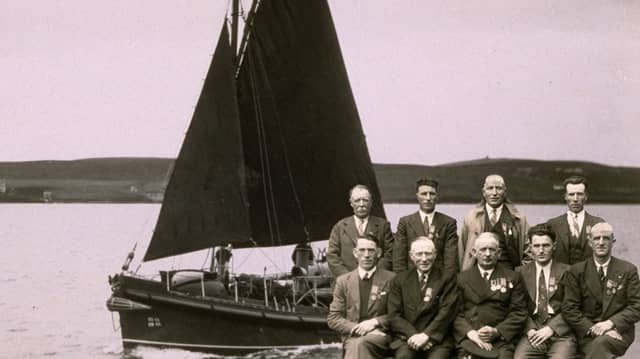

On their 140th anniversary, Nora Flanagan looks back and recalls when Arranmore Lifeboat earned international recognition after risking life and limb in a heroic 22-hour rescue operation to save the lives of 18 men whose ship Stolwijk had ran aground
Arranmore RNLI this year celebrated 140 years in existence, an exceptional service off the coast of west Donegal.
“On the application of the local residents the RNLI (Royal National Lifeboat Institution) Committee decided to open a lifeboat establishment on Arranmore Island,” the RNLI Archives says. “The site for the boathouse and slipway was kindly granted by the landed proprietor Lieutenant F Charley, and the expense of the boat and equipment was defrayed from a legacy bequeathed to the Institution by Richard Vandeleur of Dublin.”
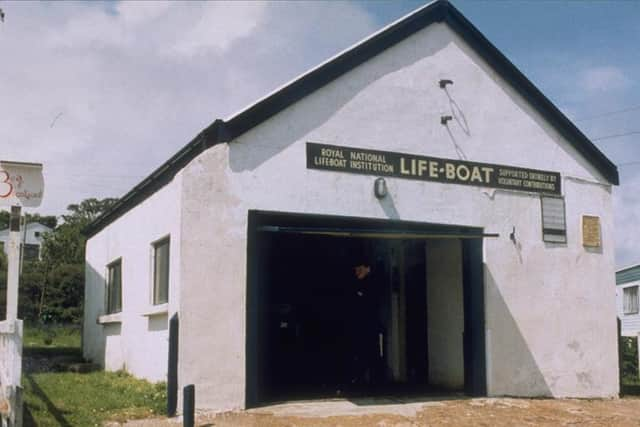
One hundred and forty years later the ethos of volunteering is still strong among islanders and the volunteer crew of the Arranmore RNLI are still ready at a moment’s notice to drop everything and answer the call.

The Dutch merchant ship of 2,489 tons, Stolwijk, was sailing in convoy from Newfoundland to Liverpool had lost power and went on the rocks off Tory Island [on December 5, 1940]. Ten of the crew were lost with 18 survivors clinging on to the stern as huge waves washed over them.
It took the lifeboat four hours to reach the stricken ship and a further four hours to rescue the remaining 18 sailors. A breeches buoy line was utilised in the rescue and unfortunately, it broke several times. With the survivors on board, the lifeboat made its way to Burtonport, again another four-hour journey to drop off the rescued sailors and refuel.
The lifeboat had to stay at Burtonport harbour overnight as the crew were exhausted and the weather conditions were still too dangerous to return to Arranmore. In all, the lifeboat and crew spent 22 hours rescuing the crew of the Stolwijk.
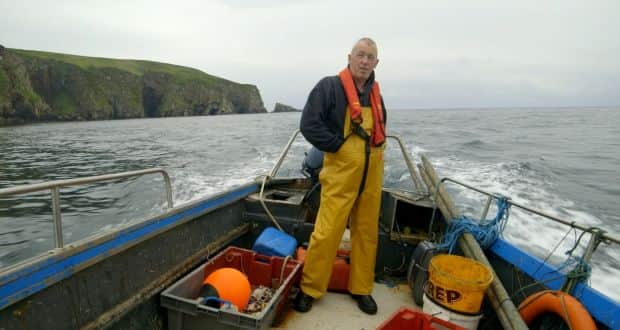
These events are recalled in a tribute by Jerry Early who shared that “listening to my father talking about the men who went out on that call inspired me to write the song, ‘I’ll Go’, with my cousin, John Gallagher.”
The lyrics of this song honour the brave lifeboat men who risked their lives to save fellow sailors. The hopeful tone of the chorus, “I’ll go and do the best I can, I’ll do what must be done, I’ll go cause I’m a lifeboat man, I am my father’s son”, evocatively sums up the dedication of lifeboat crews throughout the service.
Families are an integral part of the RNLI crew and in Arranmore the involvement and support of families can be traced through the generations from the first crew of the Vandeleur to the present day.
Brian Byrne can trace his family’s service on the lifeboat back to 1883 when his great great grandfather, Brian O’Donnell, was appointed the first coxswain on the Vandeleur.
His grandfather, father, uncle and brother, John, all served on subsequent lifeboats. Brian’s father, Neily Byrne, and uncle, Phil Byrne, were awarded bronze medals for their part in the rescue of the Stolwijk crew.
Furthermore, Phil Byrne was awarded a silver medal for leading his lifeboat crew on a successful medical evacuation from Tory Island to the mainland in raging north-westerly gales to save the life of a seriously ill young boy.
Brian recalls being on the rescue mission to Tory with many members of his family: “I remember being on the lifeboat that night; my uncle, Phil, was the coxswain, my father Neil, my brother, John and cousin, Bernard O’Donnell were also on board.”
As context, Bernard’s grandfather, Paddy O’Donnell, was one of the recipients of the bronze medals for the rescue of the Stolwyjk crew as were his uncles Phil and Neily Byrne. His brother, John also served as mechanic/coxswain on the lifeboat.

Describing his first shout, Brain says “I think I was in my early teens when I went out on my first lifeboat call. It was to a yacht anchored off Arranmore with the anchor drifting and we had to stay out all night until the yacht set sail the following morning.
“As a young fellow I don’t think I was ever really thinking about how dangerous it was to go off out on a shout in stormy weather. I suppose it’s just part of your life when you live on an island, it’s what you do.”
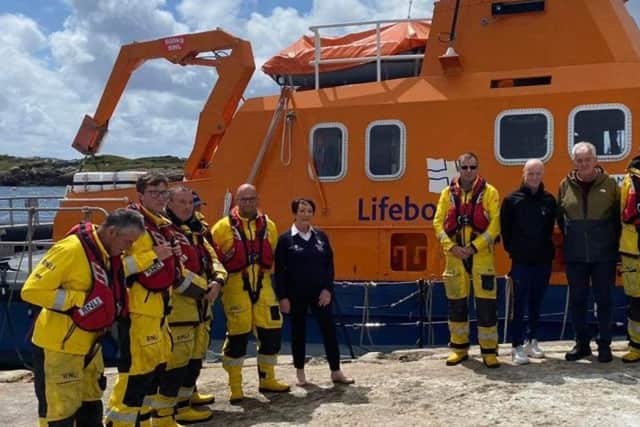
When islander Mark Boyle returned from America he promptly joined the lifeboat crew. Mark’s father, Charlie, had served as mechanic while his grandfather, Jack, who had served as coxswain, was awarded gold medals for the Stolwijk rescue.
In the early years of the Arranmore RNLI it was local men with a knowledge of the sea who went on a call for the lifeboat.
Prior to the first motor boat in 1902 boats were open to the elements, powered by oars and sail with speeds of up to 3-5 knots and the crew relied on long oilskin coats and sow westers to protect them from the wind and rain. Today’s lifeboats are state-of-the-art vessels, equipped with advanced technology, capable of speeds over 25 knots on the all-weather lifeboats and 35 knots on the inshore rigid inflatable boats.
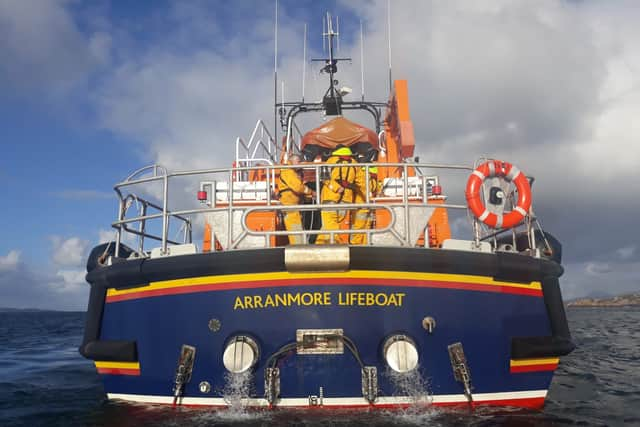
So many things have changed over the last 140 years for the RNLI on Arranmore but the one constant theme is the volunteer ethos. One thing that never changes is the courage, dedication and selfless instincts of lifeboat volunteers who, without a thought for their own safety, go to help their fellow sailors.
So as you sit down to enjoy your Christmas dinner spare a thought for the men and women who will say, ‘I’ll go’, 24 hours a day, every day of the year.