
Donegal asphalt plant decision imminent
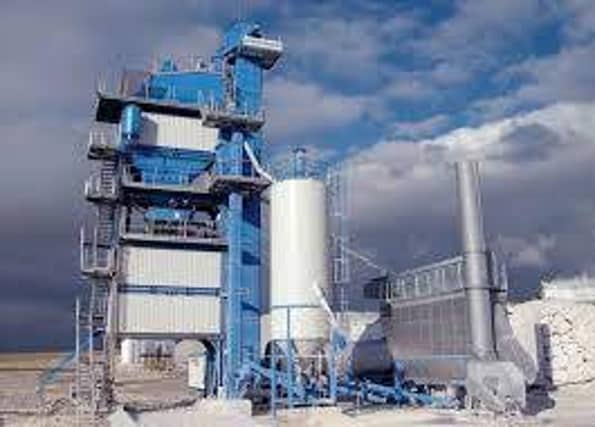

Considerable number of community objections lodged to asphalt plant planning application
A decision on whether or not a controversial Donegal asphalt Plant will receive planning permission is imminent.
The planning application for the asphalt plant was submitted to Donegal County Council by Moyle Plant Limited on February 12, 2020. Donegal County Council subsequently sought a Natura Impact Statement (NIS). A decision on the application is due on April 1, 2021.
According to the campaign co-organiser of South Inishowen Against Asphalt (SIAA), the community living in the vicinity of the the proposed plant at the Barr's Pit quarry in Gortnaskea, at the foot of Scalp Mountain, has lodged 47 objections to the planning application.
Speaking to Donegal Live, the SIAA spokesperson said local people were concerned about the potentially harmful effects of chemicals emitted from the asphalt plant.
They added: “We are also puzzled by the fact that on February 11, 2021, a Manager's Order was issued to Moyle Plant Limited by Donegal County Council, seeking additional information on the application by March 7.
“Subsequently, on February 15, 2021, Michael Friel Architects and Surveyors Limited, acting for Moyle Plant Limited, sought an extension from Donegal County Council regarding water test results connected with the application.
“The requested extension was not granted by Donegal County Council. The architects were told: 'The period cannot be further extended. If your response is not made in full within the already extended period, the application shall be deemed to be withdrawn.'
“Greentrack Environmental Consultants, acting for Moyle Plant Limited, then provided the requested information on March 5, 2021. Is such rushed information accurate?” said the South Inishowen Against Asphalt spokesperson.
According to the SIAA spokesperson, asphalt plants mix gravel and sand with crude oil derivatives to make asphalt to pave roads and car parks.
They said: “Asphalt Plants have a huge negative impact both from an environmental and public health perspective. They release Polycyclic Aromatic Hydrocarbons (PAHs), which are harmful chemicals, into the air during production. These include arsenic, benzene, formaldehyde, and cadmium.
“These toxins may cause cancer, central nervous system issues, respiratory problems, and skin irritations. Animal studies show PAH’s affect reproduction, cause birth defects, and are harmful to the immune system.
“The asphalt plant development in Gortnaskea would have a direct impact on the area, and particularly the homes in the immediate locality of the site. According to research carried out by the US Environmental Protection Agency (EPA), even a small asphalt plant producing 100,000 tonnes of asphalt per year will release 50 tonnes of carcinogenic PAHs emissions annually.
“What is also very upsetting is the adverse effect such pollution would have on wildlife in this area. The US EPA research suggested an area within a 3.5 kilometre radius of an asphalt plant could be affected. That would take us to Inch Wildfowl Reserve, the Swilly and the Foyle at Muff. Fish, birds and amphibians cannot eradicate PAHs from their systems. They don’t have metabolic detoxification enzyme systems, which means they cannot detoxify the substances from their bodies. As a result, their entire ecosystem becomes polluted by PAHs. It is like a virus that spreads amongst ecosystems and then their young are affected. Inevitably the food chain will be affected. It is terrible that something like this can go ahead,” the spokesperson said.