
Donegal Gardai target drug gangs operating in the county

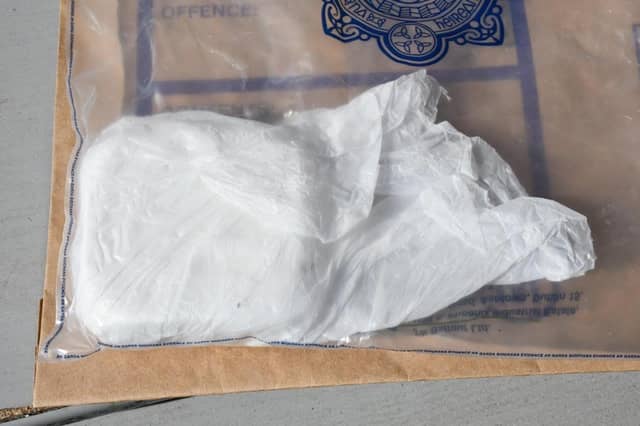

'Overarching criminal groupings' are being pursued as part of the Gardai's battle against Donegal's ever-growing drugs problem
Detectives probing drug-related activity in Donegal are targeting criminal gangs they believe are operating in the county.
Although there remain some significant operational difficulties among some units, the special branch in the Donegal Garda Division has recently been bolstered.
Gardai believe that some significant work focussing on drugs will be shown in court appearances.
“We are not just looking at street-level dealing,” Inspector Sean Grant told a meeting of the Donegal Joint Policing Committee on Friday in Lifford.
“We are now actively trying to target overarching criminal groupings and there is some good work ongoing.
“We have overt and covert operations in place and do believe that these will be reflected in pending court appearances.
“We are trying to get people to become proactive.”
The Donegal Garda Division is heading into a new era with the retirement of Chief Superintendent Terry McGinn on Tuesday.
Several new Detective Sergeants and Detective Gardai have been appointed in Donegal.
Inspector Grant said: “Key positions have been filled. We have also bolstered the detective branch.”
Detective Superintendent Sé McCormick of the Garda National Drugs and Organised Crime Bureau gave a presentation to Friday's JPC meeting.
There were 26 reported incidents of drug-related intimidation nationwide in the month of July this year.
“We are only scratching the surface when it comes to intimidation,” Detective Superintendent McCormick said.
“The North West region is not without its recorded problems.”
There have been 1,500 possession seizures nationwide and Detective Superintendent McCormick said Gardai are seizing around €1million a week in drugs cash.
His unit is working to encourage people who are being intimidated to come forward to Gardai.
“We want people to know they can come to us in confidence,” he said. “We will work to keep complaints sacred.”
Detective Superintendent McCormick said the use of social media has become widespread in the drugs trade.
“Drug trade and the normalisation of drug use is a problem,” he said. “There are challenges for everyone. We want to encourage reporting and we are striving to raise expectations.
“Addiction is stronger than legislation, but there are no no-go areas for the Gardai.”
Chairperson of the JPC, Councillor Gerry McMonagle, said drug-related intimidation was a 'particularly dark and sinister' facet of the drugs trade and that the presentation 'showed how far the tentacles of the drug trad reaches'.
“This affects people in Donegal and the North West,” Councillor McMonagle said. “We have knowledge of families who are under that type of pressure and it's important that people know that there are supports.
“I assure you, as a JPC, we will promote this drive and take the initiative on this.”
The rise in drug crime could be linked to the closure of rural Garda Stations, suggested Councillor Michael McBride.
“The drug problem is through every community,” he said. “It is a failure of the policing model.”
Councillor Barry Sweeney expressed concern that such instances have risen to more than twice their 2020 levels.
An example of a gang breaking into a family home in and 'shaking up' a father and mother, whose son owed a drugs debt was raised by Councillor Donal Coyle.
Councillor Michael Naughton, the manager of the Clanree Hotel in Letterkenny, said drugs was a
'serious issue' and implored Gardai and those working in the hospitality and nightlife sectors to work in close co-operation.