
EU Fisheries Council deliver good and bad news for the Irish Fishing Industry


Unprecedented invoking of the ‘Hague Preferences’ mechanism is saving grace in Irish negotiations
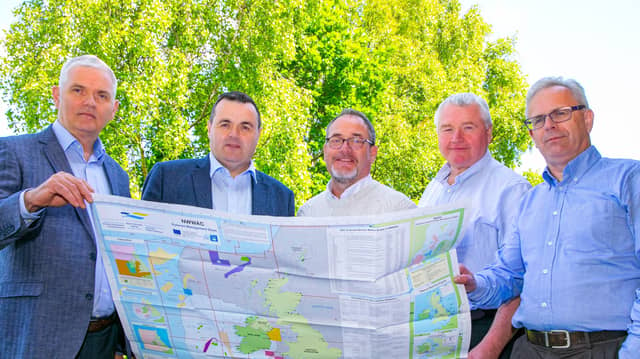
The Seafood Ireland Alliance, comprising five fishing industry organisations including three from Donegal has delivered its verdict on the outcome of the Annual Fisheries Council held in Brussels over the last two days of tense negotiations.
The agreement reached in Brussels has resulted in an increase in Irish quotas for 2025 of around 4%. However, it is claimed this does not reflect the true picture. The Irish industry will see an estimated loss in the value of fish landed in the order of €7 million.
For mackerel and prawns, two of Ireland's key stocks, there are quota reductions of 16% and 13%, respectively. This equates to a combined loss in earnings of €20 million. These quota losses have been partly offset by increases in the quotas for haddock, monkfish, herring, boarfish, and horse mackerel.
The Seafood Ireland alliance comprises the Irish Fish Producers Organisation (IFPO), the Killybegs Fishermen’s Organisation (KFO), the Irish South & West Fish Producer's Organisation (IS&WFPO), the Irish South & East Fish Producers Organisation (IS&EFPO) and the Irish Fish Processors & Exporters Association (IFPEA). The organisations are committed to working closely in a more formalised relationship, to enhance the collective effectiveness as sectoral representatives by presenting a united front with a coherent voice.
The Seafood Ireland alliance comprises the Irish Fish Producers Organisation (IFPO), the Killybegs Fishermen’s Organisation (KFO), the Irish South & West Fish Producer’s Organisation (IS&WFPO), the Irish South & East Fish Producers Organisation (IS&EFPO) and the Irish Fish Processors & Exporters Association (IFPEA)
CEO of the Irish Fish Producers Organisation Aodh O’Donnell, who was in Brussels during the talks, said: "The successful negotiations of Hague Preferences was a certain source of relief. It is the first time this mechanism was ever invoked for mackerel.
“However, it was necessary to ensure a level of mackerel fishing for our coastal communities in Killybegs and elsewhere. We now need a dedicated Ministry and Minister for the Marine to represent us, to fight for us and negotiate with us. To plan a future is a way forward because we are an Island nation with rich waters. We need to manage this resource, but we also need someone who will strongly negotiate with European partners on our behalf."
A spokesperson for the Alliance added: “The outcome of the Council is probably as good as we could have hoped for, given the scientific advice for key stocks. We have had a positive outcome on some of our priorities but there is no doubting 2025 will be another difficult year for the fishing industry.
“The big cuts agreed for some stocks are going to further reduce fishermen’s incomes coming on the back of the losses of quotas following Brexit. There are some positives undoubtedly, but we need a plan and a vision for the future if the industry is to survive”.
The Alliance spokesperson said: “Invoking the Hague Preferences was vital on this occasion. It has resulted in Ireland clawing back 4,000 tonnes of mackerel valued at around €8 million. Without this and increases for other pelagic stocks, the Irish pelagic fleet would be facing a perilous situation financially. We lost 26% of our mackerel quota under Brexit and the scientific advice for next year was for a further 22% reduction. This would have been a frightening situation to be facing into in 2025”.
The outcome for the whitefish fleet operating on the south coast was less positive. Negative scientific advice for cod, haddock, pollack and sole has led to only small quotas being allocated to Ireland for 2025. This will make operating in the Celtic Sea exceptionally difficult and will force fishermen to fish further afield to stay profitable.
The Alliance spokesperson explained: “If you take the example of sole where we have a quota of less than 33 tonnes for 2025 under EU rules when we have exhausted this small quota, we must stop fishing entirely as there is a risk of having a small unintended bycatch of sole. The same applies to pollock where the quota is a mere 48 tonnes.
“We acknowledge the work of the Minister and his officials in the long and difficult negotiations over the last few months, culminating in the December Council. The Minister has delivered on many of the industry asks and we commend him for delivering these elements. However, we still face an uncertain future. To deliver tangible outcomes for our members, we need ongoing engagement with industry from the new Minister, whoever that may be. Together, we can navigate our way through what is going to be another challenging year”.