
Fears that slurry tanks could leak because they were built with defective concrete


Ward calls on Agriculture Minister to introduce supports for farm and agricultural buildings impacted by crisis
Redress TD Charles Ward has called on the Minister Agriculture, Food and the Marine, Martin Heydon, to introduce supports for farm and agricultural buildings impacted by defective concrete.
The Donegal Deputy explained: “When we talk about defective concrete, the national conversation quite rightly centres on family homes, but across rural Ireland, the same materials were used in farm sheds, milking parlours, storage units, boundary walls, and critically, slurry tanks. These are not minor structures; they are essential to the functioning of farms, animal welfare, and environmental protection.”
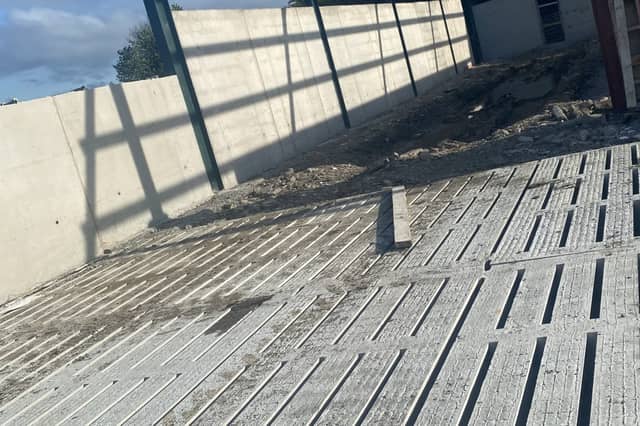
He continued: “Farmers are now discovering that slurry tanks built during the boom era are beginning to crack, weaken, or fail due to the same internal sulphate attack found in houses. The implications of this are serious; a failing slurry tank is not just a structural issue, it is an environmental risk, with the potential for leakage into soil and waterways, and a breach of environmental compliance obligations placed on farmers, which is not their fault.”
Deputy Ward criticised the fact that, unlike the defective concrete scheme for homes, there is no redress scheme for farm buildings or agricultural structures.
“Farmers are effectively left on their own, facing potentially enormous costs to repair or replace critical infrastructure, with no dedicated State support. That gap in policy is becoming more visible as more rural structures deteriorate over time,” he warned.
The 100% Redress Party leader stated that public money, including EU-supported funding streams under rural development programmes, was effectively used to build infrastructure that is now failing at scale.
“We are not talking about isolated defects,” he said. “Evidence suggests that thousands of structures nationwide may be affected.”
“The scale of what is unfolding is still not fully understood, but what is clear is this: the State is now facing a long-term liability for construction decisions made during a period of weak regulation, inconsistent oversight, and rapid development pressure.”