
Government TDs in Donegal called out over triple lock vote
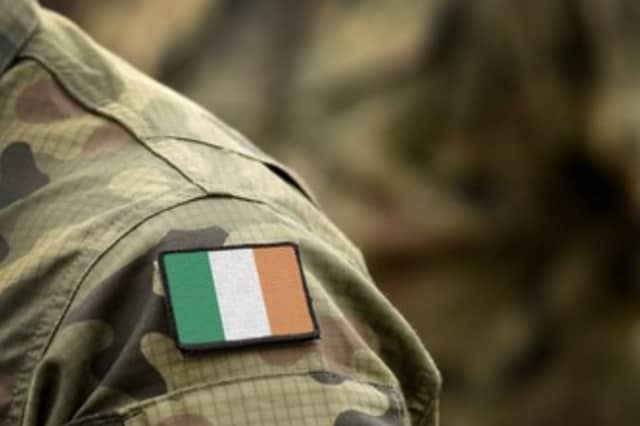

The Defence (Amendment) Bill 2026, which passed the Dáil, seeks to remove the requirement of a UN Security Council veto on Irish peacekeeping missions
Government TDs in Donegal have again been called out over voting in favour of the Defence Amendment Bill 2026.
The triple lock, codified by the bill, is a system that requires Government, Dáil and United Nations approval for overseas deployment of more than 12 troops.
The Defence (Amendment) Bill 2026 Second Stage was passed on Wednesday, October 21, which removes the UN Security Council veto.
TDs had the opportunity to vote on the bill: 79 voted ‘Tá’, 71 voted ‘Níl ’, and 24 did not vote. For Donegal, both Fianna Fáil TDs Pat ‘The Cope’ Gallagher and Charlie McConalogue voted in favour, while 100% Redress TD Charles Ward and Sinn Féin TDs Padraig MacLochlainn and Pearse Doherty voted against abolishing the triple lock.
Independent Councillor Jimmy Brogan stated that: “It will go down in history as the day the FF/FG/Ind coalition betrayed the Irish people and set in motion the sending of young Irish people to die on behalf of European elites and former colonial powers in wars against innocent people around the world.
“The end of Ireland’s policy of neutrality is the day that we have finally given up our independence in foreign affairs and the possibility of us playing a leading role as an intermediary between Europe and the third and developing world. As a former colony, we had a unique role where we could have acted as an honest broker in world affairs.
“The Defence (Amendment) Bill moves to committee stage in the Dáil before being voted on again in the Dáil, and it will then move to the Seanad where it will be voted on again.“Irish neutrality should remain firm and we should continue standing firmly against aggression wherever it occurs, supporting humanitarian aid, defending international law, and pursuing diplomacy rather than automatically becoming part of military conflicts.
“It is an argument against sending our children out to die in other parts of the world in a fight for colonialism and capitalism. That is something Irish people can’t accept and won’t stand for.”
The yes votes consisted of Fianna Fáil, Fine Gael and some Independent TDs, all part of the coalition government. The votes against were Sinn Féin, Social Democrats, People Before Profit, Aontú, Labour, the Green Party and some Independents.
The government argue that other countries, such as France, the UK, China, the US and Russia, having a say in how troops are deployed undermines sovereignty, while Opposition TDs say that the mechanism protects and upholds Irish neutrality and sets a mandate for international peacekeeping.
Ireland’s policy of military neutrality, codified in the protocol attached to the Lisbon Treaty, supports efforts to promote peace and development through the European Union and the United Nations.
Neutrality is the policy of military non-alignment and informs Ireland’s approaches to human rights, conflict resolution, and peacekeeping.
Funded by the Local Democracy Reporting Scheme