
Health & Happiness: Back to School, Fresh Ideas for a Healthier Lunchbox

Columnist Aileen Casey is a Buncrana-based writer, parent and healthy-living enthusiast with a background in early childhood care and elderly support
With the school bags packed and the uniforms ready again, September is also a good time to look at what is going into the lunchbox each day.
Convenience foods certainly have their place on busy mornings, but a little preparation can make a real difference over the course of the week.
Rather than relying heavily on packets, bars and processed sandwich fillings, building lunches around more whole foods can provide children with a better mix of protein, fibre, fruit, vegetables and slow-release energy.
One area worth thinking about is sandwich meat. Ham, salami and other processed meats are convenient, but they are best kept as occasional rather than everyday lunchbox foods. Many processed meats contain nitrites or nitrates as preservatives.
The bigger concern is processed meat itself: regular consumption has been linked with an increased risk of bowel cancer, which is why health organisations recommend limiting it rather than making it a daily staple.
A very easy alternative is to cook a little extra meat at home. A couple of chicken breasts cooked with dinner can be sliced the following day for wraps, sandwiches or pasta. Roast beef, leftover turkey or pieces of freshly cooked chicken can all work well cold.
It takes slightly more preparation than opening a packet of ham, but over the course of a week those small changes can add up. The same idea applies throughout the lunchbox.
Whole foods do not have to mean complicated cooking. Eggs, oats, yoghurt, fruit, vegetables, cheese, potatoes, chicken, fish, wholegrain breads and wraps are all ordinary foods that can form the basis of a filling school lunch.
Even spending twenty or thirty minutes preparing a few things at the beginning of the week can make the mornings far easier.
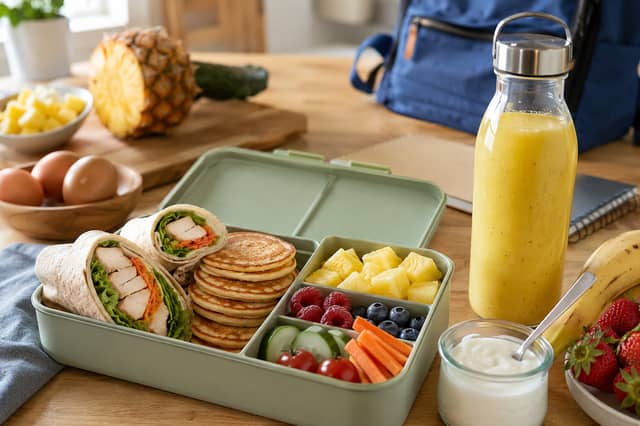
Homemade pancakes, for example, are a brilliant lunchbox addition. They can be made in a batch, kept in the fridge for a couple of days or frozen individually. They are easy for children to hold, naturally appealing, and can be made with oats and banana rather than relying on heavily sweetened packaged snacks.
Banana and Oat Lunchbox Pancakes
Ingredients
1 ripe banana; 2 eggs; 80g porridge oats; Half teaspoon baking powder; A small splash of milk; A pinch of cinnamon, optional
Method
Blend the banana, eggs, oats, baking powder and milk until fairly smooth. Spoon small rounds of the mixture onto a lightly greased frying pan over a medium heat.
Cook for around two minutes until bubbles begin to appear, then turn and cook the other side. Allow them to cool completely before placing them in a lunchbox.
They can be served with berries, sliced banana or a little natural yoghurt. Making a double batch means some can go straight into the freezer for another school day.
Smoothies can be another useful addition, particularly for children who are not enthusiastic fruit or vegetable eaters.
A homemade smoothie poured into a suitable chilled bottle can make fruit and vegetables very easy to consume. It is also a useful way of combining fruit with yoghurt, milk or oats, which makes it more filling than fruit juice alone.
The key is not to turn it into a bottle containing five or six portions of fruit. Whole fruit still has an important place because chewing it and eating the fibre in its natural form helps with fullness. A modest smoothie alongside the rest of a balanced lunch can, however, be a very handy option.
Pineapple Sunshine Smoothie
Ingredients
1 large handful of fresh or frozen pineapple; Half banana; Half small carrot, peeled and chopped; 2 tablespoons natural or Greek yoghurt; 1 tablespoon porridge oats; 150-200ml milk or an unsweetened milk alternative; A small squeeze of fresh orange or lime, optional.
Method
Place everything in a blender and blend until completely smooth. Add a little more milk if your child prefers a thinner smoothie.
Pour into a well-chilled reusable bottle and keep refrigerated until it is time to leave for school. If it will be sitting in a school bag for several hours, use an insulated bottle or an ice pack in the lunch bag.
The pineapple and banana give plenty of natural sweetness, while the yoghurt and oats make it more substantial. The small amount of carrot disappears easily into the flavour of the fruit.
Another useful habit is simply cooking slightly more at dinner. If chicken is on the menu, cook an extra breast for tomorrow's wrap. If you are making pasta, put a small portion aside before adding the evening sauce.
Boil two extra eggs while breakfast is cooking. Chop a few extra cucumber and pepper sticks while preparing dinner.
That preparation might only take an additional five minutes, but the following morning the lunch is already halfway made.
A typical lunchbox might contain a chicken and salad wrap, two small oat pancakes, some berries and water. Another day it could be cold pasta with chicken, cucumber and sweetcorn, followed by a yoghurt and fruit. A pineapple smoothie could accompany a boiled egg and wholegrain toast fingers or a small cheese and chicken wrap.
There is no need to produce a picture-perfect lunchbox every morning. Children also have individual appetites and preferences, and foods that come home untouched day after day are probably not worth continuing to pack simply because they look healthy.
The aim is to gradually build a selection of foods that are both nourishing and genuinely enjoyed.
Back to school season can feel busy enough without turning food into another source of pressure. But returning to a little preparation, more home-cooked ingredients, and fewer heavily processed everyday options can make the lunchbox healthier without making life much harder.
Sometimes it really is the small habits, an extra chicken breast in the oven, a batch of pancakes in the freezer, or a smoothie blended before school that make the biggest difference to the overall picture.