
Health & Happiness: Giving a little kindness back to the earth


Columnist Aileen Casey is a Buncrana-based writer, parent and healthy-living enthusiast with a background in early childhood care and elderly support
We turn to nature for so much: fresh air, food, beautiful views and somewhere to clear our heads. Here in Inishowen, a walk beside the Swilly or along a woodland path reminds us how fortunate we are to have such surroundings.
Yet, alongside enjoying what the earth offers, there is another question worth asking: what can we give back?
The answer can begin close to home, in how we care for a patch of ground, use resources and make room for wildlife. Everyday choices give us opportunities to contribute. Small acts of care can become worthwhile habits, connecting our wellbeing with the world that sustains us.
From Small Seeds
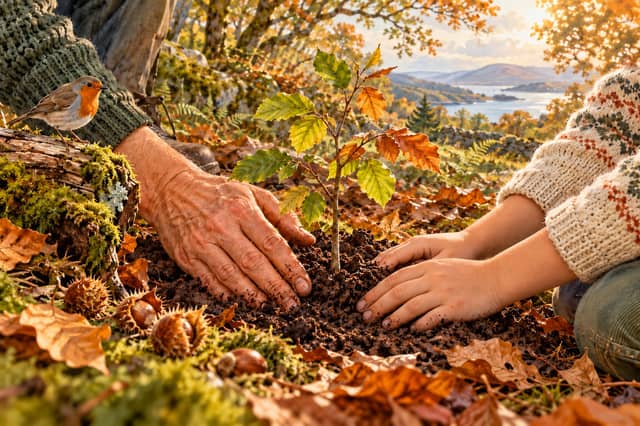
On a recent walk in Swan Park, amidst the golden glow of autumn leaves, we noticed several beech nuts beneath the trees. These little discoveries would be worth planting, giving something gathered on a walk the chance to become a tree itself.
Autumn offers opportunities to grow trees from seed. Beech nuts, hazelnuts and acorns can all be the beginning of something remarkable. Holding a small seed, it is difficult to imagine the branches, leaves and shelter it might one day provide.
Collect only a few healthy seeds where permission allows, leaving plenty for wildlife. Identify the tree and check the growing instructions for that species, as some seeds need a period of cold before germinating. Use pots with drainage holes and suitable seed compost, protect them from hungry animals, and keep the compost moist without waterlogging it.
Children can label pots, record planting dates and photograph the first leaves. There is something valuable in caring for a living thing whose progress cannot be hurried.
Think ahead about its eventual home. Beech and oak become large trees, so choose a species suited to the space. Native Irish trees are worth considering for planting projects, and permission is essential when planting on someone else’s land.
A Living Remembrance
Planting a tree together can become a meaningful family tradition. Children might give it a name, take a photograph beside it and return each year to see how much it has grown.
A tree planted in memory of a loved one can hold particular significance. Whether grown from seed or planted as a young sapling, it offers a living way to honour someone whose presence mattered.
While watering and tending it, we can share stories about that person. As the years pass, its changing branches offer somewhere to pause and remember.
Alongside that personal meaning, the tree can provide shelter for wildlife, while its fallen leaves return organic matter to the soil. Remembrance becomes an act of care for the earth.
A Little Room for Wildlife
Giving back also means tending what is already here. Watering a young tree during a dry spell or protecting an established patch of greenery matters just as much as starting something new.
A garden need not be immaculate to be cared for. Leaves beneath hedges, a few logs in a sheltered corner and seed heads left standing can provide food and refuge. Fallen leaves gathered from paths can become leaf mould: place them while damp in a ventilated container and allow them to break down into a useful soil conditioner.
Flowers chosen for bees and butterflies can bring life to even a small outdoor space. A pot of herbs or a container of flowering plants is a beginning. Growing something ourselves also helps us appreciate the time and care involved in producing food.
Fresh water in a regularly cleaned birdbath offers another helping hand. Children can enjoy watching which birds visit and learning their names. Beyond the garden, joining a community clean-up helps protect the places we all share.
Returning Goodness to the Ground
Whether you use your brown bin or consider composting at home, turning food scraps into a useful resource is another way of giving back to the earth. A little newspaper in the brown bin, or torn plain cardboard mixed into home compost, can absorb excess moisture and reduce sogginess.
Keeping food scraps covered and the brown bin lid closed also helps limit odours and discourage pests.
Making the most of our food matters too. Seasonal vegetables can become a nourishing soup, surplus portions can be frozen, and extra garden produce can be shared with a neighbour. Each is a way of valuing what the earth provides.
Everyday Care
Being considerate towards the earth extends to the resources we use indoors. Turning off the tap while brushing our teeth, switching off unnecessary lights and drying clothes outdoors when the weather permits all help conserve water and energy.
Using only what we need is another way of caring for the natural world.
Reusable shopping bags, bottles and lunchboxes earn their place through repeated use. Repairing something useful or passing it on keeps it in circulation. At Halloween, adapting a costume or bringing out decorations from previous years can be part of the enjoyment.
Recycling has its place too. Keep accepted packaging clean, dry and loose, and check unfamiliar items on MyWaste.ie. These everyday choices become easier when they are part of our routine.
Gratitude Through Kindness
Spending time in nature can help us feel part of something greater than ourselves. Beneath the trees or beside the water, we can pause, breathe and reconnect with a sense of wonder.
Gratitude grows through attention: to the earth that sustains us, the people who enrich our lives and the beauty we might otherwise miss.
Sharing what we have and caring for living things puts that appreciation into practice.
Each evening, we might reflect on a thoughtful gesture, a conversation or sunlight falling through branches. These moments can nourish us inwardly, even when life feels challenging.
Perhaps this week we could plant a seed, tend a tree or leave a little more room for wildlife.
We receive so much from the earth. Returning some kindness is a way of saying thank you.