
‘I would do it all again in a heartbeat’ – Martina Anderson at Ballinamore book launch


Former Sinn Féin MEP spoke candidly about imprisonment, the peace process and her journey from Derry’s Bogside to the European Parliament during the Leitrim launch of her autobiography
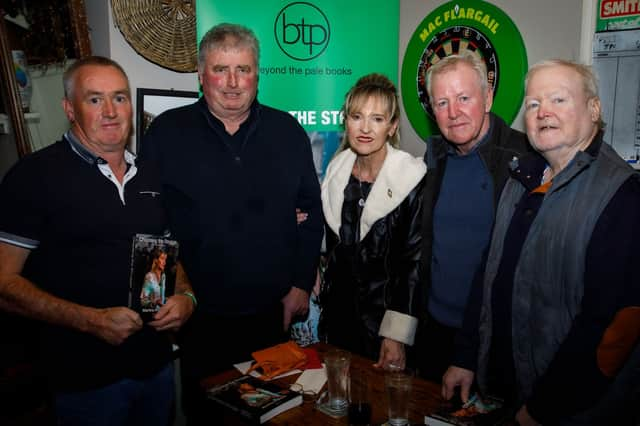
Former Sinn Féin MEP and republican prisoner Martina Anderson has declared that she would make the same choices again “in a heartbeat”, despite spending 13 years behind bars, as she reflected on her life during a visit to Ballinamore. Anderson was speaking at McGirls Bar on Friday, October 30, where she launched her autobiography, Choosing the Struggle, and discussed the experiences that took her from the streets of Derry’s Bogside to imprisonment in England and ultimately to the European Parliament.
During a wide-ranging conversation, the former MLA reflected on the Good Friday Agreement, the personal sacrifices of republican activists, her marriage while in prison and the political changes she has witnessed in Northern Ireland.
Asked what advice she would give her younger self, knowing everything she would eventually endure, Anderson offered a frank assessment. She said she would warn herself that the journey ahead would bring heartache, imprisonment, humiliation and pain, but also extraordinary friendship, comradeship and love.
She spoke of the opportunities she would later have to represent her community and fight for people's rights on an international stage. Asked whether she would choose the same path again, she replied: “In a heartbeat.”
One of the most personal moments of the evening came as Anderson recalled her first temporary release from prison, which she deliberately arranged to coincide with Halloween in her native Derry. Halloween celebrations hold a special significance in the city, and Anderson remembered the excitement of returning to familiar surroundings after years of imprisonment.
She recalled the lights, fireworks and atmosphere of the celebrations, explaining that Halloween continues to remind her of that first experience of freedom. The date of the Ballinamore event held particular significance, falling close to the anniversary of that occasion. Anderson also spoke about her relationship with fellow republican prisoner Paul Kavanagh, whom she married while both were serving lengthy prison sentences.
At the time, she said, neither believed they had any realistic prospect of release. Their marriage was, in part, a practical decision that would allow them greater opportunities to spend time together during prison visits. “I loved him enough to get married for visits,” she recalled.
The eventual prospect of freedom under the Good Friday Agreement represented a profound change for prisoners who had previously faced the possibility of spending the remainder of their lives behind bars. Anderson, who was released in 1998, subsequently entered electoral politics, serving in the Northern Ireland Assembly and later representing Northern Ireland in the European Parliament.
She described the extraordinary contrast between her years in prison and the international political role she would eventually occupy. Recalling her imprisonment in Durham, she spoke about enduring conditions in cells infested with cockroaches.
Had somebody suggested during those years that she would one day become a member of the European Parliament, she said she would have found the idea almost impossible to believe. Her political work subsequently took her to countries including Venezuela and Palestine, experiences she could never have imagined as a young girl growing up amid the conflict in Derry.
Anderson recalled witnessing the Battle of the Bogside as a child and experiencing fear long before she fully understood the political ideology surrounding the conflict. “I never, ever, ever forgot who I was and what I was representing,” she told those attending the launch.
The former MEP also rejected the description of her years in elected office as a conventional political career, explaining that she had always regarded herself primarily as an activist.
“I’m proud to say I never got the salary of an MEP. I never took it,” she told the Ballinamore audience. Turning to contemporary politics, Anderson addressed the recent dispute surrounding an Orange Order parade on Portadown's Garvaghy Road.
Anderson also drew striking parallels between her childhood in Derry’s Bogside and recent tensions surrounding an Orange Order parade on Portadown’s Garvaghy Road. She recalled being just five years old when she witnessed water cannons being deployed during the Battle of the Bogside, an experience that left a lasting impression on her.
Standing alongside residents during the recent standoff, more than five decades later, she found herself confronting memories of that frightened young girl. She recalled asking herself how, after so many years, she could once again be standing in the street facing the prospect of water cannons being deployed.
“Has nothing changed?” she recalled wondering. However, she argued that the political circumstances surrounding the latest controversy were fundamentally different from those of her youth.
“Everything has changed,” she said. Anderson claimed the dispute went beyond the route of a parade and reflected resistance among some unionists and loyalists to the changing political landscape in Northern Ireland. She pointed to the appointment of Sinn Féin's Michelle O'Neill as First Minister as an example of that change, arguing that equality and changing political representation remained difficult for some sections of society to accept.
Her comments reflected her own assessment of the dispute, which remains a sensitive issue involving competing views on marching rights and the rights of local residents. Throughout the evening, Anderson returned repeatedly to the importance of family, friendship and comradeship in sustaining her through imprisonment and political life.
Although she acknowledged the personal cost of her involvement in republican activism, she maintained that the sacrifices had been worthwhile. Her autobiography, Choosing the Struggle, traces her childhood in the Bogside, involvement in the IRA, imprisonment and subsequent political career, while exploring the relationships and experiences that shaped her outlook. The Ballinamore event formed part of a series of launches across Ireland following the book's publication earlier this year.