
Inquest told of discovery of Laura Marshall’s bruised body in bath
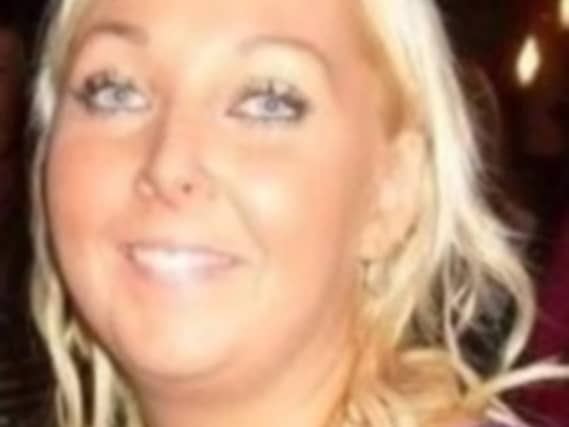

An inquest into the death of the 31-year-old dental nurse has opened in Belfast.
An inquest has heard of the moment the bruised body of a dental nurse was found partially submerged in water in the bath of her Co Armagh home.
A police officer also told the hearing how he had formed a “working hypothesis” from attending the scene that the death of Laura Marshall “had the hallmarks of domestic-related murder”.
The body of the 31-year-old was found in a flat in Victoria Street, Lurgan, in April 2016.
Opening the inquest at Laganside Courthouse in Belfast on Thursday, which was attended by members of Ms Marshall’s family, coroner Louisa Fee said the proceedings are not designed to attribute blame to any individual.
Setting out the background to the case, counsel for coroner Aidan Sands said Ms Marshall had lived in an apartment block in Victoria Street, Lurgan, with her partner, Gary O’Dowd, who was originally from Banbridge.
He said their relationship had been a “difficult one” and Ms Marshall had made a number of complaints of domestic violence against him.
The barrister said weeks before she died, Mr O’Dowd had been charged with assault and threats to kill, but Ms Marshall had decided she wanted to drop the charges.
Mr Sands said the inquest would hear about telephone contact between Ms Marshall and Mr O’Dowd.
He said that on April 3 2016 a downstairs neighbour had complained about water coming into his flat.
Maintenance manager Declan Maher went to Ms Marshall’s flat in the evening and entered the bathroom.
Mr Sands said: “When the door opened partially, he saw Laura Marshall lying naked in the bath with her head and shoulders partly above the water and the water still running.
“Then he rang 999, contacted the police and the police told him to go back into the bathroom and turn off the tap, which he did.”
Mr Sands said the bathroom was in a “state of disarray”, the sink had been broken and there was evidence of blood on the walls.
He said an initial post-mortem examination had found Ms Marshall had bruising on her body and forehead and a gash on her left arm.
The barrister said pathologist Jack Crane was of the view Ms Marshall had died by drowning, and her injuries “were more likely to have been sustained in an assault rather than being accidental injuries”.
However, he said a number of experts had examined the case and there is a “divergence of expert views as to the cause and circumstances” of her death.
Mr Sands said Mr O’Dowd was charged with the murder of Ms Marshall in April 2016.
The barrister said Mr O’Dowd had denied the offence and “had given a full account of his movements to the police in interview”.
In February 2018, the charges were withdrawn by the Public Prosecution Service.
Maintenance manager Mr Maher gave evidence and told the inquest he had gone to the building following a complaint of a water leak.
He said he went to the apartment below where Ms Marshall lived and saw water “pouring from the ceiling like a waterfall”.
He told the court he went upstairs and knocked, but received no answer.
Mr Maher entered the apartment and said he unlocked the bathroom door because there was water in the hallway and he “believed something was badly wrong at this stage”.
He said: “I saw Laura Marshall lying on her front in the bath. Her head was facing towards the door.
“I could see her back. She was naked. There was no lights in the bathroom. The bath tap was on and the water was overflowing over the brim of the bath.”
Mr Maher said he phoned police and then turned the water taps off.
He added: “I saw that there was a red mark on the floor, which I presumed was blood, and that Laura had bruises or black marks on her shoulder and other areas of her body.”
Asked why he had not tried to help Ms Marshall, Mr Maher said: “I just knew she wasn’t alive, I just knew by the way she was in the bath and the colour.”
The court heard from a detective sergeant who had attended the apartment after Mr Maher’s call.
He said: “I noted that there were multiple bruises present on the female’s body, including a circular bruise in the centre of her forehead, I also observed a deep gash on a forearm, approximately eight centimetres long and running along the length of the arm.”
The officer said he then looked in the bedroom and formed the opinion that there had been more than one person lying in the bed.
He said: “From my interpretation of the scene, I declared this a suspicious death, as I had formed the opinion that this incident had the hallmarks of domestic-related murder.
“That two persons had been in bed, that some type of argument occurred, which resulted in the female taking refuge in the bathroom behind the locked door.
“Attempts to force entry had resulted in the handle coming off, both inside and out.
“However, the assailant was then able to open the lock on the outside.
“It appears that a violent assault took place in the bathroom, which resulted in damage to the room and to her having cuts and bruises in multiple parts of her body.”
The detective sergeant said he later briefed the PSNI major investigation team.
A barrister for the Marshall family asked the officer if the scene had been one of “quite a lot of destruction”.
He responded: “A lot of destruction.”
A barrister representing Mr O’Dowd, who is expected to give evidence at the inquest, said it was not known how the sink in the bathroom was smashed.
He added: “It was your job to work out what the scene presented to you and you were doing your best?”
The officer said: “It’s a working hypothesis.”
The barrister added: “Evidence is a very important thing when it comes to coming to conclusions about things?”
The officer responded: “It was initial hypothesis, not a conclusion.”
The barrister also said there was no evidence of an argument in the flat or that there had been two people in the bed.
The inquest will resume on Friday.