
Joint first minister title at Stormont ‘won’t fix a single pot hole’ – Robinson
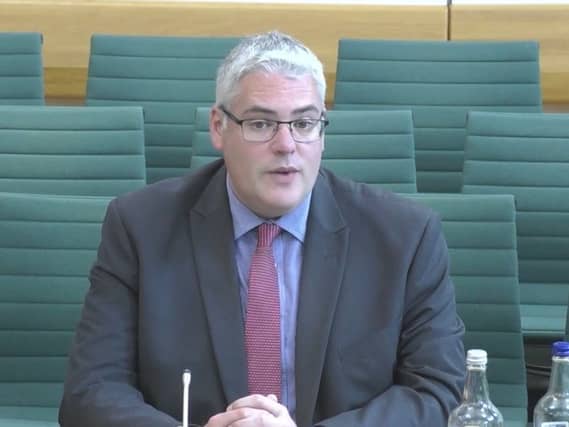

The DUP leader was speaking after representatives for Alliance, the SDLP and UUP argued for reform of the devolved government institutions.
A new joint first minister title in Northern Ireland “won’t fix a single pot hole”, DUP leader Gavin Robinson has said.
Mr Robinson also said some “wish to talk up crisis… purely for electoral benefit” ahead of the next Assembly election in 2027, after representatives for the Alliance Party, SDLP and UUP argued for reform of the devolved government institutions, and warned of the public losing faith in Stormont.
Sinn Féin did not send a representative to address the Northern Ireland Affairs Committee’s look at reform of Stormont on Wednesday morning.
It comes after decades of instability in devolved government in Northern Ireland, with periods of collapse between 2017 and 2020 and 2022 and 2024.
In February, former First Minister Arlene Foster told the Assembly and Executive Review Committee there was “growing suspicion” within grassroots unionism in Northern Ireland around reform of Stormont.
Mr Robinson told MPs that any reform could not undermine the Belfast/Good Friday Agreement, describing a “system that reflects suitably and appropriately the community balance within Northern Ireland”.
“We cannot countenance a scenario where, for 20 years, unionists were told you cannot take decisions that are of detriment to a minority, only to find (when) unionism is in the minority, that those protections are no longer suitable,” he said.
“We cannot agree to that. We also think that there’s a need for reform within our civil service, and the effectiveness of information available to government departments.”
He accused others of a “majoritarian approach”, which he said “is about shutting down and shutting up the people I represent, saying to them that in the past – when unionists were in the majority – they had to compromise, they had to concede, they had to engage, they had to reach consensus”.
In terms of some of the reform proposals made by Stormont parties, including transforming the job titles of first and deputy first ministers to joint first minister, changing how the speaker is elected and reforming veto mechanisms, Mr Robinson questioned how this would impact delivery.
“How on earth would a change in the titles of first and deputy first minister deliver water infrastructure? It would have absolutely no change on the ability of planning changes or water infrastructure at all,” he said.
“If you change the way in which a speaker was elected, it would have absolutely, fundamentally no difference and no impact on water infrastructure.
“The greatest reform has to be in attitude, it has to be in will, it has to be in the desire for elected representatives and leaders to work together to deliver.”
He said: “There are clearly people engaged in this discussion because they think electorally it’s useful for them.”
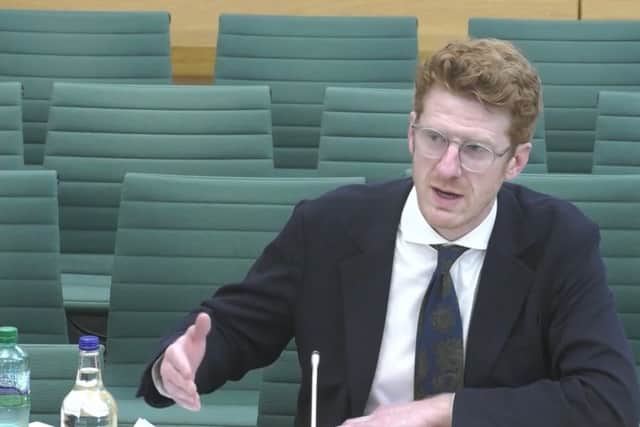
Earlier, Stormont Opposition leader Matthew O’Toole argued that both the reform of the institutions as well as a cultural shift in the Executive were needed.
“It’s very, very difficult in Northern Ireland for people to see what meaningful improvement Stormont makes to their lives, and that’s really pernicious, particularly in a society where democracy, where basic governance has been so challenged for so much of our history,” he said.
“For people to just not believe that there’s really much point, or it’s achieving very much, is really, really toxic, whatever your preference on the constitution.”
Mr O’Toole highlighted the fact that a Stormont budget for this financial year had still not been agreed, warning that civil servants could only authorise 95% of last year’s budget, delivering an effective 5% budget cut.
“There’s a very specific frustration that people rightly have, which is the dysfunctionality and the repeated collapses at Stormont… it self-evidently cannot go on like this indefinitely, because the public have completely lost faith in devolution, which is a tragedy when you think of a society that came out of conflict when so much hope was invested in those institutions,” he said.
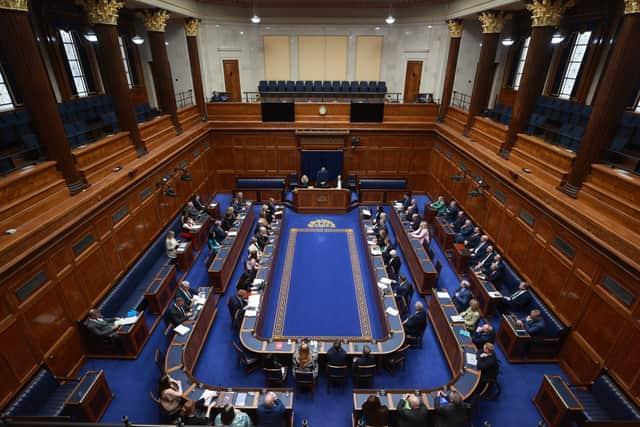
He said: “The blunt truth is, Sinn Féin and the DUP have a structural political interest in permanent opposition to one another, while being in permanent government with one another, that structurally is challenging.
“So structural changes are important, and they can move you in that direction, but you do need a cultural shift too, and you need people to want to lead, and to want to lead people in the right direction.”
Alliance deputy leader Eoin Tennyson criticised the UK Government for not taking a more proactive role.
He described a current situation where the two largest parties, Sinn Féin and the DUP, were “wielding vetoes at the Executive table to hold one another’s legislative proposals hostage”.
“I think we are condemning the institutions either to a death by 1,000 collapses, which is possible, or worse, and more likely, death by a slow bleed of public confidence in the ability of those institutions to deliver on the democratic will of the people of Northern Ireland,” he said.
Mr Tennyson also made the point that without an “activist” secretary of state and Irish government in 1998 “pulling the parties in the direction and banging their heads together”, the Belfast/Good Friday Agreement would not have been secured.
“We need to see that same engagement now to ensure that the institutions reflect the society that we are and the needs of the people that we represent, rather than the divisions that we’ve inherited,” he said.
UUP leader Jon Burrows said most people regarded Stormont as a “basket case” and described a “palpable disconnect” with the public.
He argued that basic changes to Stormont “would make all the difference in delivering effective government”, such as changing the titles of first and deputy first minister to a joint first minister title, and a “fully functioning opposition” with shadow ministers for better scrutiny.
“The level of scrutiny in Stormont is very, very poor, and the statutory committees, which should be focused on performance and delivery of the minister, and driving performance… they do not scrutinise properly amendments and proposed legislation, and then we have bad legislation,” he said.