
Key part of Windsor Framework ‘undermines sovereignty’, committee hears
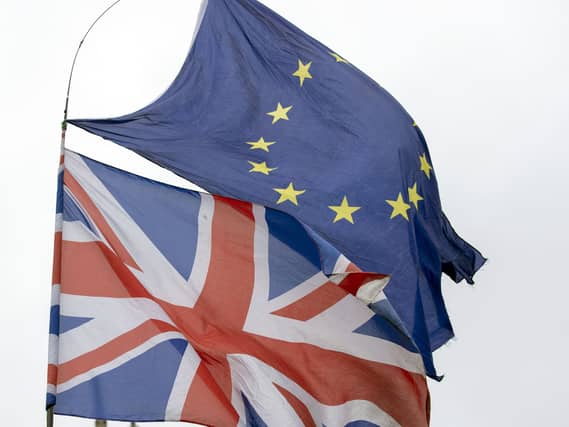

Political parties have been giving evidence to a House of Lords Committee which is visiting Stormont.
A key element of the Windsor Framework undermines the sovereignty of Northern Ireland within the UK – as well as the Good Friday Agreement, Ulster Unionist leader Jon Burrows has told peers.
SDLP Stormont leader Matthew O’Toole said Article 2 provisions of the framework were important because people needed confidence their rights would be protected, while TUV leader Jim Allister called it a “constitutional insult”.
The House of Lords Northern Ireland Scrutiny Committee visited Stormont on Thursday where it heard evidence from political parties about the Windsor Framework.
The post-Brexit deal between the EU and the UK was aimed at reducing trading frictions between Great Britain and Northern Ireland, but Article 2 contains an element around human rights.
That part of the framework seeks to ensure that as a result of Brexit there is no diminution of rights underpinned by EU law that were committed to in the 1998 Good Friday Agreement.

The committee is examining how that works in practice and its legal enforceability following a Supreme Court judgment.
Mr Burrows told the committee: “Unfortunately Article 2 of the protocol has actually become not a shield for protecting rights, but a sword for cutting through rights in terms of the sovereignty of the United Kingdom and actually the fundamental premise of the Belfast Agreement, that Northern Ireland remains part of the United Kingdom wholly, unless the majority of people vote otherwise.”
The UUP leader said he believed there was a tendency for the UK Government to “take a supine view when it comes to a human rights lobby or the lobbying by Dublin in terms of how things should operate here”.
He added: “I think the UK government….because this happened with the trade border too, still lives under a shadow of the threat of instability, disorder, even terrorism, affecting its judgment in how it deals with matters in Northern Ireland.”
Mr Burrows said the framework had become a “dynamic vehicle upon which you can disapply UK law in Northern Ireland”.
He said: “I think it totally upends the Belfast Agreement because, at its heart, was a principle of consent that Northern Ireland remains part of the United Kingdom until the majority of people say otherwise, and that is not replicated now in legal constitutional reality.
“So not only do we have the separate issue of the trade border, we have a situation whereby laws and directives from the EU can apply in Northern Ireland, be disapplied in Great Britain, and that have no legislative basis or consent from the people of Northern Ireland, or indeed Westminster.
“So it undermines the sovereignty of Northern Ireland in the United Kingdom, which is the cornerstone of the Belfast Agreement.”

SDLP Opposition leader Matthew O’Toole said that the Brexit process had been “fundamentally destabilising for the entire edifice of the Good Friday Agreement”.
He said: “I acknowledge there are tensions in respect of how you balance rights going forward, and I suppose Article 2 is part of that.”
Mr O’Toole said the history of Northern Ireland had resulted in a “context where rights are there is a more complex rights environment than there would be in other places”.
He added: “Therefore, people need to be confident that their rights are going to be protected.
“That’s why I think the Article 2 provisions of the Windsor Framework were so important.”
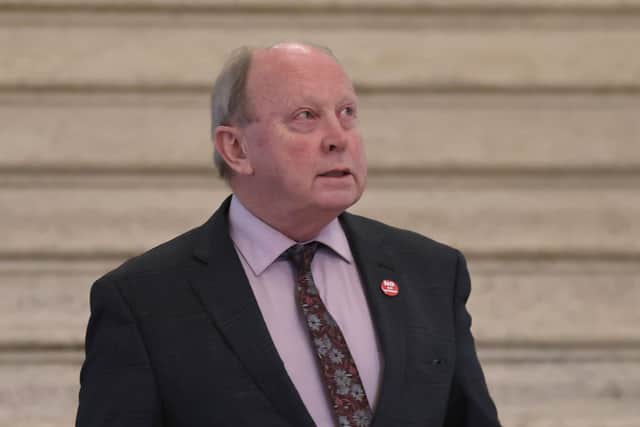
Mr Allister said Article 2 was an “intrinsic and inseparable part” of the Windsor Framework.
The North Antrim MP said it and other parts of the framework “denude Northern Ireland of the right to have a say in many legislative issues”.
He said: “That is a constitutional insult and a constitutional absurdity, that any rules and regulations, laws which govern any people, should be not those they make themselves, but indeed those through dynamic alignment, which are the laws of others enforced upon them.
“So, there’s a fundamental democratic objection, which informs the post Article Two as much as it does the rest of the protocol impositions.”