
Resident doctors staging 24-hour strike over pay

It follows strike action by consultants and specialist doctors last week.
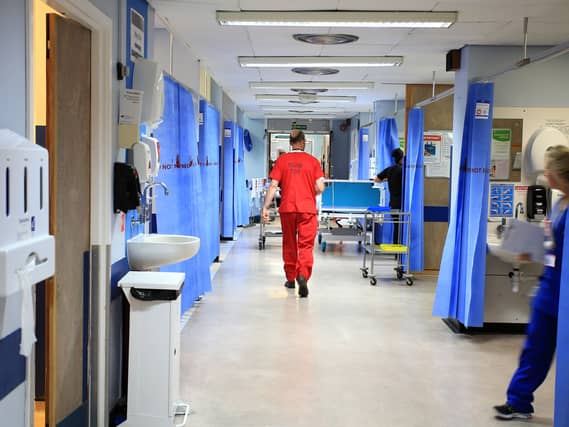
Resident doctors across Northern Ireland are taking part in a 24-hour walkout over pay.
The strike started at 7am on Monday and will go on until 6.59am on Tuesday.
Resident doctors in hospitals and GP surgeries are staging the action amid a demand for full pay restoration.
It follows strike action by consultants and specialist doctors last week.
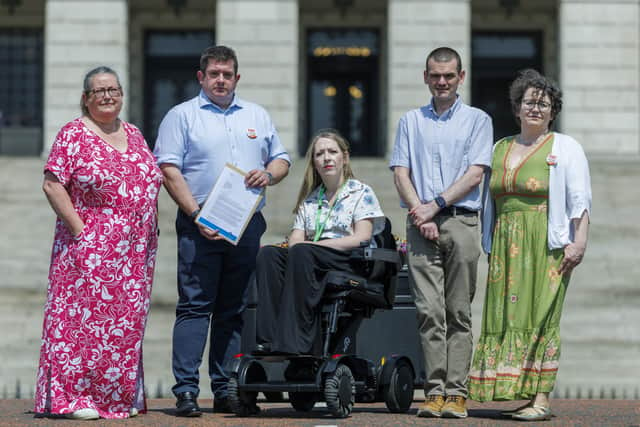
The British Medical Association (BMA), a trade union and professional organisation which speaks for doctors, said that all doctors in Northern Ireland are in dispute with the Department of Health.
They said GPs are still in dispute with the department over the imposition of the 2025/26 General Medical Services (GMS) contract.
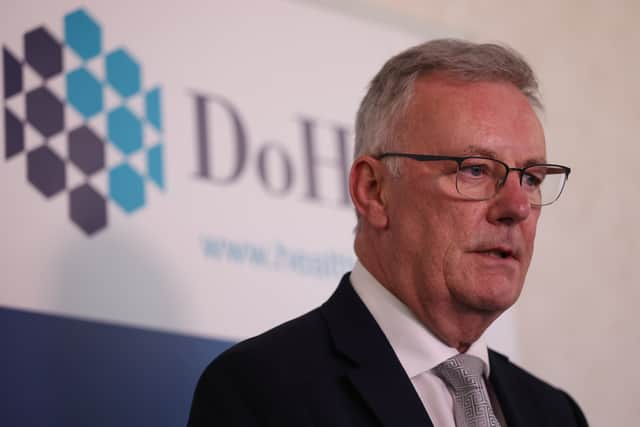
Dr Steven Montgomery, chairman of BMA’s Northern Ireland resident doctors committee (NIRDC), said they feel they have been left with no choice other than to strike.
“Pay erosion for resident doctors still sits at up to 20% since 2008 and we lag behind our colleagues in the rest of the UK and in the south of Ireland on pay,” he said.
“Add to that, growing patient numbers without the necessary number of doctors needed to meet this demand and pressure, alongside younger doctors looking to leave the health service to work elsewhere for better pay and working conditions.
“It is unfortunately a perfect storm for our health service.”
He added: “What does it say about our health service when all branches of practice in medicine are in dispute with the government?
“The health minister can bury his head in the sand about this problem all he wants but the numbers speak for themselves: there are not enough doctors to treat our growing, ageing population as our waiting list crisis demonstrates.
“We also know that over half of penultimate and final year medical students studying in Northern Ireland are either planning to leave the country or are undecided once they finish their foundation training, with poor pay cited as the main reason.
“These medical students – and us as resident doctors – are the future consultants, GPs and SAS (Specialty, Associate Specialist, and Specialist) doctors that the Department of Health is dependent upon to meet growing patient numbers and implement its plans for a neighbourhood model of care.”
Dr Montgomery has urged Health Minister Mike Nesbitt to “engage in meaningful negotiations towards pay restoration”.
“It is unacceptable that doctors – frontline health care staff – have been once again forced into the position of taking strike action to be heard, while government sits on its hands, counts on our goodwill and delayed pay uplifts to keep the health service going. This cannot continue,” he said.
“We join our consultant and specialist doctor colleagues in calling on government to step in and resolve this dispute with a credible offer to avert strike action and solve these disputes without delay.”
In response, Mr Nesbitt said he was “disappointed” that the action had been taken.
“This follows a 24-hour period of industrial action by consultants and specialist and associate specialist (SAS) doctors Thursday into Friday last week,” he said.
“It is important to stress that the vast majority of services across the Health and Social Care (HSC) system are proceeding as planned. All patients with scheduled appointments on either day should attend as planned unless they have been directly contacted to advise their appointment has been postponed. All trusts have activated their planning arrangements to ensure essential services are maintained.”
Mr Nesbitt said he remained committed to implementing the pay award as recommended by the independent Doctors’ and Dentists’ Pay Review Body (DDRB). But he said he was unable to do so until Stormont ministers agreed a budget for the year.
“This action is being taken on the mandate of less than a quarter of the medical workforce in Northern Ireland,” he said.
“Overall, only 24.8% of doctors locally have voted to take this action. I am very grateful to those who recognise the impacts strike action will have on our population, and for their commitment to provide continuity of service.
“The uplift recommended by the Review Body for 26/27 is 3.5%, which is higher than that for other healthcare professionals working in Health and Social Care (HSC). It comes on top of an average cumulative pay uplift over the last three years of 30% for resident doctors, 25% for specialty, associate specialist, and specialist doctors (SAS doctors) and 24% for consultants.
“I recently met with the chairs of the three relevant BMA committees and made clear my position. They made clear that even the increase of 3.5% is nowhere near enough to satisfy their demands. To go beyond the 3.5% as recommended by the independent pay review recommendation would have significant repercussions for nurses, teachers, police officers and indeed the entire public sector workforce. So, calling on me to act fails to recognise this is an Executive decision, a point I put to the BMA representatives.
“I reiterate my commitment to ensuring HSC colleagues receive their recommended 26/27 pay uplifts, despite the unprecedented shortfall as indicated in my draft budget. I value the workforce above our buildings, beds, equipment and medicines. But there is simply no scope for pay awards beyond the recommendations of the review bodies in 26/27.
“Finally, I want to pay a particular tribute to the many doctors, nurses, allied health professionals and exceptional support staff who will continue to deliver care and see patients throughout the days of planned industrial action.”