
Warning signs missed at Muckamore as abuse became ‘normalised’ – inquiry chair


Tom Kark KC said ‘clear warning signs’ were missed over a number of years, and ‘systemic problems’ must be addressed.
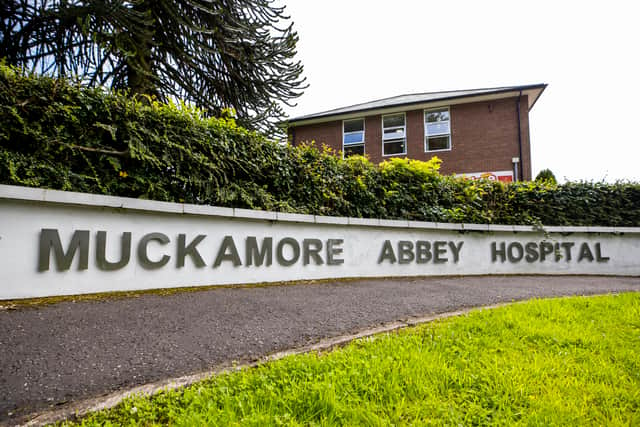
There was “wide-ranging” abuse of vulnerable people at Muckamore Abbey Hospital, including “overuse” of restraint and sedation, the chair of the public inquiry into the case has said.
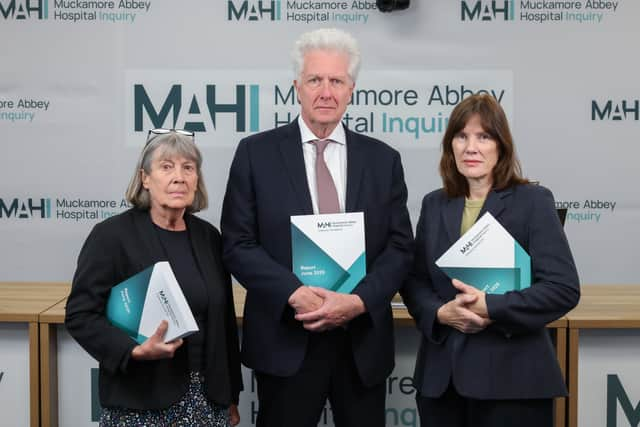
Tom Kark KC said “clear warning signs” were missed over a number of years, and “systemic problems” must be addressed to ensure such a situation does not occur in the future.
The long-awaited inquiry report found “profound and deeply troubling” failures in the care of adults with severe learning disabilities and mental health needs at the Co Antrim facility.
Mr Kark said the most shocking part of the inquiry’s findings was the “scale of the abuse”.
“The abuse was very wide ranging,” he told the Press Association.
“It wasn’t just in terms of physical harm to patients, but there was also significant neglect of some patients.
“There was overuse of restraint, and there was overuse of sedation, but perhaps the most shocking thing is that there seemed to be a culture where people just ignored what was going on.
“We’ve referred to the normalisation of deviance, which is when small bad things happen, and then they become normalised and behaviour becomes worse and worse, and that seems to be what occurred here.”
In addition to the restrictive practices being used inappropriately, the report highlights “as needed” medication being overused leaving “patients zombified”.
Mr Kark said: “People with learning disabilities or people with autism have human rights that need to be respected, and they need to be treated as individuals.
“We heard a lot of evidence from relatives about bruises and black eyes and marks.
“Now, not all of those would have been caused by members of staff, but it was difficult to listen to that evidence, and much more difficult for those relatives to give it, and so I do want to say, how grateful we are to the many relatives who did come along and speak about the most personal things in the full glare of a public inquiry, because without them we wouldn’t have got the evidence that we needed.”
He said at the time of the abuse, families were “frightened of complaining in case that actually affected the care of their loved relatives in the hospital, and that’s obviously a dreadful place to be”.
“If our recommendations are implemented as they should be, families will receive much, much more support than they have done until now in terms of making complaints,” he said.
The inquiry report also found CCTV footage from the facility was “essential in revealing the truth” about the extent of abuse, but Mr Kark said it is “quite clear that the abuse had been going on long before the CCTV footage captured it” in 2017.
He described the use of CCTV in healthcare settings as “a difficult and contentious issue”, but reiterated the report’s recommendation that “every place that looks after people with learning disabilities considers carefully” its implementation.
The inquiry chair highlighted that “over 100 inspections” were held at Muckamore between 2009 and 2019 which failed to realise the extent of the problems, with witnesses telling the inquiry “the nature of the ward would change when an inspector turns up”.
The senior barrister also said there were “clear warning signs from at least 2012 onwards” that the board of the hospital “failed to pick up”.
The hospital, run by the Belfast Health and Social Care Trust, has also been at the centre of the UK’s largest-ever police investigation into the alleged abuse of vulnerable adults and a number of prosecutions are continuing.
Mr Kark said there were “clearly failures on the board” and individuals who “could have performed better”, but stressed the focus should remain on “systemic issues”
“You don’t change systems by, frankly, hanging a few people out to dry,” he said.
“You change systems by looking at the systemic problems, and our recommendations are very much focused on how to improve the system to make sure this can never happen again.”
The inquiry heard oral evidence from 181 witnesses and 333 statements have been considered, resulting in a package of more than 100 recommendations.
Mr Kark said those need to be looked at “as a package”, but highlighted in particular a duty of candour which “needs to be acted upon urgently”.