
Government effort to tackle drug deaths not moving fast enough, says charity
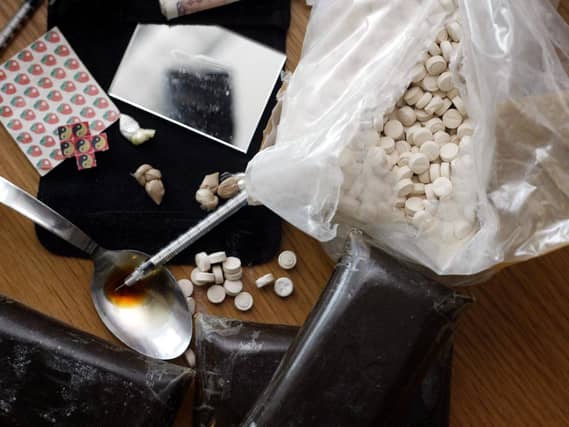

There were 320 suspected drug deaths between March and May this year – down from 333 the previous quarter.
Scotland’s response to drug harms is not moving quickly enough, a charity has said, as figures showed a small decrease in the number of suspected drug deaths.
Figures released on Tuesday by the Government’s Rapid Action Drug Alerts and Response (Radar) system, show there were 320 suspected drug deaths between March and May of this year, down from 333 in the previous quarter.
However, recent years have shown fluctuations in the number of deaths, with 289 recorded in the same quarter in 2024 and 347 during the same period last year.
Suspected drug deaths are compiled using police data and have not yet necessarily been confirmed.
Kirsten Horsburgh, the chief executive of the Scottish Drugs Forum, was critical of the Government’s work on the issue.
“While any reduction in suspected drug deaths is welcome, these figures still represent too many lives lost and show that we are not seeing the scale of change that is desperately needed,” she said.
“We know what works to reduce harm, but proven interventions are not being implemented at the scale and speed needed.
“It took too long to open our first safer drug consumption facility, despite the overwhelming international evidence supporting their effectiveness, and we have yet to establish further facilities elsewhere in Scotland.
“Drug checking services remain delayed, while safer inhalation equipment is still unavailable despite the growth of crack cocaine.
“We cannot accept this pace of change.
“Our new Scottish Government must work collaboratively – across portfolios, with support and treatment services and the third sector, and alongside people with living and lived experience – to deliver a response that is faster, bolder and driven by evidence.”
Responding to the figures, drug and alcohol minister Maree Todd said every death from drugs is a “tragedy”, as she expressed her condolences to those who have lost loved ones.
“As we respond to new challenges, our new long-term alcohol and drugs strategic plan refocuses our efforts in a more co-ordinated and sustainable way and we are working with partners to drive the necessary changes for a new collective approach,” she said.
“We are already widening access to treatment, residential rehabilitation and life-saving naloxone and the plan continues support for initiatives already saving lives such as The Thistle, the UK’s first safer drug consumption room, and the introduction of drug-checking projects.
“Backed by record funding and building on our previous five-year National Mission on Drugs, the plan will continue to strengthen multi-agency collaboration.
“Backed by more than £160 million in 2026–27, it expands treatment standards to cover alcohol and all drugs, with a renewed focus on prevention, as we continue to work hard to respond to an increasingly toxic supply – including the threat from highly dangerous synthetic opioids like nitazenes.”
The Radar figures come as the Government released a report assessing its £250 million National Mission on Drugs, which was launched by former first minister Nicola Sturgeon.
According to the report, the number of drug deaths remains at a “high level” despite dropping from 1,280 to 1,017 between 2019 and 2024 and it is “challenging” to assess if the initiative has improved people’s lives.
Estimated opioid addiction has also dropped slightly, from 1.2% of the population to 1.13%.
Responding to the report, the minister added: “The Scottish Government’s five-year National Mission on Drugs saw record investment in alcohol and drugs services and widened access to treatment, residential rehabilitation and life-saving naloxone.
“The new, long-term alcohol and drugs strategic plan is backed by record funding and will continue to strengthen multi-agency collaboration.
“Backed by more than £160 million in 2026–27, it expands treatment standards to cover alcohol and all drugs, with a renewed focus on prevention.
“We will continue to monitor progress as part of our evidence-based approach to saving and improving lives.”