
Retained duty firefighter system ‘creaking and straining’ – Lib Dems

The party has urged the Government to examine Scotland’s fire defences amid the increasing risk of wildfires.
Scotland’s retained duty firefighter system is “creaking and straining”, the Liberal Democrats have claimed in light of new statistics.
A series of freedom of information requests by the party found the Scottish Fire and Rescue Service spent almost £6 million in overtime payments last year.
This figure has risen by a third in the last five years, from £4.5 million in 2021/22, the party said.
Mental health absences have also increased, from 4,219 days lost in 2021/22 to 12,132 in 2025/26.
The Lib Dems said the figures have revealed issues with the retained firefighter system.
Across stations in the east of Scotland, out of 563 full-time equivalent (FTE) posts, 413 are filled.
In the north of Scotland, out of 1,933 full-time equivalent posts, 1,229 are filled.
In the west, 628 full-time equivalent posts are filled out of 813.
The number of full-time equivalent posts unfilled across Scotland is 1,039 – 31%.
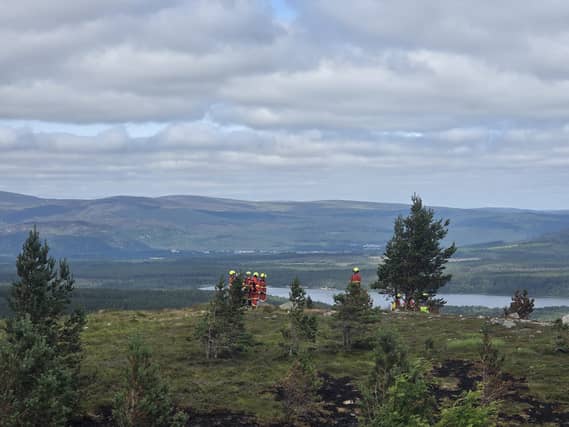
The Lib Dems have highlighted the figures amid the ongoing warnings of wildfires and as crews remain on site at a wildfire in the Cairngorms.
Andrew Baxter, the MSP for Skye, Lochaber and Badenoch whose constituency includes Nethy Bridge, the area where the Cairngorms fire started, said: “Scotland’s retained duty firefighter system is creaking and straining.
“This dossier exposes that in so many communities across Scotland, lives, livelihoods and our precious natural environment are being defended by just a handful of volunteers.
“Meanwhile the fire service is losing more and more staff to mental health pressures and relying on a growing overtime bill to plug gaps.”
Crews have been tackling the Cairngorms wildfire since July 15.
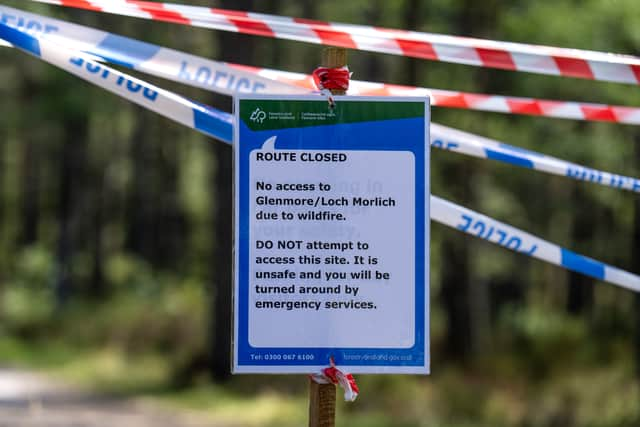
While roads and facilities in the area have now reopened, the Cairngorms National Park has advised the public “to follow current guidance and be aware that the situation may change”.
A warning was also issued this week across eastern parts of the Highlands and eastern and southern Scotland about the “very high” risk of wildfires.
Mr Baxter has called on ministers to examine Scotland’s fire defences.
“We need the Scottish Government to step in and commission a probe into whether Scotland’s current defences are fit for purpose,” he said.
“No-one will ever fault Scotland’s firefighters for effort or service. That needs to be matched by leadership from fire service bosses and the ministers who sit behind them.”
The Lib Dems said the figures show Troon in South Ayrshire is among the worst affected stations. It is supposed to have 20 retained duty firefighters but is dependent on 8.83 FTE roles.
Muirkirk and Mauchline in East Ayrshire also have fewer than half the firefighters they should on their roster.
Scotland’s island communities have also been impacted, the party said, with six of the proposed 20 firefighters in place on Hoy in Orkney and five of 12 at the Valtos station in the Western Isles.
In the north east, at least seven staff are said to be missing from rotas in Turriff, Aberdeenshire, while Inverurie in the same region has 10 staff out of an intended roster of 20.
A Scottish Government spokesperson said: “The 2026-27 budget includes almost £436 million for SFRS (Scottish Fire and Rescue Service) – an increase of £23.8 million. This investment supports frontline services and the Scottish Government is in regular contact with SFRS to ensure it has the resources it needs to continue to keep Scotland’s communities safe.
“The strength of a national fire service lies in its ability to draw on resources from across Scotland to respond to incidents like wildfires. Earlier this year, the SFRS conducted a review to ensure resources are in the right place at the right time.
“As of March 2025, there were 11.1 firefighters per 10,000 population in Scotland, compared to 5.6 in England and 10.3 in Wales. On-call firefighter availability is a historical and complex challenge being faced across the whole of the UK. SFRS is also working to address issues with recruiting firefighters in rural areas through its On-Call Improvement Programme.”
Andrew Watt, SFRS deputy chief officer, said: “We recognise the recruitment and retention challenges affecting on-call fire stations in many rural and remote communities across Scotland.
“The safety of Scotland’s communities remains our absolute priority.
“The Scottish Fire and Rescue Service continues to respond to emergencies across the country every day, ensuring firefighters, specialist assets and operational support can be deployed as needed to respond effectively to incidents of all scales.
“We are actively investing in our future operational capability through targeted recruitment activity, support for our on-call workforce, enhanced wildfire preparedness and continued investment in specialist equipment and training.”