
Swinney pays tribute to firefighters at scene of Cairngorm blaze

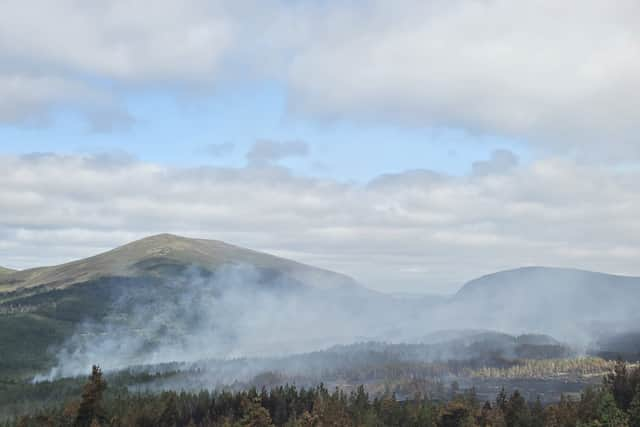
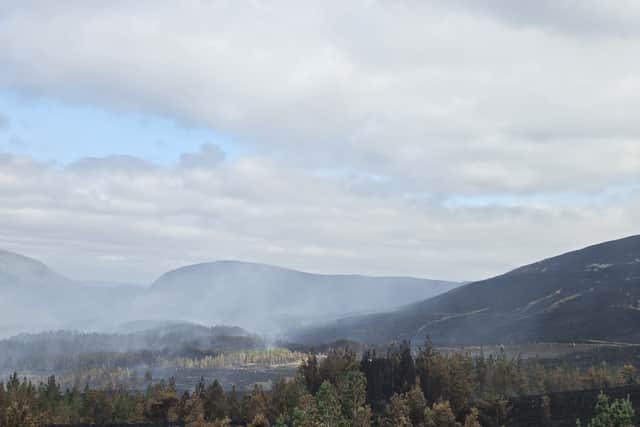
Firefighters have been tackling the blaze for almost a week.
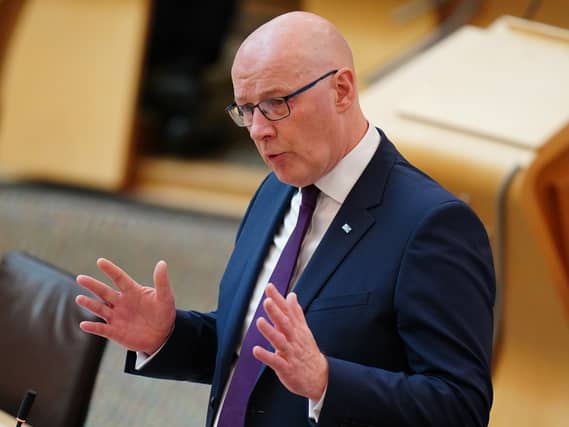
First Minister John Swinney has paid tribute to the people tackling the wildfire in the Cairngorms during a visit to then scene.
The Scottish Fire and Rescue Service (SFRS) has been tackling the blaze near Aviemore since last week, using helicopters to “waterbomb” the flames.
Speaking during a visit to the area on Tuesday, the First Minister said there needs to be a “combined effort” to ensure the fire service has the required resources, following criticism of how the SFRS is funded.
“We’re clearly facing significant changes in our climate and the prevalence of wildfires in Scotland on a now, unfortunately, frequent basis is an indication that climate change is happening,” he said.
“So, what we’ve got to make sure is that we have the resources and the skills in place to tackle the wildfires.
“I want to pay tribute to everybody that was involved in extinguishing the fire here in Strathspey, that’s been a combined effort led by the Scottish Fire and Rescue Service, but involving land managers in the locality, involving organisations like the RSPB and the Cairngorms National Park and also Forestry and Land Scotland.
“It’s got to be a combined effort to make sure that we have the skills, the expertise and the resources to make sure such circumstances can be tackled and the great natural beauty of Scotland protected.”
Responding to calls for more funding for the SFRS to tackle the increasing threat of wildfire, the First Minister said: “The Scottish Government gave the Fire and Rescue Service an increase in the budget for this year and obviously the nature of the fire risk that we’re facing in as a country is changing.
“We have a much lower prevalence of house fires in Scotland, thankfully, but we have a much greater risk of wildfires and flooding.
“We’ve got to make sure resources are deployed in a way that meets the challenges that we face as a society and that will be at the heart of the dialogue that takes place around budget priorities with the SFRS.”
Ross Ewing, the director of moorland and strategic projects for Scottish Land and Estates, welcomed the First Minister’s visit, but called for a dedicated helicopter to help tackle wildfires.
“We welcome the First Minister’s visit to Loch Morlich today and are grateful for the time he took to see first-hand the impact of this devastating wildfire.
“We particularly appreciate his willingness to engage directly with firefighters, gamekeepers, land managers, agencies and local residents, whose efforts have been vital in responding to this major incident.
“There must also be a serious discussion about Scotland’s preparedness for future wildfires,” he said.
“Scottish Land & Estates remains deeply concerned about the lack of a dedicated, aerial, firefighting capability.
“No helicopters were available on the first day of this fire, despite the fact that the battle against a wildfire is often won or lost in those crucial early hours.
“Similar challenges in accessing aerial assets were highlighted during the Carrbridge-Dava wildfire last year, demonstrating that this is not an isolated issue.
“Scotland needs a dedicated aerial response capability, available at the time of need and operating under the command and control of the Scottish Fire and Rescue Service.
“As wildfire risk continues to grow, we must ensure our firefighters have the resources they need to tackle these incidents effectively.”
Sandy Bremner, the convener of the board of the Cairngorms National Park Authority, welcomed the First Minister’s visit to see the “devastation caused by the fire”.
“I underlined the stark implications of the fire for people, businesses and nature in what is one of the most environmentally sensitive areas of the UK’s largest national park,” he said.
“It was an opportunity to stress the vital importance of immediate access to fire-fighting aircraft to supplement the incredible efforts on the ground in hard-to-reach areas, preventing small outbreaks having catastrophic consequences.
“Also, to outline the park authority’s heightened preparations for what is a growing threat – in everything from the development of the UK’s first, comprehensive, integrated, wildfire management plan to the provision of nearly £300,000 of firefighting equipment and training for landowners, as well as the introduction of the fire management byelaw, which has already reduced significantly the number of recreational fires.”