
Killer’s sentence for murdering ‘defenceless’ Henry Nowak too short, court told
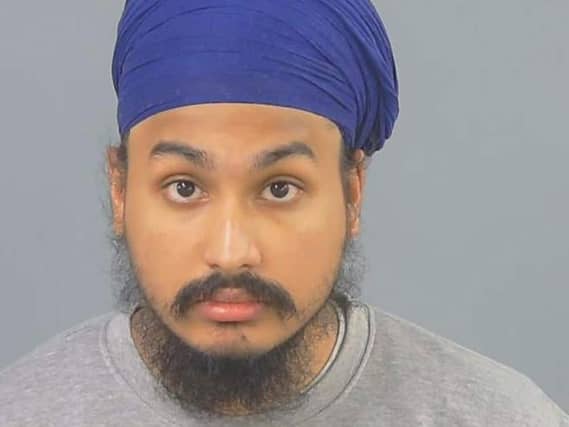

Vickrum Digwa is appealing against his sentence at the Court of Appeal, while the Attorney General is seeking to have it increased.
The killer of Henry Nowak should have received a longer sentence, as he “repeatedly deployed” a knife against an “unarmed and defenceless stranger”, the Court of Appeal has been told.
Mr Nowak, 18, was stabbed multiple times by Vickrum Digwa in Southampton on December 3 last year, who then lied to police that his victim had racially abused him.
Digwa, 23, was jailed for life with a minimum term of 21 years in June, and is now appealing against his sentence as “manifestly excessive”.
The Attorney General, Ellie Reeves, has also referred the sentence to the Court of Appeal as “unduly lenient”, with three senior judges hearing both bids to change the minimum term on Thursday.
In written submissions on behalf of the Attorney General, Jonathan Polnay KC said that Digwa “abused the privilege” afforded to Sikhs to carry a knife in a public place for religious reasons.
He said: “The offender was carrying a substantial bladed weapon in public, immediately available for use, which he repeatedly deployed against an unarmed and defenceless stranger.
“He abused a statutory religious exemption permitting him to carry that weapon.”
Mr Polnay continued: “There were significant additional aggravating factors: the offender’s sustained attempts to pervert the course of justice, his false allegation of racism against the deceased, his procurement of his mother’s assistance in concealing evidence, his degradation of the dying victim by filming him, and his conduct in misleading responders.”
“The minimum term imposed failed adequately to reflect the combined weight of those features.”
The hearing was temporarily paused after about 15 minutes because a fire alarm sounded at the Royal Courts of Justice, prompting the building’s evacuation.
Digwa watched proceedings from HMP Frankland in Co Durham, wearing a dark suit, shirt and tie.
Members of Mr Nowak’s family attended the hearing in person, telling ITV before the hearing that Digwa being allowed to challenge his sentence “doesn’t feel fair to us at all”.
At Digwa’s sentencing hearing at Southampton Crown Court, Judge William Mousley KC said that on the night of the murder, Digwa had a small knife hidden from view called a kirpan, which is a strict requirement for Sikhs to have at all times.

Digwa also had a “large dagger in a sheath”, due to his membership of an order of Sikhs called the Nihang, who have a tradition of having a second knife.
Judge Mousley said: “The privilege extended to practising Sikhs of being allowed to be in public with a bladed article and, particularly in respect of the large dagger, a highly dangerous weapon, easily accessible to the wearer, brings with it huge responsibility.”
Mr Polnay told the court that the bid to increase the sentence “is not about the lawful possession of a kirpan” and the laws allowing Sikhs to carry blades, adding: “It is about what followed.”
He said that Digwa’s use of the dagger was “on at least one level, analogous to an abuse of trust”.
He continued: “When a person who has the benefit of that accommodation uses the article protected by law for repeated lethal violence, that is an aggravating factor of particular weight.”
The killing later sparked unrest when police body-worn video was released showing officers handcuffing Mr Nowak, from Chafford Hundred, Essex, as he lay dying after Digwa falsely told officers the teenager had racially abused him.
Imran Khan KC, for Digwa, said the sentence could only be increased in “exceptional, rather than borderline cases, and directed to gross error by the sentencing judge”, asking: “Where is the gross error?”
He acknowledged the law allowing Digwa to carry the knife “plainly did not” allow him to use it to murder Mr Nowak, but also said Judge Mousley had “already expressly aggravated (the sentence) for both the dangerous weapon and the abuse of religious privilege”, as well as other factors.
He said: “There must be vigilance for using the same underlying facts repeatedly.”
He continued: “Simply repeating the points and putting them into sub-headings does not make the argument any better.”
Mr Khan also said carrying a knife for religious reasons “should not of itself” cause Sikh offenders to be given longer sentences.
Challenging the length of the sentence, Mr Khan said while Digwa’s lies to first responders “unquestionably affected the dignity with which Mr Nowak was treated”, his wounds were unsurvivable.
“The false account therefore did not worsen the fatal injury or deprive Mr Nowak of the prospect of survival,” he said.
When the Lady Chief Justice Baroness Carr responded that it “must have been terrifying for Henry”, Mr Khan said: “I accept that.”
The hearing before Baroness Carr, Mr Justice Nicklin and Mr Justice Wall is due to conclude on Thursday.