
Matt Hancock’s care home protective ring claim ‘unfounded’, Covid report finds

There were more than 43,000 recorded care home deaths involving Covid-19 between March 2020 and July 2022.
The care sector was “an afterthought” during the Covid-19 pandemic with failings allowing the virus to “spread like wildfire” and resulting in thousands of deaths despite the claim there was a protective ring around care homes, the inquiry has found.
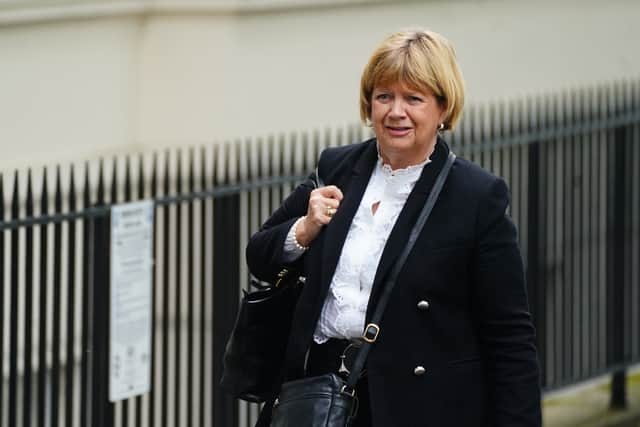
Then-health secretary Matt Hancock’s claim – made in May 2020 about protections at the start of the pandemic – was “unfounded”, UK Covid-19 Inquiry chairwoman Baroness Heather Hallett said, adding: “Quite the opposite was true.”
The inquiry has found that vulnerable care home residents were left with “insufficient protection” as patients were discharged from hospitals without knowing if they had the virus.
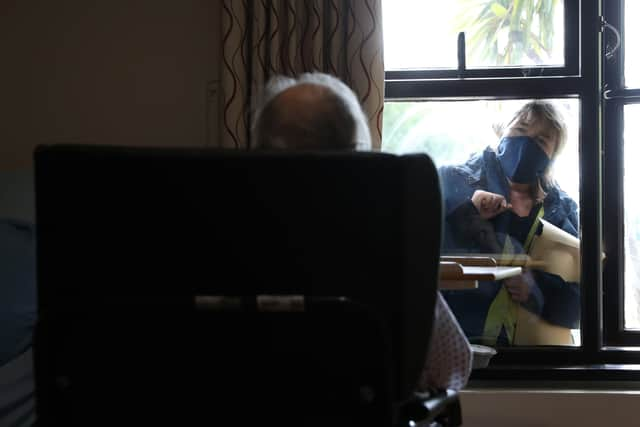
The mantra of protecting the NHS “sometimes came at the expense of the users and providers of care”, the report found, with care homes “becoming prisons” for some amid visiting bans and many residents feeling “abandoned”.
Lady Hallett said the pandemic had “a devastating impact” on carers and those they cared for, and efforts to protect these groups “came too late”, with failures as a direct consequence of “an absence of proper pandemic planning for the adult social care sector”.
Her report said the “failures” set out in her findings “created environments in care settings in which the virus could spread like wildfire”.
There were more than 43,000 recorded care home deaths involving Covid-19 between March 2020 and July 2022, the report said, and inquiry hearings last year heard a civil servant describe the toll as a “generational slaughter within care homes”.
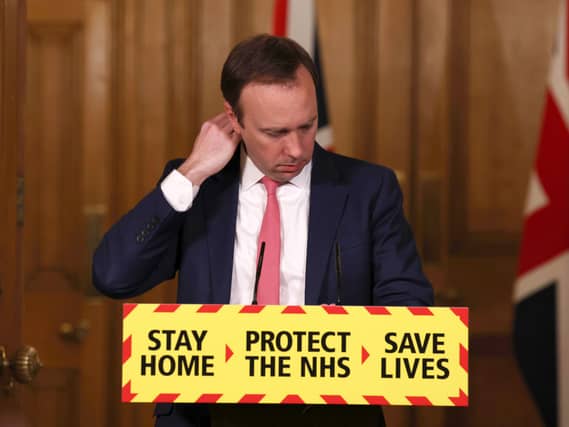
At a Downing Street press conference on May 15, 2020, Mr Hancock – who resigned from government in 2021 after admitting to breaking social distancing guidance by having an affair with a colleague – said: “Right from the start, we’ve tried to throw a protective ring around our care homes.”
Lady Hallett said: “At the critical early stages of the pandemic, not enough was done to protect those living and working in care homes. The claim that a so-called ‘protective ring’ had been thrown around care homes – ‘right from the start’ – was unfounded.
“Quite the opposite was true. During the crucial weeks of March and early April 2020, the overriding focus of the UK government and devolved administrations was on protecting hospitals.”
Mr Hancock declined to comment on Tuesday’s report but has previously defended his handling of an “impossible” situation.
Covid-19 Bereaved Families for Justice (CBFFJ) UK said Mr Hancock’s claim had been a “cruel lie”.
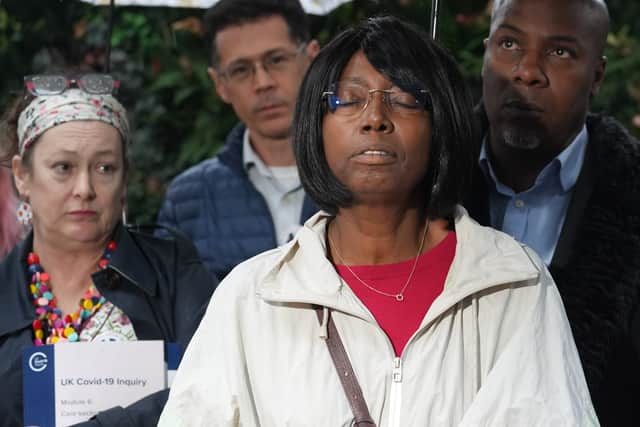
Speaking on behalf of the group, Jean Adamson – the daughter of Windrush pioneer Aldrick Adamson who died having caught Covid in his care home – said the report was “a devastating account of one of the darkest episodes in our country’s history”.
She said: “It shows that the government knew the care sector was extremely vulnerable to a pandemic and yet did nothing. Failing to act until it was too late.
“It shows that Matt Hancock’s claim to have thrown a protective ring around care homes was a cruel lie.
“The most at-risk people in our society, the sick, elderly – many of whom had a full and long life ahead of them – were failed by a government who abandoned them and left them to die.”
But solicitor Nicola Brook, representing more than 7,000 families from CBFFJ described the report as a “superficial damp squib”.
Lady Hallett’s report stated the UK governments had known “of the extreme vulnerability of care home residents to respiratory viruses” but homes “received insufficient protection at the time they most needed it”.
The 287-page report also found:
– Preventing visits to care homes “caused incalculable harm to residents and their loved ones and often resulted in a significant decline in the health and wellbeing of residents”.
– Shortages of personal protective equipment (PPE) for care workers led to some using festival waterproof ponchos, painters’ overalls, and gloves bought online as well as homemade PPE from fabric, bin bags, bed linen and other household items.
– Do not attempt cardiopulmonary resuscitation (DNACPR) decisions “made during the pandemic based on a person’s age, disability or health conditions, or without a personalised assessment to consider the person’s wishes and feelings, caused considerable distress and confusion for the individual, their loved ones and staff”. The inquiry branded this “unacceptable” and said it “must not happen again”.
– Support for the approximately 5.8 million unpaid carers across the UK “came too late”.
– Many of the at least 1.5 million care workers in the pandemic “put their lives at risk to provide care” but a lack of centrally recorded data on the number of care workers who died from the virus “hindered the ability of the UK government and devolved administrations to understand the severity and transmission of the virus and its impact on the social care workforce”.
Lady Hallett said that in the early stages of the pandemic, the adult social care sector “as a whole appeared to be something of an afterthought”.
She added: “The profound isolation and sense of abandonment felt by residents as a result of the visiting restrictions resulted in immense emotional harm. Most distressingly, some people were not permitted to be with their dying loved ones. Many remain wracked by a guilt that they do not deserve to carry.

She said: “The failures were the direct result of an absence of proper pandemic planning for the adult social care sector. It underlines why my recommendations in this report must be acted upon now before the next pandemic strikes.”
Among her recommendations, Lady Hallett called for better pandemic planning by UK governments, ensuring financial support to adult social care staff to self-isolate and for governments to publish guidance on visiting restrictions in care homes based on the principle that residents have the “right to in-person visitors, except in the most grave or exceptional of circumstances”.
She also said there should be mandatory end-of-life care training for health and social care professionals, including around decisions on DNACPRs; and called for a voluntary workforce register for adult social care workers “in order to strengthen the professionalisation and recognition for those working in the care sector”.
Unison, which describes itself as the biggest union in the social care sector, said: “The inquiry’s damning report underlines the urgent need for proper funding, root and branch reform, and decent pay and conditions for social care staff.”
Prime Minister Andy Burnham said the Government is “committed to learning the lessons” from the report on the care sector and pledged to use the findings to develop an “action plan” in case of a future pandemic.
Mr Burnham said he recognised “the pain and suffering caused by the pandemic and the lasting impact it continues to have on many people”.
He added: “The Government is committed to learning the lessons from the inquiry and ensuring the social care sector are prepared for a future pandemic. We will consider carefully the findings and recommendations of the report and respond in due course.”
Health Secretary Yvette Cooper said she agreed with the chair on the point that adult social care had “for too long, been undervalued and under recognised’, that has to end”.
Data published in July showed the public inquiry into the Covid pandemic has cost the Government more than £122 million to respond to so far, including costs for legal advice and dedicated staff working on preparing evidence.
That amount is on top of the estimated £200 million cost of the inquiry itself.