
‘Reprogramming’ immune system could target deadly skin cancer

Early data suggests the treatment could improve survival among those who previously had no hope.
Scientists have “reprogrammed” the immune system of skin cancer patients, helping them to fight the most deadly form of the disease.
Early studies have shown promising results in a new cell therapy for people who had nowhere else to turn when traditional treatments have stopped working.
The first UK patients have joined a global trial assessing whether the treatment could help patients with advanced melanoma that is no longer responding to immunotherapy.
Around two-thirds of patients with advanced melanoma will not benefit from current immunotherapy.
Consultant medical oncologist Dr Yin Wu told the Press Association: “When you get there, it is essentially a death sentence.
“You can salvage maybe 10% of those people with some more lines of therapy, but by and large, there’s no good treatment after that, and these patients will, the majority of them, unfortunately, will die of their disease.”
On the new trial, Dr Wu said: “The early phase data from this are miles ahead of what we would be able to get with standard therapies – a patient who fails first-line immune therapy now, I would give them about a 10% chance of long-term survival. With this, it looks like it could be much more – the early data says about 50% to 60% of patients will respond, and many of those, not all of them, but many of them will respond for many months to years.”
The UK-arm of the trial is being led by King’s College London and Guy’s and St Thomas’ NHS Foundation Trust.
The treatment, a cell therapy called anzu-cel, involves taking T cells – part of the immune system – from patients and “reprogramming” them in a laboratory to recognise and attack a molecule present in cutaneous melanoma.
The molecule, PRAME, is present on cancer cells in around 95% of cutaneous melanoma patients, but it has limited expression in most healthy cells and tissues.
This means that when the engineered cells are then given back to the patient, they will specifically bind to cancer cells presenting PRAME – providing a targeted approach to cancer treatment.
Dr Wu, from the Centre for Inflammation Biology and Cancer Immunology, King’s College London, added: “We’re actually reprogramming every single cell that we take out of the body to see the cancer, and then putting this back in.
“Nearly 100% of cells that are going back into the body have been reprogrammed to directly target the tumour, which is why it’s really effective.”
He continued: “If I took your T cells out, some of them would see flu, some would see Covid, some would see the chickenpox virus and some of them would just be quiet and not doing anything until they’re called upon, but all of those will now be reprogrammed to see the tumour cell.
“So we give them the ‘sniffer’ for this, for this tumour, so all of them are now seeing exactly the same thing.”
Around 400 people around the world will be recruited to the study, including a few dozen in the UK.
The first patients administered the single-dose drug in the UK all have inoperable metastatic melanoma – meaning the cancer has spread to other parts of the body.
In a single dose, patients are infused with around one to 10 billion of these engineered cells.
They will also be given cytokines – a type of protein released by immune cells – to support their immune response.
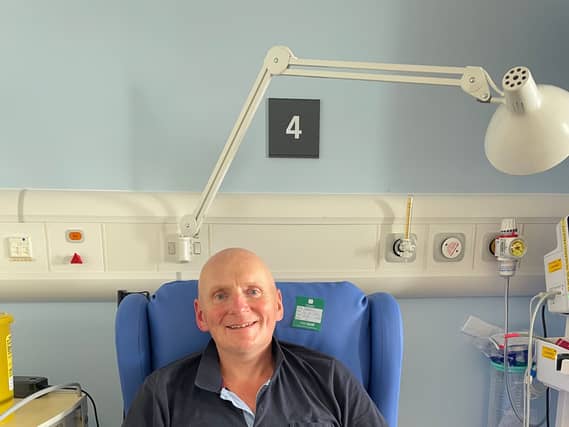
Alex Cameron, 50, from Northwood in London, was one of the first patients in the UK to be given the treatment.
The father of two was diagnosed with melanoma in 2020 when he had two moles removed from his back.
The cancer returned in 2021 and was then found in his kidney in 2024. He was given immunotherapy, but his body could not tolerate it.
Mr Cameron, who works in the military, told the Press Association that he was already back working from home after receiving the treatment in September.
“I had a short time off work to recover and I’m now essentially isolating because the chemo severely weakens your immune system, and so you have to start having your vaccines again.
“I’m isolating really until I can have those in December when I can go back to work.”
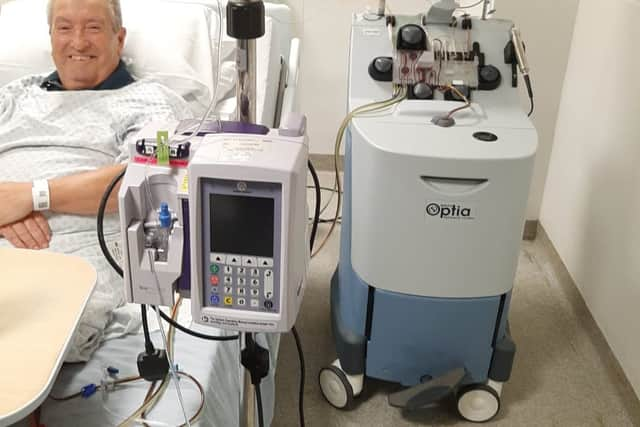
Describing the process of receiving the treatment, he said: “You are plugged up to a machine for the day while they take the white blood cells.
“Then you’re admitted for at least three weeks – the first week is four days of pretty horrendous chemotherapy, and then you have a couple of days rest, and then they give you the T cells and then monitor everything.”
He added: “It was a no-brainer to come on the trial. My prognosis before was basically that I would eventually die before too long. So, this gave me a chance or a bit of hope.”
Kevin Peak, from Stanford-le-Hope in Essex, is another of the first patients in the UK to receive the treatment.
The 66-year-old told the Press Association: “This has given me a chance.”
Mr Peak was diagnosed with melanoma in 2023 and medics removed the big toe on his right foot in a bid to contain the spread of the disease.
But in 2025, the father of two was told his cancer had returned and spread to his lung and groin. He was put on immunotherapy, but it did not work.
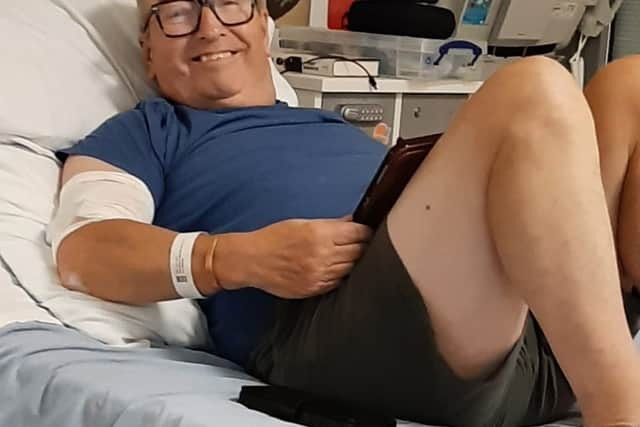
The retired bank worker said that joining the trial has given him hope that he can walk his daughter down the aisle when she gets married next year.
“To be honest, I want my life back, the last two or three years have been a nightmare,” he told the Press Association.
“My daughter gets married in August and my goal has been to walk her down the aisle, earlier this year I didn’t think I was going to be able to do that.”
Dr Debra Josephs, consultant medical oncologist and lead for cell therapies at Guy’s and St Thomas’ NHS Foundation Trust, added: “Seeing meaningful responses with this engineered T cell therapy in patients with advanced melanoma is so exciting.
“This study highlights the potential for cell therapy to become an important new treatment approach for solid cancers and we are delighted to be leading it in the UK, and to be able to offer our patients access to such an innovative treatment.”
Susanna Daniels, chief executive of Melanoma Focus, said: “This innovative, personalised treatment using patients’ own immune cells is very much welcomed by melanoma patients and importantly provides hope.”
The trial is set to roll out at other cancer centres across the country.