
Retailers welcome new UK-EU deal as ‘big win’ for smoother trade
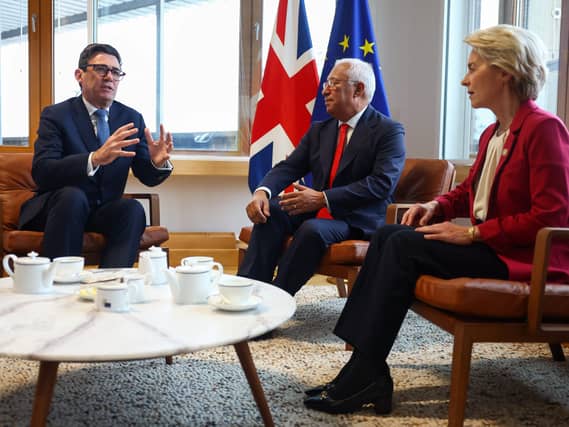

Andy Burnham is in Brussels to agree a deal with the EU in Brussels covering food and agriculture exports, emissions trading and a youth scheme.
Retailers and manufacturers have welcomed Andy Burnham’s new trade deal with the European Union as a “big win” but warned they need “clear and early” guidance from Government to aid the transition.
The Prime Minister has agreed a deal with the EU in Brussels covering food and agriculture exports, emissions trading and a youth experience scheme.
The food and agriculture part of the deal, aimed at ending post-Brexit export checks, would see Britain align with the EU on trade rules on sanitary and phytosanitary (SPS) goods, such as food and plants, from March 2028.
Retailers have broadly reacted positively, heralding the trade deal as something “we need” which will benefit “consumers and suppliers alike” in the UK.
The chief executive of the British Retail Consortium (BRC) called the SPS deal a “big win” for UK retailers but warned that businesses need “at least 18 months” to transition to the new arrangements.
Helen Dickinson said: “Reducing border friction and simplifying trade will cut costs and support smoother trade in food, drink and plants between the UK and EU, including moving goods to Northern Ireland.
“The benefits will be felt across the entire supply chain, from producers and suppliers through to retailers and the millions of consumers they serve.”
“The priority now must be to get the detail right and give businesses at least 18 months, alongside clear and early guidance, to transition to the new arrangements without unnecessary cost or disruption.”
The BRC also told the Press Association that it does not expect to see prices on supermarket shelves fall in response to this deal, even though this is a welcome intervention.
Upward pressures remain heavy and will not be alleviated by the agreement, it said.
The National Farmers Union said they had worked with the Government to secure the deal which “should help” the industry, but warned that it was “only the beginning”.
President of the NFU Tom Bradshaw said that while reducing border friction is welcome, “rebuilding lost exports will take time” as in some cases British products have been replaced by goods from elsewhere.
He added that it was “great news” that the deal includes new agricultural trade specialists in Europe and in England to advocate for British farmers.
The NFU, like the BRC, underlined the importance of implementation, and asked for Government reassurance that UK farmers won’t be disadvantaged.
Mr Bradshaw said: “Reaching this agreement is only the beginning. Its success will ultimately depend on how it is implemented and the UK Government’s ability to influence future EU rules that work for British farmers.”
The managing director of Marks & Spencer Food, Alex Freudmann, said in a blog on Friday that the deal will “remove bureaucracy” from the current regulations.
He wrote: “How hard can it be to get a spaghetti bolognese from a factory in Lincolnshire onto a shelf in Dublin?
“Today, it takes hundreds of extra miles, mountains of paperwork, a vet’s signature and the Latin name of a cow (Bos taurus, if you’re wondering).
“This is what food trade looks like after Brexit. And it’s why we need the UK-EU food trade deal announced today.”
Ryan McDonnell, chief executive at Lidl GB, has said that a closer trading relationship with the EU will “benefit consumers and suppliers alike” and help grow British agricultural and food businesses.
He said: “We warmly welcome the new UK-EU SPS agreement, which marks a significant step toward smoother trade flows and delivers much-needed predictability and efficiency across UK and EU agri-food supply chains.”
A spokesperson for Asda said they also “welcome” the new agreement but said it is “critical” that the Government provide businesses with “clear and timely guidance” to ensure a smooth transition.
The Food and Drink Federation (FDF) said manufacturers were “relieved” by the deal, which will help “rebuild trade” and should help see an end to the border friction, including in Northern Ireland.
Karen Betts, chief executive of FDF, said: “In time, I’m certain the deal will support a welcome rise in food and drink exports to the EU.
“Securing this deal has been an extraordinary team effort by government negotiators and many companies and individuals across our sector, who should be proud of today’s result.”
Mr Burnham has said the deal would be “good for working people, good for Britain and good for Europe”, and claimed it would deliver an economic boost by adding 0.5% to gross domestic product (GDP).
The European Commission chief Ursula von der Leyen said the UK-EU summit in Brussels on Friday was a sign of “good old friends that are rejuvenating the friendship”.
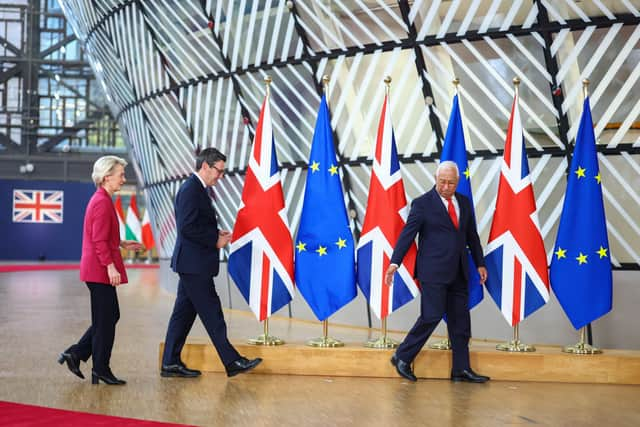
Tensions over the deal remain, with a six-month deadline put on reaching an agreement over EU demands to cut tuition fees for students from member states studying at British universities.
Officials in Brussels had indicated that implementation of the deal announced on Friday could be affected if the tuition fees issue is not resolved.
But the UK insisted the deal is done and dates for when the agreements come into force would be set out in a joint statement with the EU and are not conditional on the fees issue.