
From luxury resort to bomb blast: The story of Bill Fuller’s Teach Furbo


New documentary about the millionaire who dreamed of a luxury resort in Furbo and the bomb that changed everything
In December 1969, an explosion tore through Teach Furbo. It was the beginning of a bitter battle that would reach the Supreme Court.
Now, a new documentary by filmmaker David Burke, whose family roots lie in Cashel, revisits the extraordinary man at the centre of one of Furbo’s strangest chapters - millionaire music promoter Bill Fuller.
At around 4.40am on December 12, 1969, a bomb exploded at the Kerryman’s Furbo hotel.
Mr Fuller acquired the property in 1968 and set about creating something far more ambitious than a conventional venue.
Having built a business empire, he envisaged a luxury resort overlooking Galway Bay, complete with a pier where wealthy Americans could arrive by yacht.
“The original plan for Teach Furbo was that he was going to build this luxury resort in Connemara,” says filmmaker David Burke.
“He was going to build a hotel and there was going to be this huge pier out into the sea and all of these rich Americans were going to park up their yachts.”
-(1).jpeg?trim=548,0,1931,0&crop=&width=640&quality=65)
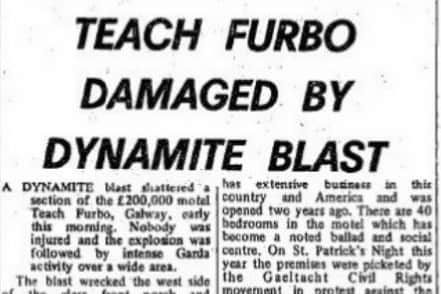
At the time, The Connacht Tribune described Teach Furbo as a £200,000 motel with 40 bedrooms, which had become “a noted ballad and social centre”.
Reporting on the explosion, the newspaper described “a dynamite blast” which shattered part of the premises.
Nobody was injured, but the blast damaged the hotel’s porch and part of the Currach Lounge bar.
Gardaí treated the incident as malicious and an extensive search of the Connemara area followed.
“Someone planted a bomb,” says David. “No one really knows exactly who did it or why. It was never really found out who did it.”
By the time Mr Fuller arrived in Furbo, he had already built a successful career in Britain and the United States.
David’s documentary, 'Have You Never Heard of Bill Fuller?,' tells the story of the businessman and music promoter whose career took him from the Irish dancehalls of London to the US, where he promoted some of the biggest names in music, including Billie Holiday, Nina Simone, Johnny Cash and Willie Nelson.
Having left Kerry for London at just 17, Mr Fuller made a fortune in demolition before expanding his entertainment interests.
He owned 23 music venues including the iconic Fillmore West in San Francisco, The Electric Ballroom in Camden and Manhattan's City Centre Ballroom.
He also owned the Crystal Ballroom on South Anne Street in Dublin, which later became McGonagle’s.
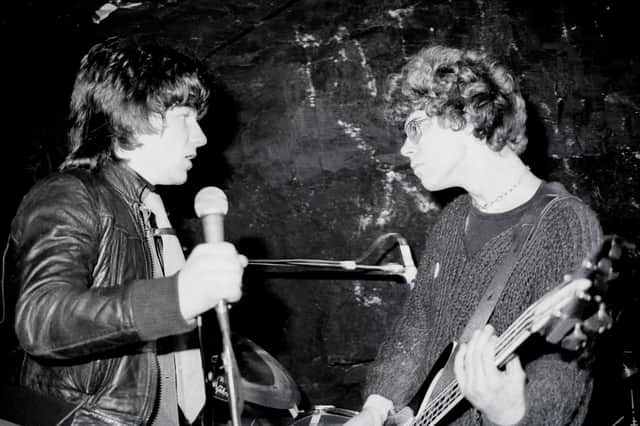
“It's where U2 cut their teeth,” says David. “U2 have a song called the Crystal Ballroom because it is where Bonos parents first met.”
In America, his dancehalls became part of the social world of the Irish diaspora.
“He was always ahead of the game,” says David. “He was a big figure for the diaspora in the USA. He had venues all across the States. Wherever there was an Irish population, he would have had a dancehall.”
Mr Fuller’s connections extended well beyond music. David describes how he knew the Kennedy family and even provided John F Kennedy with the use of an office in Boston.
His arrival in Furbo, however, was not universally welcomed. There was opposition from local B&Bs who believed the new hotel threatened their livelihoods.
“A lot of the locals got very annoyed,” David says.
“They saw this millionaire coming in building this hotel. He was taking from all the local B&Bs. He got the back up of the locals. They were unhappy with that.
“Fuller did whatever he wanted. But he wasn’t able to get final planning permission for the pier.”
.jpeg?trim=108,0,1152,0&crop=&width=640&quality=65)
Business competition was not the only controversy surrounding Teach Furbo. In 1969, RTÉ came to the Gaeltacht to record Bunny Carr’s popular television programme Quicksilver at the hotel. The decision to stage an English-language programme in the Gaeltacht angered Irish-language campaigners, who picketed the hotel and disrupted the recording.
“There was a TV programme being shot in Teach Furbo at the time,” David says. “The locals came out and they started protesting because it was being done through English.
“There were bones of contention with the locals at the time.”
The protest came during growing frustration over the lack of Irish-language broadcasting and formed part of a campaign that would lead to Saor Raidió Chonamara taking to the air the following year.
The Connacht Tribune recalled the controversy in its report on the bombing.
“On St Patrick’s Night this year, the premises were picketed by the Gaeltacht Civil Rights Movement in protest against the staging there of an English entertainment which was broadcast over R.T.E.,” the report said.
After the bombing, Mr Fuller lodged a £20,000 malicious-damage claim against Galway County Council.
For people in Connemara, that raised the prospect that they could ultimately be asked to pay for the damage through their rates.
The Connacht Tribune reported that people threatened with the bill were launching a “full-scale campaign” against paying it.
Protest meetings followed and local representatives engaged legal experts to prepare a case opposing the levy on South Connemara.
“People in Connemara are very annoyed about any attempt to put this on their rates,” said a spokesman for the Gaeltacht Civil Rights Association.
“They will not refuse to pay their ordinary rates but they will not pay any extra levy. We are very determined to fight this. The people will go to jail rather than pay any levy.”
Mr Fuller’s compensation claim eventually reached the Supreme Court in 1973.
By then, the legal issue was not the identity of the person who planted the bomb but Mr Fuller’s entitlement to compensation because of the arrangements surrounding the ownership and operation of the property.
For David, the entire Teach Furbo episode fits with the character and, for the filmmaker, one story sums him up.
When a shop tenant was allegedly slow to leave one of his properties, Mr Fuller - who had made his fortune in demolition - took a characteristically direct approach.
“Bill blew up the building,” David says. “That sums the guy up. People knew not to mess with Bill Fuller. People were scared. They knew not to cross him. He came with a reputation.”
The documentary also uncovers a complicated private life. Mr Fuller had three families, and some of his children spent years unaware of the existence of their half-siblings.
“The mad thing is that they didn’t know about each other for years,” David says. “When he just moved on from one business venture or partner, he was just gone.”
The story also brings David back to his own family connection to Connemara. While David is based in Ennis, his mother’s family comes from Cashel. His grandmother was Bridget Joyce. And there is a curious coincidence linking his family to the subject he would one day make a documentary about.
Decades before the film was conceived, David’s grand-aunt met Mr Fuller in Chicago.
“My grand-aunt met Bill Fuller in Chicago in the ’60s,” Burke says. “And she is from Connemara.”
More than half a century after the explosion at Teach Furbo, one part of the story remains unresolved - who planted the bomb, and why?
“What’s known of Bill Fuller is worthy of a documentary in itself but it’s what he left unsaid that will astonish and surprise audiences until the end,” says David.
“Fuller’s story is intrinsically linked to mass Irish immigration to the UK and the USA in the 20th century.”
The documentary features contributions from Mr Fuller’s family alongside well known names such as Adam Clayton from U2 and Suggs from Madness.
'Have You Never Heard of Bill Fuller?' will be screened at selected cinemas nationwide.