
HSE buying translation devices for foreign patients following €3.8 million Galway hospital bill
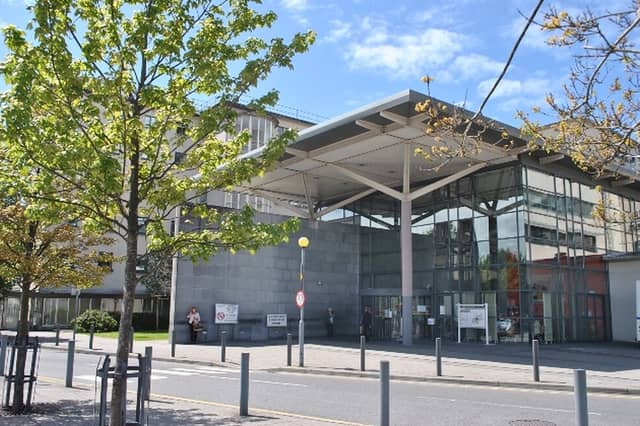

The translation devices will be worn by hospital staff and will be used to communicate with patients in at least 14 languages
The Health Service Executive (HSE) is planning to introduce digital interpretation devices to help hospital and community healthcare staff communicate with foreign patients.
It is currently seeking tenders for the supply of translation devices that can be worn by hospital staff or placed on a counter, where they will be used to communicate in at least 14 languages.
It follows a report by the Connacht Tribune last month, which revealed that Galway University Hospitals (GUH) had spent more than €3.8 million since 2022 hiring interpreters for patients who did not speak English.
Interpretation services were required on 37,862 occasions at University Hospital Galway (UHG) and Merlin Park Hospital during that period, while translators were hired to assist with written documents 82 times.
Those figures showed a 269% increase in spending on interpretation services at the two Galway hospitals between 2022 and 2025, rising from €304,665 to over €1.1 million, with total spending projected to hit €1.4 million by the end of 2026.
The HSE is now looking to award an initial 12-month contract for the provision of two-way translation devices, with an option to extend for another year. It intends to evaluate the technology’s performance during this period.
The devices will need a battery life lasting at least an eight-hour shift, be capable of delivering translations with a delay of no more than three seconds, and operate without requiring patients to download an app or create an account.
At a minimum, the technology must support 14 languages: Ukrainian, Arabic, Romanian, Polish, Brazilian Portuguese, Urdu, Mandarin, Russian, French, Spanish, Lithuanian, Cantonese, Somali, and Pashto.
The HSE stated in tender documents that it should ideally support the Irish language as well.
The devices are intended for routine, low-acuity interactions such as reception check-ins, wayfinding, appointment scheduling, and gathering basic clinical histories. They are not intended to replace interpreters for clinical interactions.
The physical devices must feature a non-porous external surface capable of withstanding repeated cleaning with hospital-grade disinfectant wipes, the tender specifies.
To test accuracy in realistic conditions, shortlisted bidders will be required to bring their proposed devices to a live reception or office environment with typical ambient noise.
Evaluators will test the gadgets using a standard scenario script featuring everyday administrative questions alongside medical terminology, including queries about ear wax microsuction, warfarin tablets, and family histories of vertigo.
The devices will not be used for high-risk scenarios, such as mental health assessments, child protection issues, conversations with under-18s without parental supervision, or obtaining patient consent for medical interventions.
Elsewhere, St. James’s Hospital in Dublin published its own tender earlier this year for technological assistance after hiring interpreters 9,382 times in 2025, predominantly for Ukrainian and Russian speakers.