
Novice Galway rower to cross the Atlantic in 12-man boat over six weeks

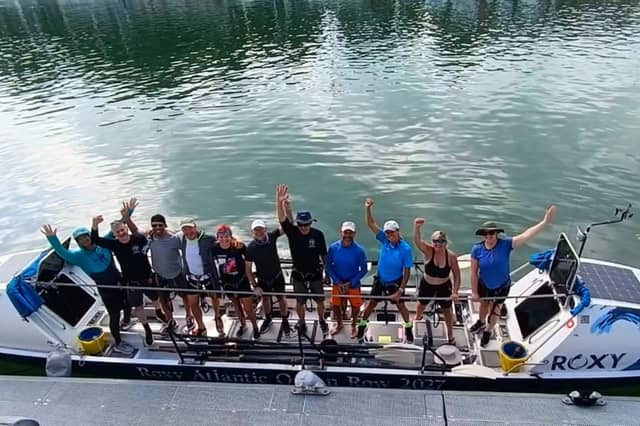

The group will row, eat, sleep and live together in the tiny confines of the RX80 rowing boat as they navigate the 2,800 nautical mile journey from Tenerife to Antigua.
By Denise McNamara
Clara Conneely is a woman who revels in tough challenges that test her mettle physically and mentally.
Past adventures include finishing the 2022 Cork Ironman, swimming the English Channel as part of a six-woman relay team in 2023 and climbing Kilimanjaro in 2025.
The 39-year-old is now about to take on the most precarious test yet after signing up to rowing the Atlantic from Tenerife to Antigua as part of an unsupported crossing.
And she does this without any previous experience of rowing.
There will be up to 12 people rowing in shifts of three hours on, three hours off, for six to seven weeks, overseen only by a skipper and co-skipper who have completed the feat before.
The group will row, eat, sleep and live together in the tiny confines of the RX80 rowing boat as they navigate the 2,800 nautical mile journey. There are six rowing positions and eight berths that Clara describes euphemistically as “cosy”.
A keen swimmer who hails from a family steeped in fishing in Roundstone, Clara only started rowing with the Stella Maris Rowing Club in Dublin after signing up for the Roxy Expedition run by UK company Rannoch Adventures a year ago.
Her interest in an ocean rowing voyage was sparked by a documentary about Ben Fogle and James Cracknell over a decago ago. More recently she was inspired by other Galway rowers, Damian Browne, Karen Weekes and Daragh McLoughlin.
“I have done it backwards alright,” admits the Dublin-based property manager.
“We had a training week in August and that was tough, we had 24 hours non-stop rowing and then had a break. It was a steep learning curve. Eight of the 11 of us were sick. They say the first week is the toughest, so if we can get past that we'll manage it.
“The longest we get to rest is three hours, the only time we would stop rowing is if it was so rough we have to be strapped to a power anchor.”
“The longest we get to rest is three hours, the only time we would stop rowing is if it was so rough we have to be strapped to a power anchor.”
There are 11 strangers taking part after another rower dropped out due to ill health – there is one rower from Ireland, another from Norway, two from Switzerland and the remained from the UK.
As well as rowing with her club, she has rented a rowing machine for her home and plans to up the training hours over the next few weeks.
“I'm doing an hour and a half here and there, I'm mixing swimming, running and other bits and pieces. I'm not as fit as I'd like but that would be the same if I was doing a 5km or a marathon. I'm trying to ramp up the training but you have to do it slowly to avoid injuries.”
Clara flies to Tenerife after Christmas and they will be off weather permitting on January 3.
She is covering the €20,000 cost of the expedition herself with some sponsorship, including from her work and her dad Pat and brother Patrick's fishing business, Roundstone Sea Angling.
She is also using the opportunity to raise money for the RNLI and any donations given will go directly to the charity which saves lives at sea. So far €2,487 has been donated by 22 supporters.
While they cannot control the weather, any issue on board has to be addressed by the crew.
“This is the time of the year least likely to be affected by hurricanes. The company have done four or five of these expeditions and have completed all to date. It's obviously quite a niche sport. I felt a solo row was too hard, I like the idea of a team working together. Hopefully we'll have a bit of craic on the boat chatting, if something does go wrong I won't be alone in making the decisions,” she reflects.
“We are strangers effectively. Hopefully we'll be good friends at the end of it. It is a once in a lifetime type of thing. I've a partner at home and family who are naturally a bit worried but the company are fully focused on safety. There is danger, but I'm trying to focus on the positives.
“To be fair, the organisers seem to be very organised, you have to wear a harness any time you're on deck so if you fall you don't drift off and the boats are designed to self-right if they do capsize.”
To donate search: Clara Conneely JustGiving Fundraiser.