
Retention refused for west Mayo house at centre of neighbours dispute

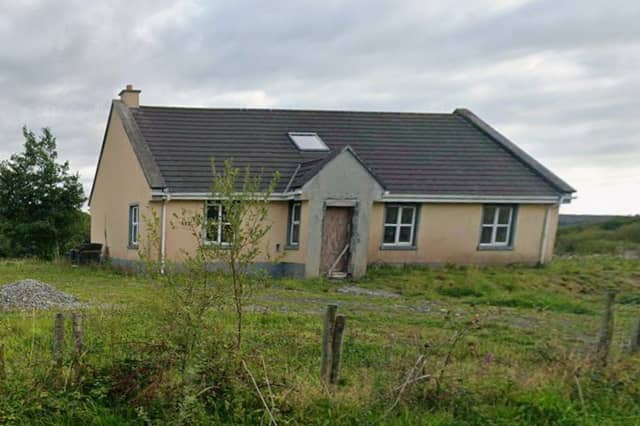

Mayo County Council refuse application to retain and complete a house near Louisburgh which is at the centre of a land ownership dispute
A planning application to retain and complete a dwelling house situated close to disputed land in west Mayo was refused as the current site is smaller than what was originally granted planning permission for.
Mayo County Council refused planning permission to Dublin-based company, Louisburgh Town Trust Ltd to retain and complete a dwelling house as well as a wastewater treatment system in the townland of Callacoon approximately 2km south of Louisburgh.
Planning permission for the house was granted to the previous landowner, Michael Mulvey in the early 2000s and retention was granted in 2006 for the building on revised site boundaries. The building was built but now appears to be derelict.
In a submission to Mayo County Council on behalf of Mr Mulvey and another neighbour, Geraldine Faherty by Kevin Brandon of Brandon O'Brien Consulting Engineers, Mr Brandon claimed there is an ongoing dispute between the applicanat and his neighbours in relation to the ownership of part of the lands located south of the site where the house is situated. The submission stated that the site where the building was located was sold to the applicant in 2024 but Mr Brandon claimed that the percolation area for the house was not part of the site sold.
Mr Brandon claimed that the applicant purchased the site in 'full knowledge' that he had to purchase part of another folio where the percolation area exists to comply with the existing planning.
“The required land...was made available to the applicant to purchase but negotiations collapsed in 2025,” the submission read.
Mr Brandon also claimed that the development description is 'inaccurate and misleading' as he claimed there is no retention for the previous wastewater treatment system and the development description should 'specify a new wastewater treatment system is proposed'.
The size of the site was also raised in the submission where Mr Brandon outlined that the site submitted by the applicant is 700 square metres smaller than the initial site granted retention in 2006 and below the minimum site size for a rural site.
Mr Brandon outlined a number of reasons for why the application should be refused and stated that 'any one of these reasons taken in isolation is prudent grounds for refusal of the application'.
“Taken in combination this is an application which wholly fails to comply with good planning practice and orderly development. Granting permission to this significantly flawed application would set a concerning precedent and it should not be permitted,” he stated.
A pre-planning meeting took place between Tommy Lyons, a Director of Louisburgh Town Trust Ltd and Pat O’Sullivan, Executive Planner with Mayo County Council in June 2026.
In the planning report, planners for Mayo County Council outlined that the design of the existing dwelling house on site is considered acceptable and complies with the current Mayo Rural Housing Design Guidelines.
However, the planners also noted a report which states that the site area is now restricted, and the original percolation bed is now outside the boundary of the site.
“The report states that there is a risk to surface and ground water, and a risk to Bunowen river draining into West Connacht Coast SAC,” the planners stated.
The local authority planners recommended that the application be refused stating that the proposal as presented fails to meet the minimum site size requirements as set out in the Mayo County Development Plan 2022-2028 and if permitted would set a precedent which would 'interfere with the character of the rural landscape which it is necessary to protect'.
Planners also stated that the applicant has failed to establish that the proposed effluent treatment system would not have a negative impact on water quality and public health.