
Official says WHO does not know how lab worker in Russia died in plague case
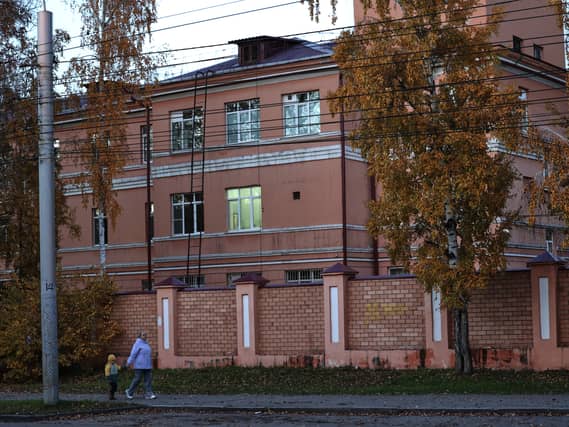

Maria Van Kerkhove said the agency did not know what the ‘causative agent’ was behind the woman’s October 2 death.
A top official with the World Health Organisation (WHO) has said the UN health agency does not know how a laboratory employee in Siberia died amid concerns about plague, and she called on Russia to provide more information.
Maria Van Kerkhove, WHO director of epidemic and pandemic management, said the agency does not know what the “causative agent” was behind the woman’s October 2 death, and “this is why we need more information”.
In its official statements, Russia’s public health watchdog, Rospotrebnadzor, does not link the case to pneumonic plague, saying only that “extensive” testing found no evidence her illness was caused by any of the pathogens she worked with at the Irkutsk Anti-Plague Research Institute of Siberia and the Far East.
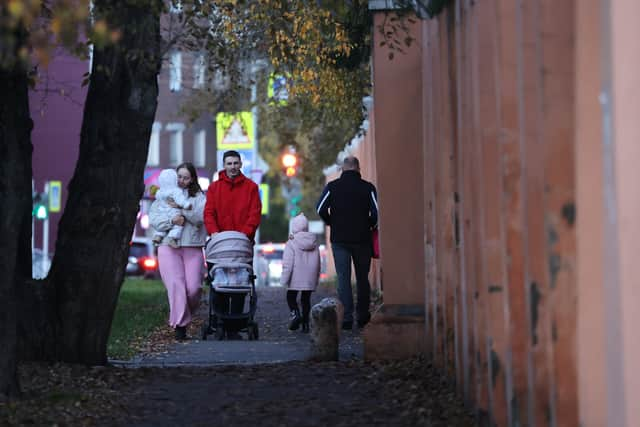
Russia has said the woman died of pneumonia – a “typical” acute respiratory viral infection – and its health authorities have found no cases of plague recently, WHO has said, acknowledging that pneumonia is commonplace.
“We don’t understand how she was infected,” Ms Van Kerkhove said.
The comments from the UN health agency suggested it has more questions than answers about the situation at the lab, which focuses on plague and was founded about a century ago to study the disease in a region where it is endemic.
Since last week’s suspicious death of the laboratory worker, Russian authorities have kept a tight lid on information about it.
The incident has been surrounded by secrecy and claims that it could have been caused by pneumonic plague.
While the case has raised global concerns, Russian state TV and other national state-controlled media have steered clear of the subject. Some state-sponsored news outlets withdrew earlier reports about the case.
Rospotrebnadzor said on Sunday that the laboratory worker was diagnosed with “pneumonia of unknown etiology”, meaning its origin was not known.
A state TV station in Irkutsk reported she died on October 2 in a hospital in Shelekhov, a town just outside Irkutsk.
Officials have quarantined a hospital and are monitoring the contacts of the worker, who died of what unconfirmed media reports said could have been pneumonic plague — a less common but severe form of plague that can spread from person to person.
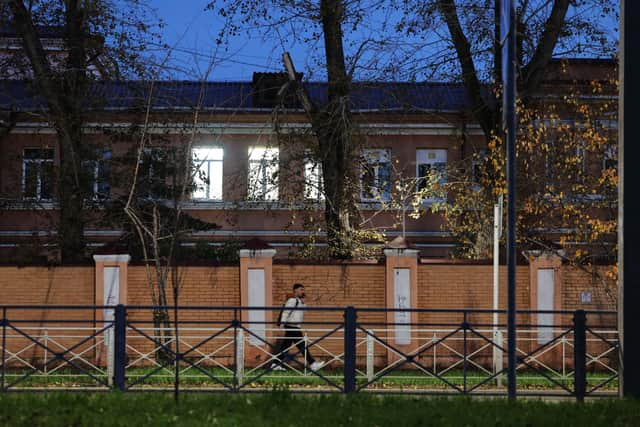
Moscow informed the WHO that no case of plague has been registered in the Irkutsk region in south-eastern Siberia.
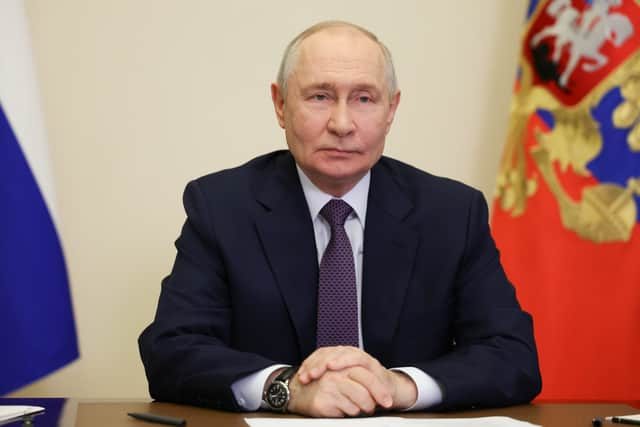
US President Donald Trump said on Tuesday that he would speak about the issue “very soon” with Russian President Vladimir Putin and report about it “probably tomorrow”. Wednesday is the Kremlin leader’s 74th birthday.
Kremlin spokesman Dmitry Peskov said on Wednesday that a Putin-Trump call had not been set yet but could be organised quickly.
Mr Trump said the US stands ready to help Russia.
Asked what the US intelligence community was saying about the case, Mr Trump said the US was in “very deep discussions” on the topic.
In response to the WHO’s request to clarify the situation in view of media reports alleging pneumonic plague as the cause of death, Russia has declared that no case of plague had recently been registered in the Irkutsk region, the UN organisation said.

Russian health authorities reported a full range of preventive measures had been carried out — including tracing the dead woman’s contacts, medical monitoring and lab tests, the WHO said on Wednesday.
The Russian note relayed to The Associated Press by the WHO said the test showed “no presence of dangerous infectious disease pathogens in any of the contacts”.
The Geneva-based organisation said it has requested further information to clarify the cause of the severe pneumonia, the pathogen that prompted the public health measures, and media reports that a second employee had pneumonia of undetermined cause.
The organisation said it has remained in contact with Russian health authorities and offered technical support.
Mr Peskov referred all questions to Rospotrebnadzor, which does not mention suspected plague in its reports.
In its latest statement on Tuesday, the agency said “the sanitary and epidemiological situation in the Irkutsk region, the cities of Irkutsk and Shelekhov is calm”.

Authorities were completing a “complex of prophylactic measures and medical observation over contacts”, it said, adding that so far they have found two cases of Covid-19 and two cases of rhinovirus.
“No other infectious pathogens have been found among contacts,” it said.
Judy Twigg, professor of political science at Virginia Commonwealth University, noted that while the measures taken by Russian health authorities “have been swift and serious”, officials sought to play down the situation and “any statements that strayed from that party line… were edited or deleted within hours”.
“What we are watching is less a failure to respond than a failure of candour,” Ms Twigg said in written comments.
Vasily Vlassov, professor at the department of healthcare administration and economics at Russia’s Higher School of Economics, said the measures taken appeared “sensible”, focusing on treating the sick, isolating them and their contacts, looking for new cases and carrying out final disinfection.
But he said it was not clear whether more transparency was possible if those dealing with the situation did not have enough certainty, and “maybe, they still don’t”.
Deceiving the public in these cases “always turns out to be harmful”, he added, and distrust of Russia’s official narrative is “natural” and “almost inevitable”.
In the Soviet era, crises with dangerous outbreaks of infection had “a thick veil of secrecy — people were told nothing”.
The “massive” restriction and isolation measures were “almost always completely successful”, he said.
The news outlet Lyudi Baikala — or “People of Baikal” — identified the dead laboratory worker as 28-year-old Darya Shipilova and said she first was admitted to hospital with cold symptoms on September 29 and died three days later.
It quoted her colleagues as saying she was a highly qualified and diligent researcher.
They also emphasised that security rules at the facility, established in the 1920s to monitor and study the plague that is endemic to south-eastern Siberia, are extremely strict.
The report quoted Ms Shipilova’s neighbours as saying a team of disinfection experts did several clean-ups of her apartment, leaving a strong antiseptic smell.
Ms Shipilova’s mother, who worked as a doctor in the past, described her daughter as hard-working and dedicated to her job, according to independent Russian news outlet Glubina, adding that she had not received official documents describing the cause of death.
Irkutsk governor Igor Kobzev said she died of a “particularly dangerous infection” and everyone who came into contact with her has remained under medical supervision.
The hospital where she died was under quarantine, no longer admitting or discharging patients, although its outpatient clinic has continued operating, according to mayor Maxim Modin.
Ms Twigg noted that Russia has criminalised “false information” about threats to public safety in 2020 amid the Covid-19 pandemic, “so silence is the one safe move for everyone below the top”.
“Personalist regimes without electoral accountability tend to treat bad news as a loyalty problem rather than focusing on the actual problem to be addressed,” she said.
She warned that “a government that is not believed when it says ‘there is no outbreak’ will not be believed when it must actually say ‘there is one; do the following’. We saw this with Covid.”