
Remains of medieval ruler Tsar Samuel returning to Bulgaria
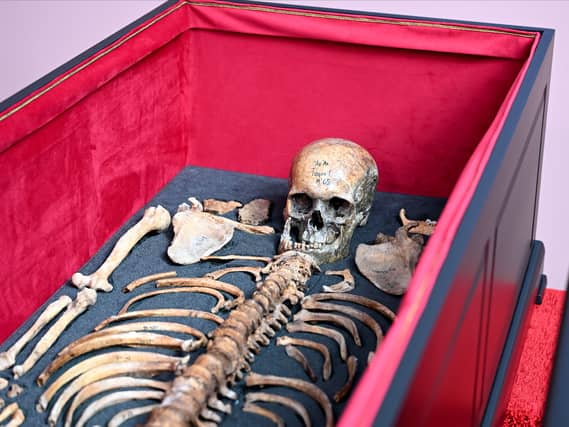

Greece is returning the remains of the symbol of Bulgarian national identity after decades of negotiations.
The remains of medieval ruler Tsar Samuel are arriving in Bulgaria, after decades of negotiations with neighbouring Greece.
Samuel was a warrior ruler who battled the Byzantine Empire to expand his kingdom, but was ultimately defeated and died shortly afterwards in 1014.
He is considered a symbol of Bulgaria’s national identity.
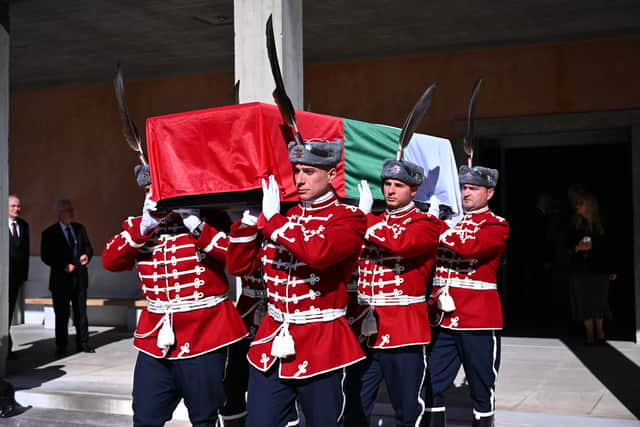
The remains – discovered in a Greek border area 60 years ago – are to be flown to the Bulgarian capital, Sofia, aboard a military aircraft to be received with full state honours, including a fighter jet escort, a 21-gun salute and a procession to the Church of St Sophia, where the public will be able to pay their respects.
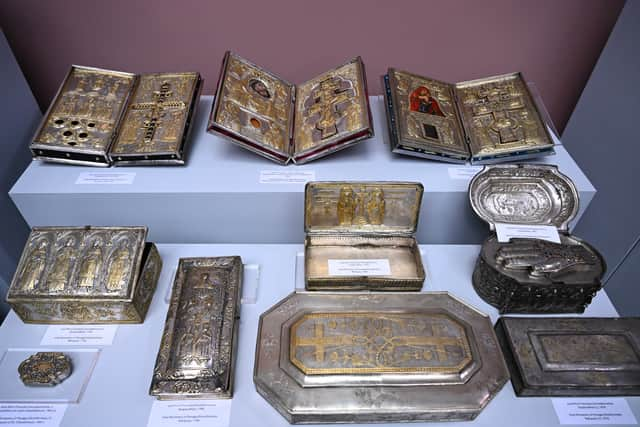
Saturday’s handover follows an agreement earlier this week between the two countries’ culture ministers, under which Bulgaria will return religious relics taken from Greek monasteries during the First World War.
Several prominent Greek academics and religious leaders have criticised the arrangement as inadequate on the Bulgarian side.
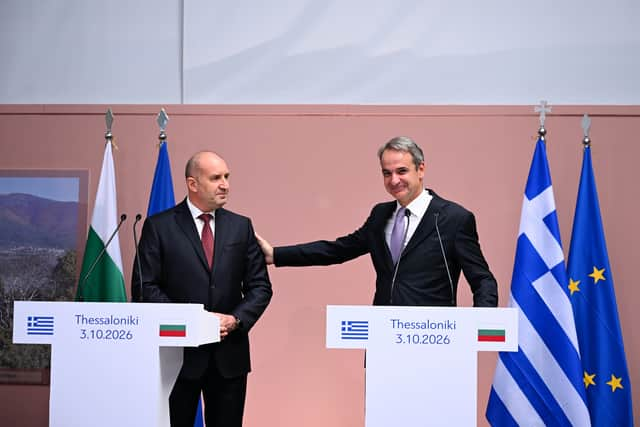
Greek prime minister Kyriakos Mitsotakis and his Bulgarian counterpart Rumen Radev attended a ceremony at Thessaloniki’s Museum of Byzantine Civilisation, where the remains were kept, before the handover.
“These are items that belong to both our peoples; they constitute our memory and our bond, and our compatriots and future generations deserve and must have the opportunity to pay tribute to their ancestors,” Mr Radev said, speaking at the ceremony in Thessaloniki’s Museum of Byzantine Civilisation.
“If in the past Tsar Samuel divided us, I can say that today he unites us. He strengthens our strategic cooperation and makes the historical relations between our states and peoples even stronger.”
Mr Mitsotakis said he hoped Saturday’s ceremony would bolster Greece’s international campaign to return the Elgin Marbles, a collection of 2,500-year-old marble sculptures taken from the Acropolis in Athens and later displayed in the British Museum.
“The global community is essentially re-evaluating its long-standing stance on protecting cultural heritage,” Mr Mitsotakis said.
“This shift is embodied by today’s initiative, which rests on the obvious principle that monuments and historical heirlooms cannot be treated as spoils of war, nor as the result of circumstances subsequent to their creation.”