
Louth people urged to support Multiple Myeloma fundraiser

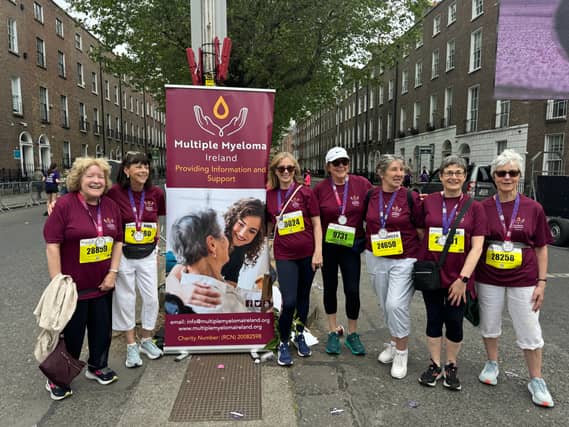

Walkers, runners, cyclists and swimmers across Louth are invited to take part
Irish cancer charity, Multiple Myeloma Ireland (MMI), has called on the people of Louth to support its “Miles for Myeloma” campaign aimed and raising funds and awareness around the blood cancer, Multiple Myeloma.
MMI said walkers, runners, cyclists and swimmers across Louth are invited to take part in the virtual event running throughout September. The inaugural event is open to patients, family, friends, health care practitioners and local communities who are encouraged to set goals to promote exercise, raise funds and spread the message of living well with Multiple Myeloma.
According to MMI there are approximately 350 new cases of multiple myeloma diagnosed in Ireland every year. But the organisation is keen to have a data base established to properly track the cases. MMI Board Chair member, Mary Kelly, said: “Unfortunately, despite the fact that people with the proper treatment can live very well with Multiple Myeloma and for a long period, there is still a huge fear factor around it, with people presuming the worst on diagnosis.”
She added: “Thankfully with improved treatments people can have a good quality of life and can live well with this disease. But a lot more needs to be done to raise awareness. A data base tracking cases and seeing how well and how long people are living with the disease is very important and will help banish a lot of the disinformation around it.”
The most common early symptom for Multiple Myeloma is bone and back pain that persists and progresses, despite the use of painkillers. Other symptoms can include weight loss, fatigue, malaise and increased frequency of infections over several months.
Haematologist, Professor John Quinn, said a diagnosis of multiple myeloma is typically made after blood and/or x-ray tests. “The most frequent signs of multiple myeloma in blood tests are raised blood calcium levels, kidney impairment, anaemia and abnormal protein in the blood and/or urine. In addition, X-rays and CT and MRI scans can show fractures or bone weakness.” he said.
Multiple Myeloma is mainly found in people in their mid-60s and is slightly more common in men. The disease is very rare in young people with just 2% of cases arising in those under 40 years.
Professor Quinn said it is important to emphasise that treatment options have improved dramatically in the last 25 years. “While it is still regarded as an incurable blood cancer, patients are living longer and longer.” he said.
A typical treatment regimen for those with multiple myeloma includes a stem cell transplant, ongoing chemotherapy, steroids, and antibody injections. Multiple Myeloma can be delivered in a haematology day ward where patients will receive regular infusions which reduce bone pain and the risk of further fracture.
The Miles for Myeloma challenge is aimed at raising funds for Multiple Myeloma research, but also to raise awareness of the disease. Details of fundraiser are as follows:
-
Plan your Miles for Myeloma challenge – walking, running, cycling, swimming or a combination. Cover the distance in your own time at your own pace.
-
Register your event using the online form.
-
Set up your iDonate fundraising page to receive a t-shirt and get started!
-
Don’t forget to share your progress and photos and tag @multiplemyelomaireland.
Link to the general registration page: https://www.idonate.ie/event/milesformyeloma