
SCSI says the average cost of delivering a new three-bed semi in Louth is €397K


Society of Chartered Surveyors Ireland publishes ‘The Real Cost of New Housing Delivery 2023’
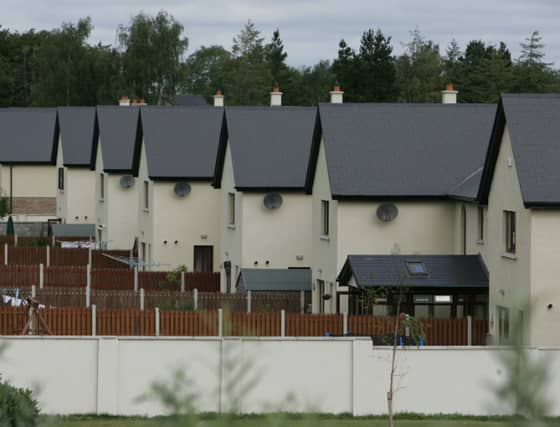
A new report has found that the average cost of delivering a new three-bedroom semi-detached house in a multi-unit scheme in Louth is €397,000, which is also the national average cost of delivering this house type across seven regions by the private sector.
Nationally the cost ranges from a low of €354,000 in the Northwest to a high of €461,000 in the Greater Dublin Area.
The report, which has been published by the Society of Chartered Surveyors Ireland (SCSI) found the national average cost of delivering this house type is €386,000 when the Dublin region is excluded.
The SCSI’s ‘The Real Cost of New Housing Delivery 2023’ report, which was launched recently at the SCSI’s national conference in Croke Park says the average cost of delivering a 3-bed-semi-detached home in the Greater Dublin Area (GDA) has increased by over €90,000 to €461,000 over the last three and a half years.
This is an average increase of 24% on the €371,000 it cost to build the same house in 2020 and an average increase of 39% since the SCSI published the first edition of this report in 2016 when the cost of building an average 3-bed-semi was €330,500, in the Greater Dublin Area.
According to the report, the increase over the last three years in the GDA has been largely driven by a rise in ‘hard costs’ – bricks and mortar – up 27% or €49K on average while ‘soft costs’ – land, development levies, fees, vat, margin – increased by 21% or €41K.
Chartered Quantity Surveyor Micheál Mahon, one of the report's authors, said the impact of Covid and the conflict in Ukraine have been the main contributors to the increase in ‘hard costs’ over the past two years.
“‘Hard costs’, which includes house building costs, siteworks, and site development, ranged from just over €198,000 in the Northwest region to just over €228,000 in the GDA, representing approximately a 15% differential.
“The main hard cost drivers have been energy, fuel, and shipping costs. The cost of various building materials, particularly concrete, insulation, electrical and plumbing products, steel reinforcement, and timber products, also increased dramatically. Nationally, ‘hard costs’ now comprise 53% of the total costs of overall delivery, while ‘soft costs’ make up the remaining 47%. However, in the GDA, this balance shifts to 49% ‘hard costs’ and 51% ‘soft costs’. While cost inflation has increased very significantly in recent years, recent SCSI surveys indicate prices are levelling off.
“’Soft costs’ range from approximately €156,000 in the Northwest region to just over €233,000 in the GDA. The primary soft cost drivers have been land costs, financing due to higher interest rates, levies and an uplift in the cost of professional fees. On a national basis, land and acquisition costs (per unit) equate to 13% of overall delivery costs on average.”
Viability
Using average market value data of new three-bedroom semi-detached properties across the various regions, the report assessed the financial viability of new home building in different parts of the country. Financial viability is determined by subtracting market value from overall delivery costs.
The research shows that financial viability, on average, is most challenged in areas of lower market values. The region where this challenge is greatest is in the Midlands region, where the average viability gap is €52K, followed by the Cork region, €50K and then the Northeast region, €45K.
The two areas where the construction of a new 3-bed-semis is most viable on average is Galway and the Greater Dublin Area.
Affordability
In the report, the SCSI also examined affordability from the perspective of a first-time buyer with an average combined salary of €95K taking out a mortgage with the support of the Help to Buy scheme.
This analysis showed that the Midlands and the Northwest are the most affordable regions for purchasing a new home using averaged market value data. The most unaffordable regions to the average first-time buyer are the GDA region, Galway region and the Cork region.
The combined average combined minimum salary levels required to purchase a new 3-bed-semi-detached house in Louth is €96K based on an average 3.3 times Loan to Income Limit. The corresponding figure for the GDA is €127K, in Cork its €104K while in the Northwest its €70K. The maximum first-time-buyers can borrow at is 4 times LTI, and in that situation the combined salary level figure required in Louth is €79K.
Despite the challenges, Mr Mahon said the SCSI’s analysis showed that Government supports aimed at addressing viability and affordability are making a noticeable impact.
Recommendations
The President of the SCSI, Enda Mc Guane, said that the report recommends that more needed to be done to support Modern Methods of Construction, pause future increases to connection charges and levies, as well as ensure the planning process is fit for purpose to de-risk development and bring down cost, which potential homeowners ultimately pay.
“While there has been a significant increase in the supply of new housing towards current ‘Housing for All’, it is important that we update those targets considering Ireland’s population increases. ‘Housing for All’ targets were based on the 2016 census, and the population has grown by 8%. Therefore, targets need an immediate revision based on the most up-to-date census figures.”
“When setting and committing to new targets, we would also urge the Government to establish new targets for the number of units delivered by off-site construction. This will facilitate a more efficient and sustainable use of resources through the rollout of Modern Methods of Construction.”
“Increasingly, we are seeing the viability of developments that receive planning permission impacted by design or density requirement conditions. We believe financial viability should be required within the planning permission process, especially concerning planning conditions imposed as parts of grants.
"The SCSI welcomes proposals to increase densities within new housing estates in the draft Sustainable and Compact Settlements Guidelines to help make suburban sites more viable by reducing the requirement for expensive apartment buildings in such estates.”
“On the cost side, we would like to see the continued pausing of development levies made a long-term policy while improvements must be made to the utility connection process to reduce costly and time-consuming delays.”
“The affordability scenarios included in this report show the First-time buyer challenges in certain locations. The SCSI believes the Department of Housing, Local Government and Heritage should review the First Homes Scheme purchase price ceilings to ensure the shared equity scheme is accessible to average market values for each county.
"The price ceilings should then be adjusted in line with construction inflation to avoid the ceilings becoming inaccessible in the future.”