
6 common summer rashes – and how to treat them
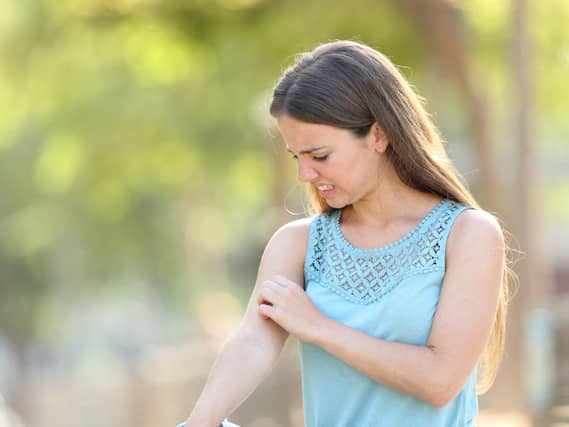

It can be tricky to know what type of rash you have.
Although the current warmer weather is a great mood booster, the combination of heat, sweat and friction creates the perfect environment for a number of common skin rashes.
Common culprits like heat rash and contact dermatitis tend to share red, itchy symptoms, but they do differ by cause and location.
We spoke to Dr Alison Grimston, GP, functional medicine doctor and head of women’s health at Dr Finlay’s Private Practice, who highlighted the symptoms and causes of six common summer rashes, and shared some treatment options.
1. Heat rash
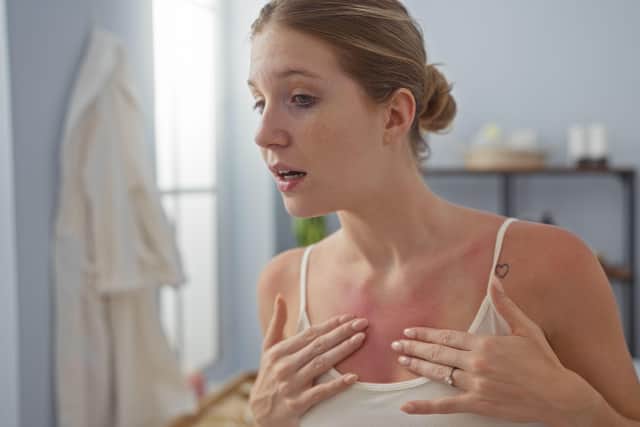
“Heat rash is related to blocked sweat ducts which causes small, itchy red bumps that are usually on the neck, chest and back,” says Grimston.
“The best way to manage a heat rash is to keep cool, wear loose clothing and have cool showers. It should usually settle on its own.”
2. Polymorphic light eruption
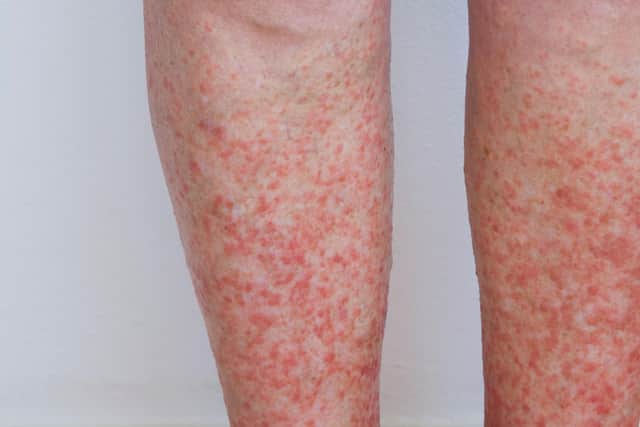
People often mistake polymorphic light eruption for heat rash because both cause itchy, red bumps, but they are triggered by different things.
“Some people have a sun allergy called polymorphic light eruption,” says Grimston. “This often appears when you go on your first sunny holiday or in spring or early summer.”
The rash may have small raised spots or blisters, have larger blotchy areas, be itchy or feel like it’s burning and be red or pink, according to the NHS website.
“It usually occurs on the chest, arms and shoulders – anywhere that’s exposed to the sun,” says Grimston.
She notes that sun protection factor (SPF) creams and exposing yourself to the sun gradually are the best ways to prevent it.
“Don’t spend all your first day on holiday in the sun and wear loose cotton clothing,” advises Grimston.
The NHS website also states that a pharmacist can recommend some treatments, such as emollients and antihistamines.
3. Contact dermatitis
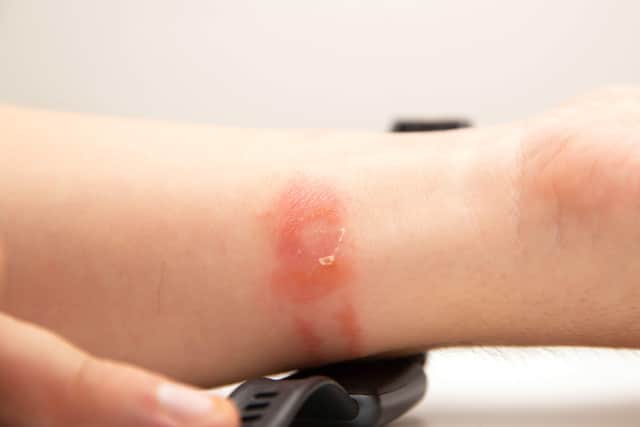
Contact dermatitis is a type of eczema triggered by contact with a particular substance, according to the NHS website.
“Summer triggers can include sunscreens, fragrances and chemicals in a swimming pool,” says Grimston.
The NHS website states that symptoms of allergic contact dermatitis can range from mild redness and itchiness of the skin, to skin that becomes cracked, filled with fluid, extremely itchy and has a stinging sensation.
It usually improves or clears up completely if the substance causing the problem is identified and avoided.
“Read the ingredients on sunscreens and try to use as natural a sunscreen as possible,” recommends Grimston. “Emollients can also help, and sometimes you might need a mild steroid cream to help it to settle.”
4. Insect bites

“Warmer weather means more time outdoors, exposing us to mosquitoes, midges, horseflies, wasps, and bees,” says Grimston.
“Insect bites usually present in a raised red, itchy bump that has local swelling and warmth around the bite, and occasionally blistering.”
The GP recommends washing an insect bite with soap and water and applying a cold compress to the affected area for 10-20 minutes.
“Avoid scratching as that can damage the skin and increase the risk of secondary infection,” she adds. “Oral antihistamines can help if itching is troublesome, and a mild topical hydrocortisone cream, that you can buy over the counter, can help reduce inflammation.”
5. Swimmer’s itch

“Swimmer’s itch, which is also called cercarial dermatitis, is an allergic skin reaction caused by tiny parasites called cercariae, released by certain freshwater snails,” says Grimston.
“These parasites normally infect birds and can’t survive in humans, but they can penetrate the outer layer of the skin and trigger an immune response.
“Symptoms include tingling or burning shortly after leaving the water, itchy red spots or small raised bumps and occasionally tiny blisters. It usually develops within hours and settles over several days.”
The GP recommends showering after swimming, towel drying vigorously after leaving fresh water and avoiding known affected lakes during outbreaks to avoid this.
“Treatment options include cool compresses, emollients to soothe the skin, oral antihistamines for the itch and a mild topical steroid cream if needed,” says Grimston.
6. Intertrigo
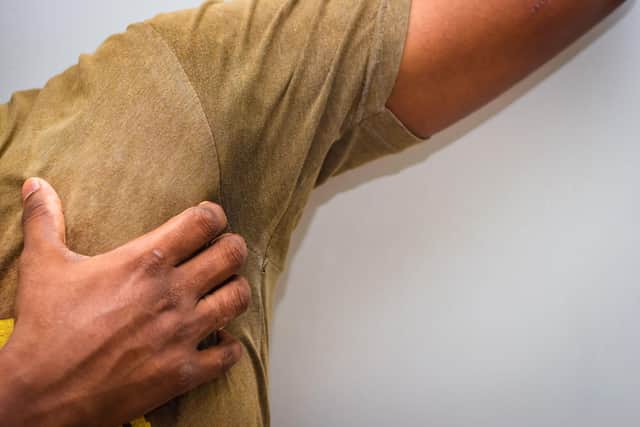
“With intertrigo, inflammation develops when skin rubs against skin,” explains Grimston. “It’s common under the breasts, in the groin and between abdominal folds.
“It can also occur in the armpits, between the buttocks, between the toes and even inside the belly button.”
Summer conditions make it worse.
“In the summer you’ve got heat, sweating, friction plus reduced airflow, and that damages the skin barrier, especially if it’s staying damp,” says Grimston.
“Staying damp is very bad for the skin and can make it macerate or get compromised.
“This can led candida overgrowth, which is the fungus that causes thrush, and it can also cause proliferation of bacteria, so you can often get a secondary bacterial infection where it gets even worse.”
There are several symptoms to look out for.
“Symptoms include red rash, burning, itching, or soreness, and occasionally you can get a cracking,” adds Grimston. “If there’s a secondary bacterial infection, you may get an unpleasant smell.”
If you develop these symptoms, the GP highlights the importance of keeping the affected area cool, clean, and dry.
“You need to wear loose cotton clothes where possible and dry carefully after showering,” advises Grimston. “I usually recommend topical antifungal cream such as Daktarin. If there’s a bacterial infection, you may need antibiotics.”
When to seek medical advice:

“If a rash is spreading, is very painful, is associated with fever, or simply isn’t improving after a week or two, it’s worth seeking medical advice rather than just trying another cream,” recommends Grimston.
“The skin likes to be clean, cool, and dry and treating the underlying cause is just as important as treating the rash. If a rash keeps coming back, it’s worth asking whether there’s an underlying condition such as diabetes, pre-diabetes or eczema.”