
Comedian Ola Labib: Comedy has been my saviour
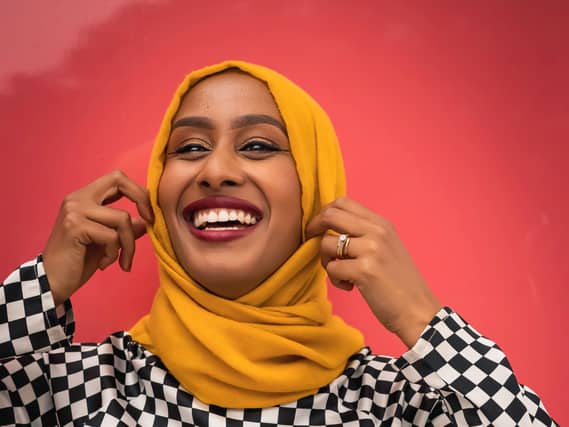

The British Sudanese Muslim stand-up comedian reveals how she has overcome bullying, racism and trolls.
Over the years, Sudanese comedian Ola Labib has batted away racist taunts and prejudice through humour.
“I get trolled so much,” says the woman who has forged a career in comedy, from the early days in open-mic sessions to becoming the first black Sudanese Muslim woman to perform at the 02 Arena. “Trolling is literally 90% of my career! But then I do videos responding to trolls and they get multi-million views.”
Labib, 37, says she is still encounters racism. “It quietened down for a bit in the early 2000s, but I’d say in the last three or four years it is the worst it’s ever been.”
Social media and anti-immigration propaganda hasn’t helped, says the comedian.
“I think this is the first time that I’d actually consider relocating to a different country.”
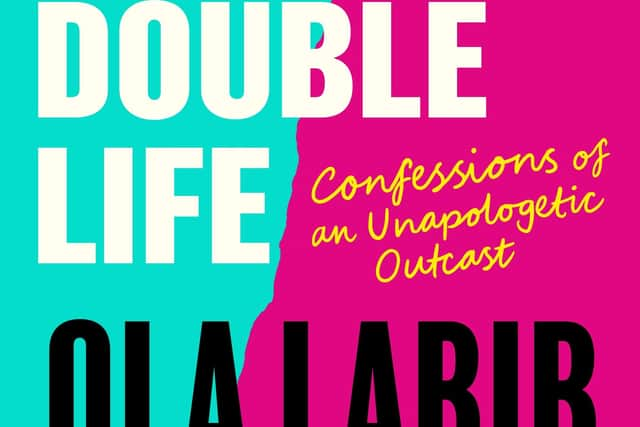
Born and raised in Portsmouth, Labib explains her experiences of being brought up in a strict but loving Muslim Sudanese family and navigating a blend of strict Islamic values, African heritage and British culture in her memoir How Not To Lead A Double Life, along with her path to happiness and marriage to Kashta, better known as American rapper Ramey Dawoud, who she married in Sudan.
“I do believe that humour and comedy is the best way to put a message across without it being so difficult to process,” says Labib, whose debut semi-autobiographical comedy pilot The Pharmacy, based on her years as a pharmacist, aired on Channel 4 last year.
She highlights in the book how she felt as though she was living a double life – never quite Sudanese enough for her family and community, yet never British enough to fully belong in the world around her.
Labib was the middle child between two brothers who had much more freedom than she did growing up and was the only African Muslim girl in her school.
She took to wearing a hijab aged 10, not because of any deep religious motive, but because she’d met some cool, stylish older girls at her Saturday Islamic school who did the same.
She rebelled to an extent against what she saw as her overprotective parents – her mother and her father, a maths teacher – who she says were driven by the importance of education, and sometimes found herself in hot water if she attempted to stray from their protective path.
At school she soon learned that her best defence was to be funny.
“If I made people laugh, I was safe. Humour got them on my side, and socially I started to flourish,” she recalls in the book, which is indeed razor sharp and witty in many parts, without diluting the serious issues she raises.
She says she was bullied primarily because she looked different.
“I looked different even before I wore the hijab. I put in a yearbook picture of me when I was in Year Five and I was literally the only person of colour in the whole year. Anyone that gets bullied will tell you it’s not easy, but genuinely it was such a motivating factor.
“I knew that I wanted to do good and wanted to do something with my life. Doing comedy was that thing that [made me feel like], ‘One day I’m going to be above all of you – you bullied me but I did so well with my life’.”
One of the bullies contacted her on Facebook recently, she reveals.
“He said, ‘Oh my God, I just saw you on Celebrity Pointless. Do you remember me? We sat next to each other in science’. I didn’t respond, but in my head I was thinking, ‘Yeah, you made my life miserable for two years’.”
She writes about meeting a sexual predator aged 14 – he was 10 years her senior – who groomed her. While she only met him twice, on the second occasion he took the terrified young teenager to his apartment where he indecently exposed himself before she fled, she alleges in the book.
“In the earlier part of my life it just made me very vigilant when men were behaving inappropriately,” she says. “I learned a lot about myself through that experience. ”
While in her younger days she resented what she saw as her lack of freedom, but today Labib has a different view.
“When you’re younger, you interpret it as freedom, but as I’ve grown older – I’m married now and settled – I look back, and I see they (parents) give you the freedom that they think will protect you from the outside world.
“They don’t want you to go out late because they’re scared of what happens to you. So I don’t necessarily see it as lack of freedom.”
She studied pharmacy at Portsmouth University, but pharmacy eventually gave way to a comedy career, much to her mother’s disdain, who said that by doing this ‘thing’ (she couldn’t bring herself to say comedy), Labib had brought shame and embarrassment to the family.
“For her, it’s not so much that it was comedy. I think she was worried about what people would say because it’s so unorthodox.”
“Making my parents happy is so important,” she continues. “They are so loving. They want the very best for me and they’ve got me out of some of the darkest times in my life. But sometimes you are under pressure with parents that you sacrifice your happiness for theirs.”
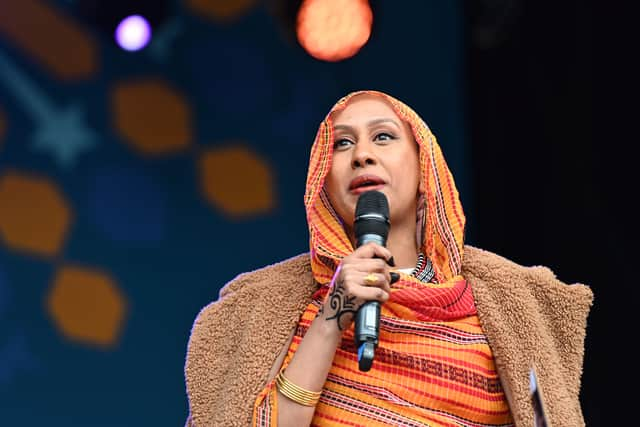
Starting with open-mic sessions, she became the first black Sudanese Muslim woman to perform at The O2 Arena.
“It’s such a hard feeling to describe,” she says. “When I was doing open mic – and you do about three to five minutes – you’re on top of the world. You don’t think about anything in your life other than you want to entertain these people. You don’t want to bomb, you want to make them laugh. For me, it became like a drug, like a getaway.”
Initially, Labib didn’t want her community to find out she was performing comedy.
“But when I did The O2 I was very overwhelmed by how supportive they were. It was like, ‘Oh, now finally we’ve got representation in the UK’. That took me by absolute surprise.”
When civil war broke out in Sudan three years ago, Labib stopped gigging and became depressed, she recalls. It was a tough time for her family and everyone in that diaspora.
“Then eventually, because I did comedy fund-raisers, I found that performing, even if it was just for five minutes, makes you forget for a moment. It was like a form of therapy.”
Today, she and her husband live down the road from her parents in Portsmouth and her community remains all important, she says. When she performed in Portsmouth on her last tour, she didn’t think they’d attend.
“When the community turned up to my comedy gig, most of them didn’t even understand a b***** word I was saying. But they were there for support.”
As for the future, Labib has projects in development with the BBC and Channel 4, and has already written a pitch for another book.
She is proof of the pudding that nothing is impossible.
“I’m a Sudanese girl from a small seaside town, with working-class parents. I was always being pushed into academics, but there are possibilities out there on how to be successful. There will be hurdles in the way, but what doesn’t kill you makes you stronger.”
How Not To Lead A Double Life: Confessions of an Unapologetic Outcast by Ola Labib is published by Robinson, priced £22. Available now