
‘I’m not dying, I’m living’: Grandfather, 73, still cycling five years after 15-month cancer prognosis
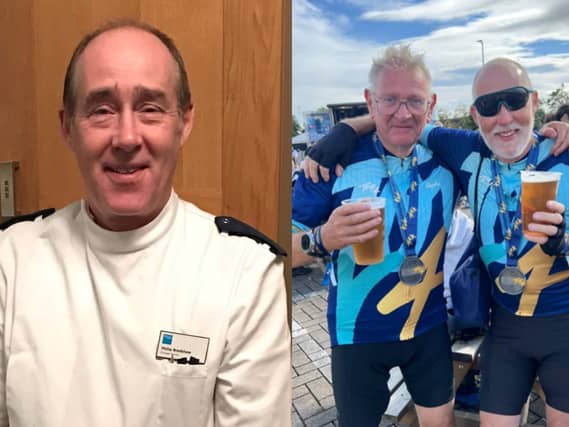

Former nurse and lecturer Phil Bradshaw, 73, spent years teaching palliative and end-of-life care before receiving his own terminal cancer diagnosis.
A grandfather given just 15 to 17 months to live after being diagnosed with terminal lung cancer is still cycling five years later and says: “I’m not dying, I’m living.”
Phil Bradshaw, 73, from Out Rawcliffe, Lancashire, was diagnosed with stage 4B lung cancer in June 2021 after months of symptoms he initially believed were caused by a chest infection.
He was treated with osimertinib, a new targeted medication taken as a daily tablet, which he has continued for around five years.
Phil said recent results appear to suggest possible disease progression and he is soon due to see his oncologist to discuss his next treatment options. These include immunotherapy, another targeted medication and two types of chemotherapy.
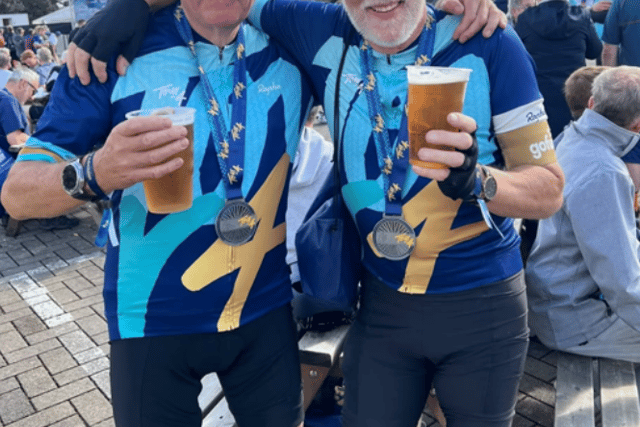
But five years after his diagnosis, the former nurse and university lecturer has twice taken part in Sir Chris Hoy’s Tour de 4 cycling challenge and says he remains determined to live life on his own terms.
Phil told PA Real Life: “A lot of people say ‘dying of cancer’. I think, no, I’m actually living.
“I’m living with cancer.
“I’m alive. I feel vibrant.”
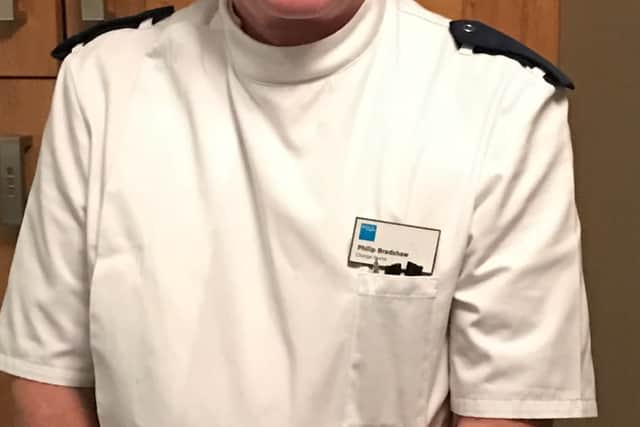
Phil first became unwell in January 2021 with symptoms he thought were a chest infection and was prescribed antibiotics, but did not improve.
A chest X-ray in January found nothing unusual, before a later X-ray revealed a suspicious shadow.
By the end of May, Phil was suffering from severe dizziness and his wife Gill, 67, called NHS 111, which escalated the call to 999.
One of the attending paramedics recognised Phil from his years as a charge nurse in A&E at Blackpool Victoria Hospital. Knowing his medical background, the paramedic asked what Phil thought should happen next.
Phil said: “I said: ‘Blimey, I need a CT scan. I need to find out what’s going on.’”
After consulting doctors, the paramedics were advised Phil could remain at home, and a locum GP then arranged an urgent CT scan.
Within days, the scan revealed tumours in both lungs and Phil was referred to a chest clinic, where doctors told him they suspected cancer.
Further tests, including an MRI scan, revealed tumours in his brain and an oncologist diagnosed him with stage 4B lung cancer, meaning the cancer had spread beyond his lungs.
Phil was given a prognosis of 15 to 17 months and said he and Gill were “shell-shocked”.
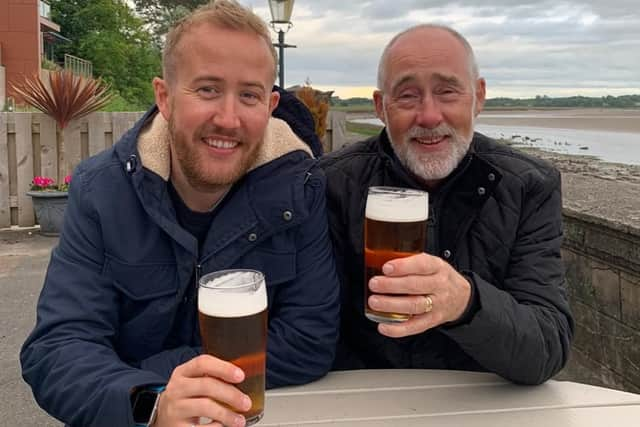
Gill had previously been diagnosed with stage 3B bowel cancer in 2018 and undergone successful chemotherapy and surgery.
Gill’s attitude during her treatment inspired Phil. He said: “Gill was so positive when she was having chemotherapy, that became the blueprint.”
Phil began his career in psychiatric nursing before qualifying in general nursing and working in A&E, including as a charge nurse. He later became a senior lecturer in nurse education, teaching palliative and end-of-life care.
He said: “It can only be a blessing because I’ve seen it up close with people in dire circumstances.
“I’m very fortunate. I’ve had a wonderful life and done lots of things that people only dream about.”
Having survived years beyond his initial prognosis, Phil dislikes language which makes cancer sound as though it has taken over his identity.
He said: “One of the words I hate is ‘cancer journey’.
“I’m not on a journey. I’m living my life, and life is wonderful.”
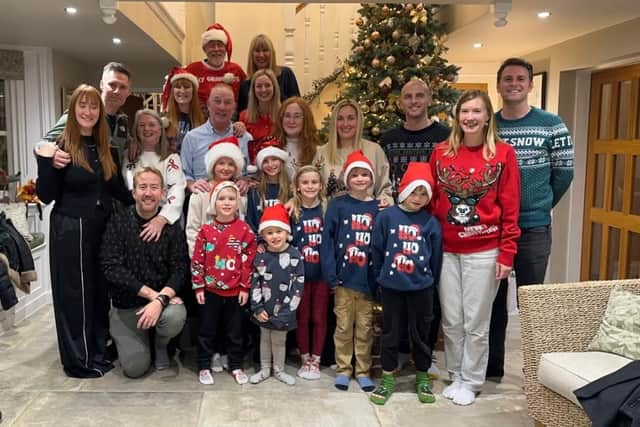
Phil and Gill have three children – Gemma, 43, Rebecca, 41, and Richard, 39 – and seven grandchildren. The couple live on a smallholding of around five or six acres in rural Lancashire, where Phil enjoys being outdoors and spending hours on his ride-on lawnmower.
Phil had not ridden a bike for around 50 years when he watched Sir Chris Hoy discussing Tour de 4 in 2025 and decided he wanted to take part.
Despite Gill pointing out he did not own a bike, he bought one, completed the event with an old friend and returned this year.
He said: “It’s just so nice to be with people who are trying to do something about the perception of cancer.
“It’s not all doom and gloom. Your life continues.”
This year, riders with stage four cancer were offered gold armbands to recognise others in a similar position.
He said: “They can charge my positive batteries, and I can charge their positive batteries as well, just by having a conversation.”
During this year’s ride, Phil spotted another gold-armband cyclist at traffic lights.
Pointing to their matching bands, Phil said “snap”, before the pair discovered they were both living with stage four lung cancer.
Phil said: “He asked: ‘How are you doing?’ and I said: ‘I’m doing good.’
“He said he was doing good too, and we did a high five.”
Phil recently underwent a lung biopsy and admitted beforehand that he was apprehensive after previously collapsing during a pleural aspiration, when fluid was drained from around his lung.
But the biopsy went well and Phil praised the staff for their care and professionalism.
Cancer remains at the “back of my mind”, Phil said, rather than becoming the focus of every day.
He continues to cycle, spend time with Gill and his family and enjoy life on their smallholding.
His experience has reaffirmed something he taught students about palliative and end-of-life care – that no-one, regardless of diagnosis, can know exactly how much time they have.