
Man diagnosed with PTSD after being robbed at gunpoint says medical cannabis has been ‘life-changing’
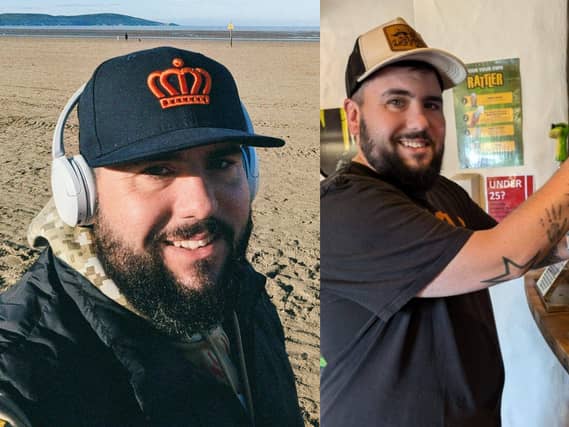

Luke Walter was held up at gunpoint while working as a bookmaker in 2007 and was diagnosed with PTSD and depression.
A father who was diagnosed with post-traumatic stress disorder (PTSD) after being held up at gunpoint while working at a bookmaker in 2007 said he finally feels “like me again” after starting medical cannabis three years ago.
Luke Walter, 38, a compliance manager from Worcestershire who is using his middle name instead of his surname for privacy reasons, was closing up a William Hill store in Worcester at around 6pm on October 14 2007 when the attack happened.
Hearing a noise in the toilet, 19-year-old Luke went to see what it was and came across a man in a balaclava, who put a gun to his head and a knife to his chest before running off with £530.
Luke gave a statement to police and tried to go to rugby training the next morning as normal, but he said he had a “huge breakdown” at his university in Worcester that Monday and took three weeks off his studies.
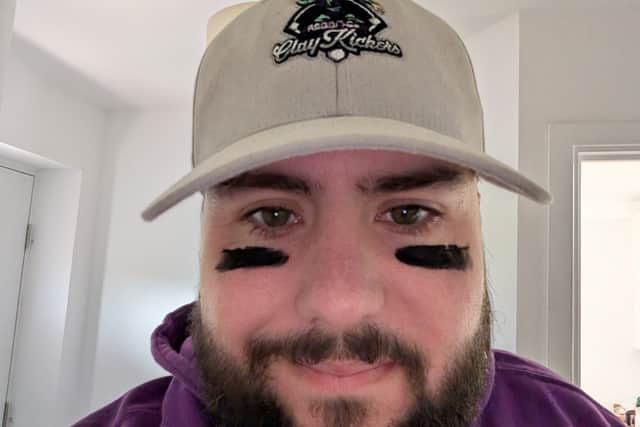
Luke said he was diagnosed with PTSD and depression and struggled with “constant stress” after developing a fear of the dark, enclosed spaces and strangers in public.
In the almost two decades since the incident, he said he has been treated with “lots of different” types of antidepressants, but experienced side-effects like low mood and “numb” emotional responses, which prompted him to “come off everything”.
Luke went to some “very dark places”, including self-harm, punching walls in an attempt to control his anger.
It was during trauma-focused cognitive behavioural therapy (CBT) in 2021 that Luke’s therapist first mentioned medical cannabis, which he decided to try two years later after doing his own research.
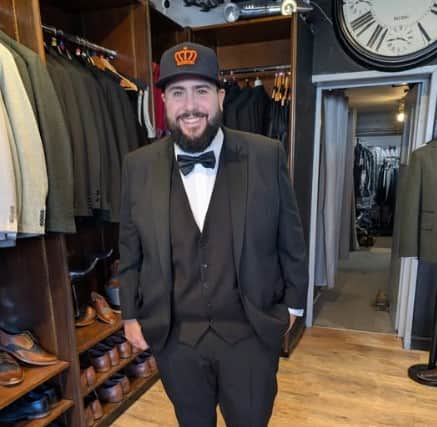
Describing his life now, Luke said it is like “night and day” because, although he still has some bad days, the new medication has taken “the fear” away.
Luke, who has two children aged 12 and 10 with his wife of 14 years, told PA Real Life: “Medical cannabis is not for everyone… but I think it’s really fair to say that if I hadn’t found it, I wouldn’t be here today.
“I think PTSD is something that never goes away, so I don’t want to get into a false sense of security that I’m good.
“I’m just trying to work on myself every day and make sure that I’m providing the best version of myself for my kids and my wife.”
Luke said he had “no issues with mental health” before the armed robbery.
He got his part-time job at the bookmaker in summer 2007 while living at home in Bristol after his first year of university. The day of the armed robbery was his first shift after transferring to the Worcester branch.
While closing the store at around 6pm, Luke went into the shop’s toilet to check no one was in there before he locked up.
“That’s when I was greeted with (a man) holding on to the sink, balaclava on, basically psyching himself up,” Luke said.
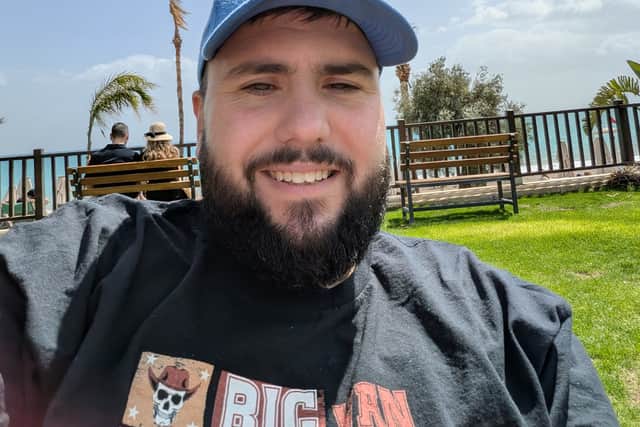
“He turned to me and I saw panic in his eyes, then he ran into the stall, ran back out, and I had a gun put to my temple and a knife put to my chest.”
The thief grabbed £530 from behind the counter and escaped through the fire exit, before Luke pushed a panic button and police arrived shortly after.
The robber, Stephen Jackley, formerly of Sidmouth, Devon, was sentenced to 13 years in prison in 2009 after pleading guilty to 18 offences including armed robberies, attempted armed robberies, firearms offences, burglary, attempted burglary and assault.
Luke made a police statement and an officer drove him home by 10pm, but he said the gravity of the situation “didn’t hit” until the next day.
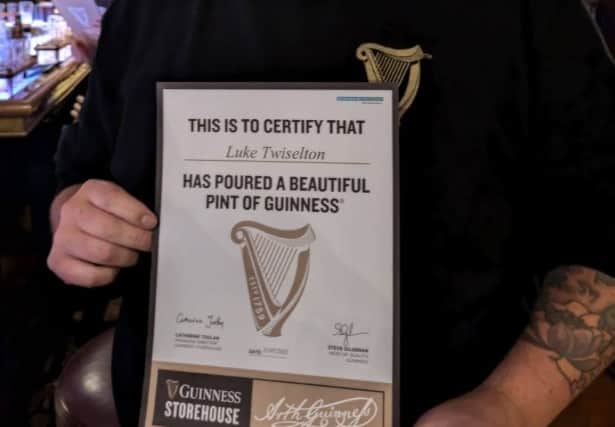
After rugby training, Luke was supposed to go to class but found himself having a panic attack, so he went to his university’s student services office instead.
“I couldn’t get my words out and I couldn’t do anything,” Luke said.
“Then I just had a huge breakdown.”
Luke called his parents and went home to Bristol for three weeks, where he said he “basically just didn’t leave” his room and “broke down constantly”.
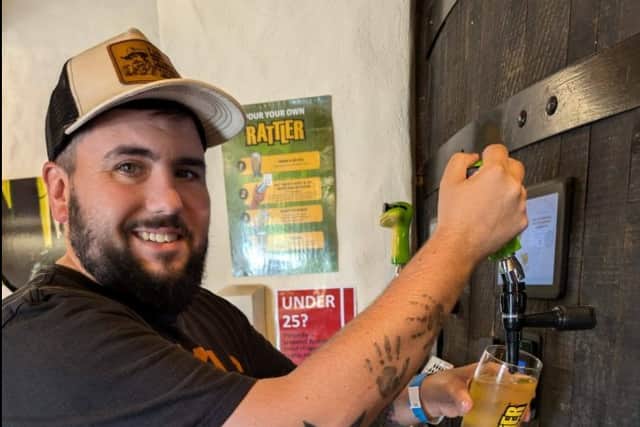
The first time he visited a GP was when he was back at university in November 2007 and found he could not sleep properly.
Within a year, Luke received his PTSD diagnosis and said he tried sleeping pills but “hated them with a passion” because they made him feel “groggy”.
He gained 12 stone due to “comfort eating” and was 28 stone at his heaviest.
Luke said he also developed deep fears of the dark and closed doors, so he would sleep with the lights on and would scan for exits whenever he entered a room.
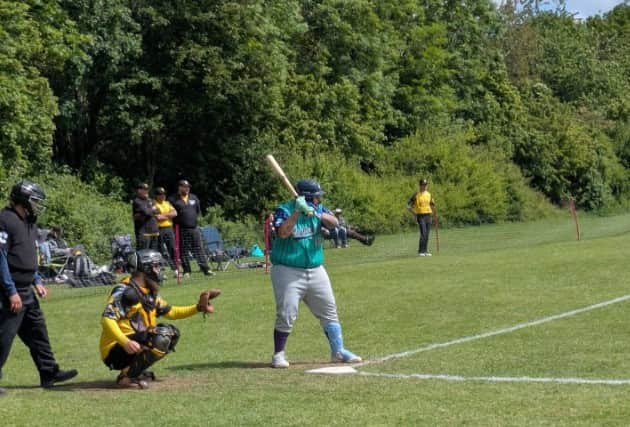
“I couldn’t do things like travel to London because I’d be looking for danger everywhere and scanning every person.
“The anxiety of being in public was massive, and I just had to fight it.”
Luke said different types of antidepressants made him “numb” so he tried two rounds of CBT and one round of specific trauma-focused CBT that helped him process what happened and his resulting fears.
During an appointment with a therapist for the latter, Luke learnt about medical cannabis, which has been legal in the UK since 2018 when prescribed by a specialist doctor listed on the General Medical Council specialist register.
Dr Ahmed Shoka, consultant psychiatrist at Medical Express Clinic, told PA Real Life: “Medical cannabis is sometimes prescribed for PTSD.
“It’s typically prescribed as oils or dried flowers for vaporising (and) the treatment is often aimed at trying to ease poor sleep, nightmares and anxiety.
“Some patients do report improvements… (but) cannabis should not replace established treatment or be used without medical supervision.”
Luke came across Curaleaf Clinic, whose director of research, Dr Simon Erridge, explained how a prescription works: “It starts with a review of the patient’s medical records, followed by a consultation with a specialist doctor.
“Each case is then considered by a team of doctors to make sure treatment is appropriate, and we keep the patient’s GP and any other healthcare professionals involved in their care informed.
“Once treatment begins, patients have regular follow-ups so their care can be adjusted over time.”
Patients typically pay between £75 and £250 a month, including medicine and routine appointments.
Since starting medical cannabis in 2023, Luke said it has taken his “stress and constant fear away”.
Luke uses a medical vaporiser for up to eight doses of 0.3g of cannabis a day, but said he will only really use the full dosage if something like an anniversary or Facebook memory of the incident comes up.
Luke said medical cannabis has been “life-changing” and makes him “feel stuff”, instead of the numbness he experienced on antidepressants.
“I’ve never looked back because I’ve had multiple promotions, my family life is much better, my mental health improved, I’m back in sport, I’ve lost weight and it’s opened up so many doors,” he said.
“I’d given up and I was just going through the motions, but now it’s completely different.”
Luke believes it is important to share his story to help reduce negative perceptions around medical cannabis.
“The stigma around it is ridiculous,” Luke said.
“This is my medication and it doesn’t affect anyone else.
“It helps me function, it allows me to contribute (to society), and most importantly, it allows me to be there for my kids.”
For more information about Curaleaf Clinic, visit the website: curaleafclinic.com/.