
‘My daughter’s cerebral palsy doesn’t stop her love of sport – she just completed a triathlon-style race aged five’
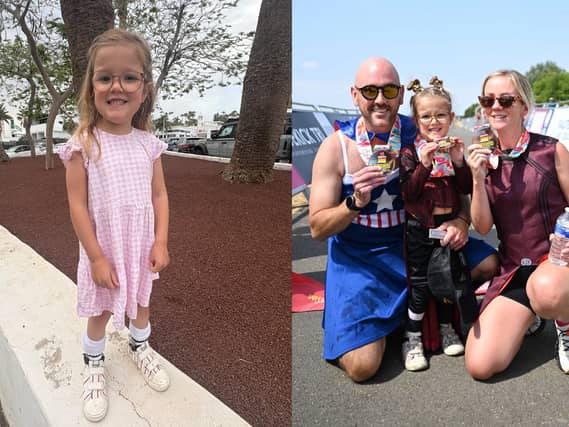

Maeve Bisset was diagnosed with cerebral palsy shortly after her first birthday.
The father of a five-year-old girl from Fareham who does not let her cerebral palsy hold her back from her love of sport said that he was “so proud to see her giving her all” at an annual sporting event for people with disabilities.
Maeve Bisset was diagnosed with cerebral palsy shortly after her first birthday, after her parents, Dan Bisset, 37, and Lindsey Troy, noticed she was not reaching expected developmental milestones.
Dan said Lindsey had “that mum intuition” and “fought to try and get her in front of the right people to get examined”, which led to Maeve being diagnosed with the condition – which is caused by problems with the brain before, during or soon after birth and affects movement and co-ordination, according to the NHS – in late 2022.
However, Maeve – who her dad describes as “stubborn” and “up for a challenge” – has come along “leaps and bounds” following “pretty much constant physiotherapy” and a major spinal surgery in December 2025, and she has just taken part in Superhero Series’ annual Superhero Tri sporting event hosted for people with disabilities.
“Seeing Maeve cross the finish line under her own steam was incredible,” Dan told PA Real Life.
“After her surgery in December, to think she would be doing a triathlon in August was just unimaginable. We were so proud to see her giving her all to get that medal.”
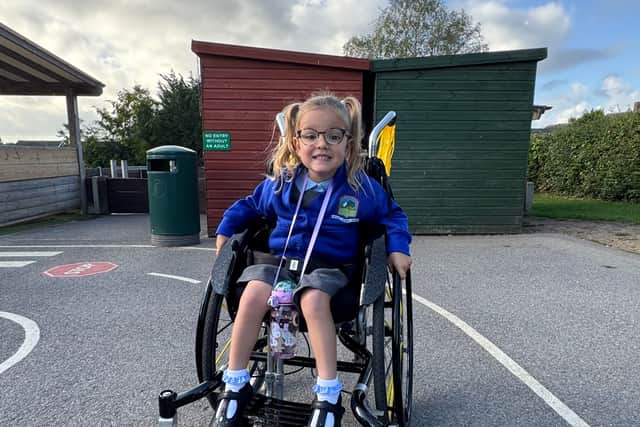
Dan said he and Lindsey began to notice Maeve struggling to hit the usual developmental milestones such as crawling and learning to walk around her first birthday, and took her to hospital to try to determine what might be wrong.
She had a brain scan in 2022, and her parents were initially told that the scan had come back clear, leaving them relieved but still puzzled.
However, less than two weeks later, they received a call to inform them that the initial examination of the scan results had “missed something quite significant” – Maeve had a brain injury called periventricular leukomalacia (PVL).
According to the NHS, PVL is a brain injury where the white matter surrounding the ventricles of the brain is deprived of blood and oxygen, and can cause problems with movement and other body functions. The most common symptom of the injury is cerebral palsy.
After further tests, Maeve’s diagnosis of cerebral palsy was confirmed, and Dan said the news felt “like a punch in the stomach”.
“At her age, it was kind of unknown how she would develop… It was an unknown journey to go into,” he added.
“We didn’t know about cerebral palsy, and that became our education and our journey, really, with understanding what you can do, the limitations, and how to push and develop and strengthen.”
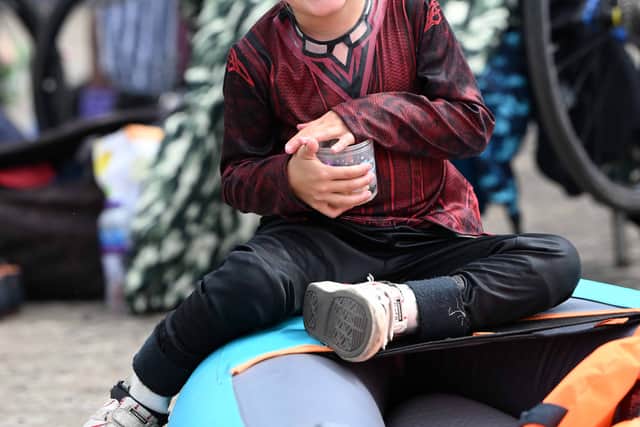
Because Maeve was so young, doctors were not sure what the future held for her, as every case is individual.
Her parents did their own research to help Maeve reach milestones – trying different walking aids from frames to sticks, using a balance bike to develop her core strength, and utilising “pretty much constant physiotherapy” to help her get as much mobility and independence as possible.
“Every day is physio, every day is stretching, every day is trying to push that little bit further,” Dan said.
“Luckily, with Maeve’s temperament, she’s up for that challenge. She’s quite stubborn in a way, which is great for this!
“She’s doing really well, and it’s just trying to knock down that next milestone, really, for her. There’s always something to work on.”
In December 2025, Maeve had a major spinal surgery called a selective dorsal rhizotomy (SDR), which Dan described as “like pushing a big red button” on her progress, meaning Maeve had to “learn everything again – learn to walk, learn to sit up, crawl, all those other things”.
According to the NHS, SDR surgery aims to reduce spasticity in the lower limbs by cutting the nerve rootlets in the spinal canal that are sending abnormal signals to the muscles – and Dan said it “was quite scary, as a parent, to send your kid off to have”.
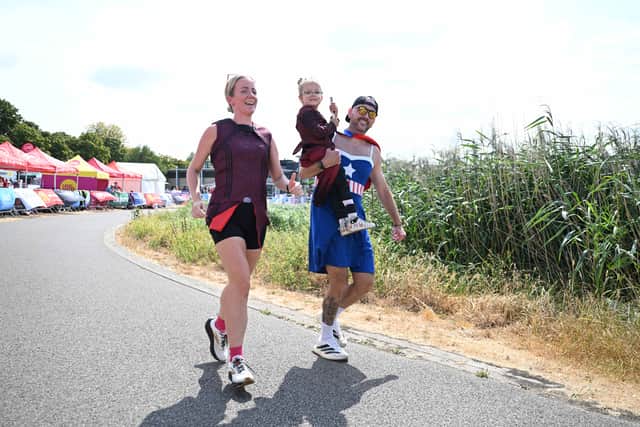
In Maeve’s case, Dan said, “the results and the impact of that have been huge”. The reduced spasticity – muscle tightness and stiffness – in Maeve’s legs has allowed her to regain more mobility and independence, and she has been able to go back to her mainstream school four days a week while having a day of physiotherapy on the fifth day.
Maeve loves to be active, and her parents, both of whom are keen athletes and take part in open water swimming events, triathlons and long-distance running, are thrilled that she was able to indulge her interest in sport by taking part in the Superhero Series’ Superhero Tri, powered by Marvel – the UK’s only mass participation disability sports event – on August 15.
Held at Dorney Lake in Windsor, the event – which celebrated its 10th anniversary this year – sees participants tackle a swim, cycle, and push/run, either in triathlon-style or as part of a relay.
The family got in the full superhero spirit with Maeve and Lindsey wearing matching Scarlet Witch costumes, and Dan in a Captain America dress Maeve picked out for him, and they formed a team with Paralympian and family friend Bethy Doran, who also has cerebral palsy and won two medals at the London 2012 Paralympic Games.
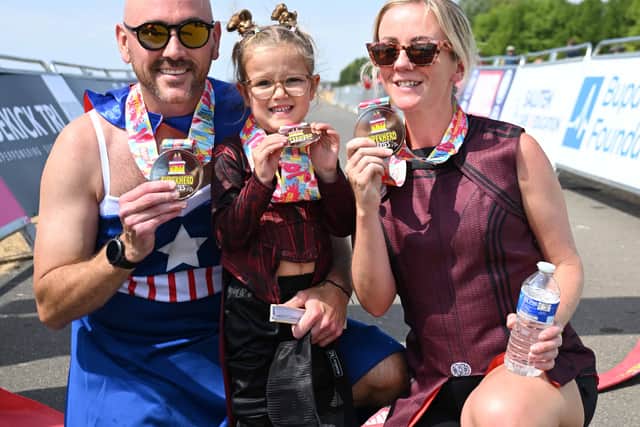
“The atmosphere was so supportive, it was great to see so many people pushing themselves,” Dan said of the event.
“Seeing Maeve cross the finish line under her own steam was incredible. Maeve also managed to do a tiny stint on her ‘big bike’ with no stabilisers or support for the first time ever.
“After her surgery in December, to think she would be doing a triathlon in August was just unimaginable. We were so proud to see her giving her all to get that medal.
“Maeve’s biggest achievement was the run. She was so tired by this point, but she wouldn’t stop.
“She’s asked to do it next year, so we could have an athlete on our hands!”
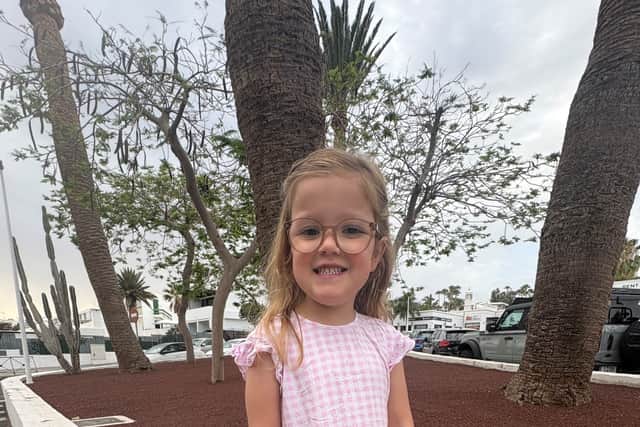
For Dan, it was a joy to see Maeve take part in an inclusive sporting day where participants are able to use any tools, equipment and gadgets they need on the course.
“I think it’s good to see that there are events like this that are inclusive,” he said.
“Having done those kinds of events myself in the past, it’s just a really fun day out. And to share that with Maeve – a year ago we never thought we’d be in this situation at all.
“We’re just very lucky and proud to be where we are now.”