
‘Rugged, raw areas still exist’ – Simon Reeve on travelling through the wilderness for his new BBC Two show
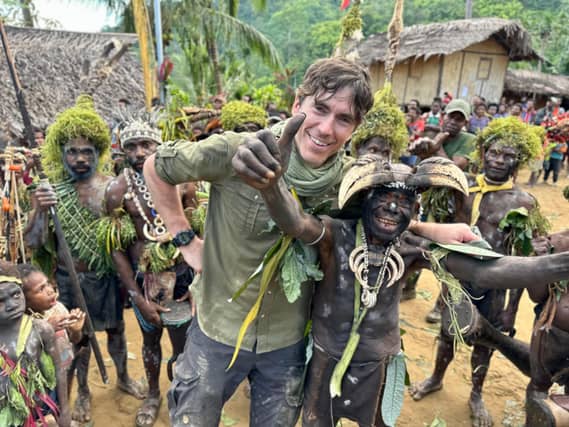

The second series covers Papua New Guinea, the Sea of Cortez, Canada’s Yukon and Mongolia.
Camping in the wilds of the Yukon, a burning log fell out of Simon Reeve’s camp stove onto the floor of his tent – and he grabbed the only thing he had to stop the blaze. A bottle full of his own urine.
“The only thing I had to put it out, because my water had frozen, was my recently-filled wee bottle,” says the intrepid globetrotter and presenter, who is back with an extraordinary second series of Wilderness with Simon Reeve on BBC Two.
The show reveals more wild, remote and breathtakingly beautiful areas of our planet – and some moments of adventure not quite going to plan.
“I had to pour my wee over the burning log. And thank God it worked and put the fire out. That was a very bad moment.”
Recalling some dicey times in the most challenging filming of his career, the 54-year-old says his expedition team pushed themselves further than ever before.
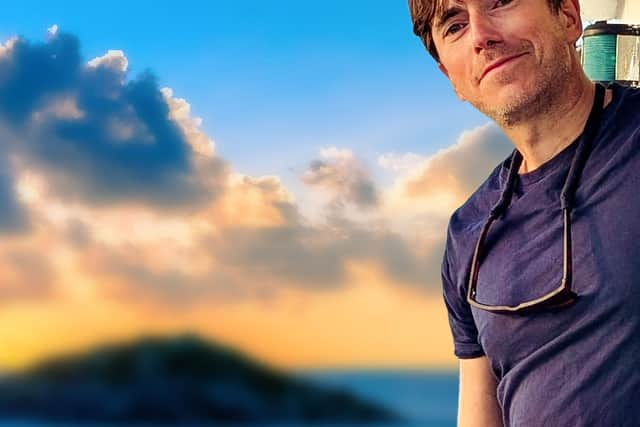
“It’s bigger, bolder and more ambitious than series one,” Reeve says, describing the vast distances they travelled and the remarkable local conservation efforts they discovered. “In Mongolia, we make a 3,000-mile-trek – there are camels, snow leopards and golden eagles. We bloody slog for it.”
In the first series of Wilderness, Reeve explored the Pacific Ocean’s Coral Triangle, Africa’s Congo, the sweeping Kalahari desert, and wild landscapes of Patagonia.
This time the Londoner filmed four expeditions across the rainforests of Papua New Guinea, Mexico’s Sea of Cortez, the vast and empty Yukon Territory in Canada, and Mongolia’s brutal and beautiful landscapes in pursuit of some of the world’s rarest sights.
Used to putting himself through the wringer, Reeve reveals this show took him way beyond his comfort zone but it was worth it. “It’s massively important for the viewers to know these places still exist. There are people like me who worry about the state of the world and think we’ve ruined all of it,” he says.
“But if you want something to fight for, here’s an example of somewhere that’s got 4% of the diversity on the planet. And there are incredible people there who want your help.”
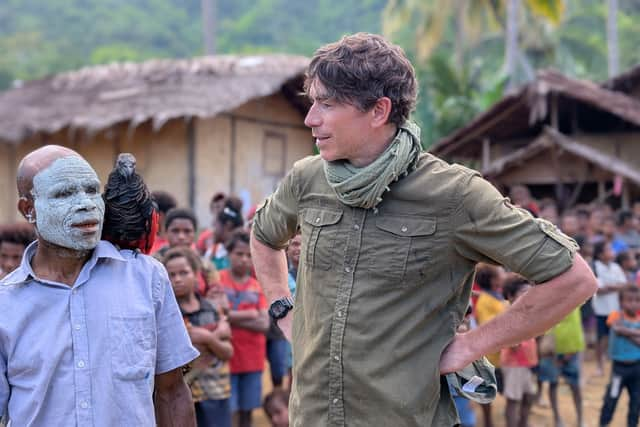
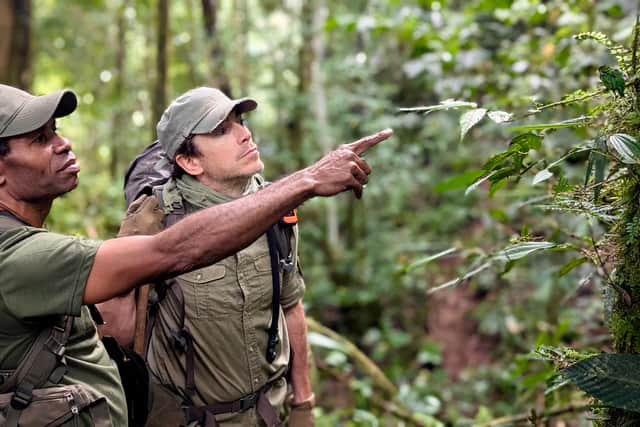
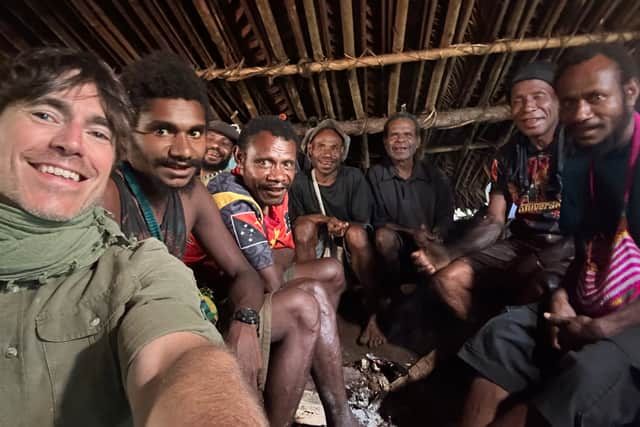
Venturing into the rainforests of Papua New Guinea for the first episode in search of one of the rarest creatures on the planet, the critically endangered Tenkile – a species of tree kangaroo – the team got a TV first.
“We turned up at the Goldilocks moment when their numbers had just increased, and no other telly team had been out there,” he says. “We’re not a wildlife team who go for months on end. We’ve got to go at the right time and work hard to get it.”
Reeve admits it was a physically challenging episode that made him feel sweaty-palmed. “I like to think the programmes I make aren’t always about my blisters. There’s a lot of slipping and sliding about – what the telly commissioners call ‘jeopardy’. I tried to make sure my ankles were strong for that one!”
In fact the whole crew had to train hard, and Reeve reveals how he got in shape. “Weighted vests are my secret. Wearing those going up and down the stairs 10 times. That’s properly shattering for middle-aged legs.”
Reeve never shies away from reporting on the heart-rending stories of fragile ecosystems ripped apart by human greed, but he says this series is about redemption. “I hope people will see that there are rugged, raw areas that still exist. There is nowhere that isn’t touched by humans, but we haven’t lost our planet to industrialisation. There is still wonder out there.”
He finds the changing face of conservation uplifting, adding: “Five years ago we struggled to avoid filming white conservationists, now it’s not just locals who are doing field work but leading it with real passion and skin in the game.
“Some of the villages are out there with bows and arrows literally fighting off the road builders.”
In the second episode, Reeve – who has presented over 100 documentaries – explores Mexico’s Sea of Cortez, once called “the aquarium of the world”, but is now under threat from industrial fishing.
But while Reeve discovers the depleted reef has been transformed into a marine reserve and he swims with rare scalloped hammerhead sharks, he recalls his night on “Bird Poo Island”.
“We’d foolishly camped on an uninhabited island and it was only when the boat had left and it was dark that we realised why nobody stayed.
“There was this thick but fine dust floating like talc in the air, and when the wind kicked in, all the crap from these blue boobies began whipping up.
“I was swallowing it, breathing it. God knows where that fitted on a risk assessment.”
In the third episode, Reeve travels to Canada’s Yukon to the land of forests, and immense glaciers in the mountains that melt into lakes and the mighty Yukon River. He meets the First Nation people for whom hunting moose is not sport but survival, before trekking north, close to the Arctic Circle, to witness how the once-teaming salmon runs are now leaving the grizzlies hungry.
The most sparsely populated country, Mongolia, is Reeve’s fourth and final destination where he attempts camel-herding like a “muppet” with nomadic families in the Gobi Desert, before heading west where herders live alongside the “ghost of the mountains”.
Reeve reveals it was a real pinch-me moment, saying: “We had a bit of a wobble because we thought we really might not see them.
“So finally, seeing snow leopards, one of the most elusive creatures on the planet. I could not believe that was the gig.”
Wilderness with Simon Reeve begins on BBC 2 on Sunday September 20 at 9pm.