
‘I have attended too many accidents where people have been seriously injured or killed': Limerick-based sergeant
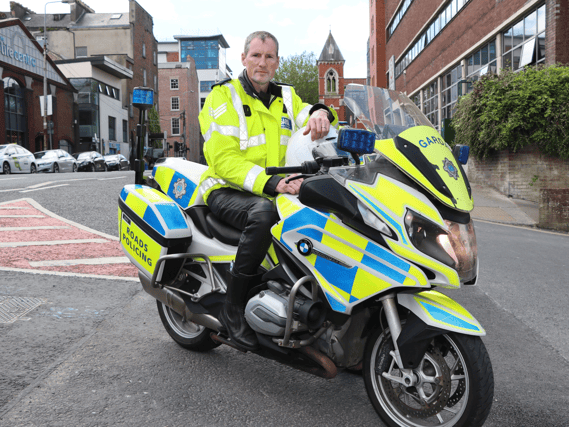

Sergeant Kevin Balfe highlights the dangers and effects of intoxicated driving
FOR THE majority of people Christmas is a time to take a break from the normal working routine of the year.
Additional leave days are taken and we tend to relax and let our hair down a bit more than usual. Over the Christmas break, we make a greater effort to meet up with family and friends we haven’t seen for a while, and socialise with work colleagues. We do this in varying ways, meeting for lunch, going for a meal, a few drinks after work or a night out. Calling to friends and family is more popular at this time of the year, and that could be for a few hours or more.
When I was growing up, callers at Christmas would be offered a drink, a beer or a whiskey, or similar and no-one thought anything of it. But those were different times. During the 1980s the average number of fatalities from road traffic collisions in Ireland was 465 each year with alcohol playing a significant role in that.
Since then significant work has been done by An Garda Siochana, the RSA and other bodies to educate drivers, highlighting the dangers and effects of intoxicated driving, and through rigorous enforcement by An Garda Siochana, to reduce the incidence of intoxicated driving.
The benefits of driver education, multiple annual campaigns and enforcement were evident in the gradual reduction of fatalities from a yearly average of 465 deaths on Irish roads in the 1980s to the lowest recorded figure of 133 in 2021. Since 2021 that downward trend has stalled and for the last two years has moved in the wrong direction.
This year, as in previous years, An Garda Siochana are increasing the number of patrols and checkpoints over the Christmas period. Mandatory intoxicant checkpoints are being conducted across Limerick city and county. Members of the Roads Policing Unit and other uniformed gardaí will be checking drivers for the presence of both alcohol and drugs.
Drivers who fail the roadside tests will be arrested, taken to a garda station and will have to provide either a breath, blood or urine sample. If the results of those tests are over the legal limit then the driver will end up in court and if convicted face mandatory disqualification from driving and a fine.
The duration of the disqualification for a conviction of drunk driving is scaled depending on the concentration of alcohol and previous convictions for intoxicated driving. This can range from three months to six years. Drivers convicted of drug driving, in addition to a monetary fine, face one year off the road for the first offence and four years for second or subsequent convictions. Disqualification from driving can be very disruptive, considering how reliant we all are on our cars. We are very dependent on our cars to get to and from work, bring children to school, going shopping, sports activities or to visit friends.

It is also important to remember that drivers don’t have to be involved in accidents to be stopped. As mentioned previously, Roads Policing Units will be doing checkpoints during the day and night where drivers will be stopped and required to provide breath or oral fluid samples. An Garda Siochana also have the power to demand a sample of breath or oral fluid from drivers who breach the Road Traffic Act. They could be going through a red light, crossing a white line, speeding or even having a bulb missing from your car.
The consequences of drink or drug driving can be a lot further reaching than a court appearance, a fine and disqualification from driving. I have attended too many accidents where people have been seriously injured or killed as a direct result of intoxicated driving.
The effects that these accidents have on the people involved and wider family and friends is immeasurable. Some of the victims have life changing injuries, physical and psychological, that will remain with them for the rest of their lives. It can take years for physical injuries to heal. Others aren’t so lucky and don’t survive.
It must be remembered that the accidents where intoxication is a factor are totally preventable. At the end of the day the choice is yours, do you leave the keys at home, or in your pocket if you went out from work. Do you get the late bus or book a taxi?
Different safety campaigns over the years have shown the legal consequences of being caught while being over the limit, they have offered alternatives to driving home while intoxicated, they have shown the devastation experienced by families of crash victims.
Other campaigns were more graphic, showing crash scenes, with another showing an empty chair at the Christmas dinner table. If you decide to drive while intoxicated this Christmas, you should ask yourself the question…Who can I afford to lose?