
Life in Reform and beyond for Limerick musician Don O’Connor
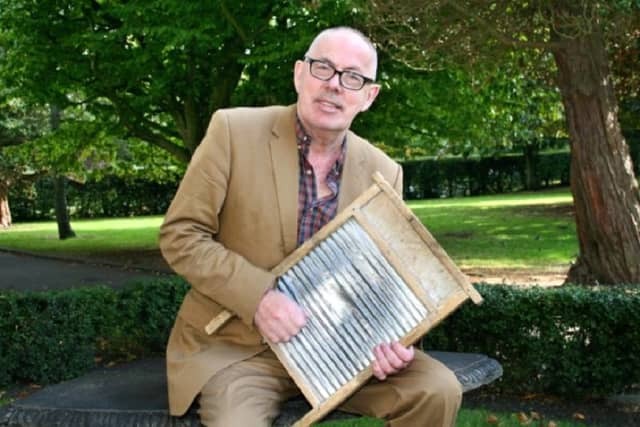

Don O’Connor explores innovative ways in which music impacts people’s lives
By any measure, Don O’Connor is one of those artists whose influence outweighs his profile. For decades he has been a steady rhythmic pulse in Irish music, a performer, writer and community figure whose work has rippled far beyond the stages he first stood on.
From the raw energy of Reform in the late 1960s and 1970s to later explorations in world, folk and community music, O’Connor’s story is also the story of Limerick’s modern musical coming-of-age.
The birth of Reform
Reform emerged in Limerick during a period when Irish bands were beginning to assert their own identities instead of simply copying overseas acts. Alongside guitarist and vocalist Willie Browne and bassist Joe Mulcahy, Don O’Connor helped form a trio that was tight, ambitious and unafraid to write its own material.
In Reform, O’Connor was far more than ‘the drummer’. He was a vocalist, a writer and a visible presence on stage. His percussion style was direct and muscular, rooted in rock but flexible enough to accommodate melody and harmony. Vocally, he brought warmth and grit, contributing to the band’s distinctive blend of shared lead and harmony singing.
What set Reform apart was their sense of purpose. They were not content to be a regional curiosity. They wanted their songs heard nationally, and they worked relentlessly to make that happen – gigging, rehearsing, refining and competing.
National attention and the Irish charts
Reform’s breakthrough came through national exposure in song-writing competitions and broadcast performances, at a time when these platforms could still change a band’s fortunes overnight. Songs such as I’m Gonna Get You and You Gotta Get Up brought them onto the Irish charts and into living rooms across the country.
For O’Connor, this period was formative. The band learned how to operate at a professional level - dealing with studios, promoters, broadcasters and the pressures that come with success. Yet they never lost the sense that they were a band from Limerick, representing a city that was often overlooked in favour of Dublin or overseas acts.
Their album One for All, released in 1979, stands as a snapshot of that era: confident, melodic rock with strong song-writing and a sense of collective identity. It also captured O’Connor’s belief in music as something communal, something built through cooperation rather than ego.
Life on the road
Touring Ireland in the 1970s and early 1980s was not glamorous. Long drives, inconsistent sound systems, modest pay and hard-won audiences were all part of the deal. Reform embraced it. They played everywhere - ballrooms, clubs, festivals and special events - honing their craft night after night.
O’Connor thrived in this environment. His stamina as a drummer and singer made him a cornerstone of the live show, while his easy rapport with audiences helped turn casual listeners into loyal supporters.
Those who saw Reform live often remember not just the songs, but the sense of connection the band created.
This period also reinforced one of O’Connor’s lifelong traits: resilience. Success came in waves, not in a straight line, and the ability to adapt, persist and keep creating would serve him long after Reform eventually wound down.
After Reform: expanding the musical horizon
When Reform disbanded in the mid-1980s, O’Connor did not step away from music. Instead, he stepped outward. Freed from the structure of a rock trio, he began exploring a wider musical world, drawing on folk traditions, global rhythms and collaborative projects.
One of the most significant phases of his later career was Don O’Connor’s Celtic Fusion, a project that blended Irish musical roots with African and world music influences. This was not a gimmick or a trend-chasing exercise. It reflected O’Connor’s genuine curiosity about rhythm as a universal language and his belief that music could bridge cultures without diluting its origins.
Through international travel and collaboration, particularly in Europe and Africa, he deepened his understanding of percussion as both musical and social practice.
Drumming, in this context, was not just accompaniment; it was communication.
Music as community
Perhaps the most enduring aspect of Don O’Connor’s career is his commitment to music as a community force. Long after chart positions fade, the impact of shared music-making remains. O’Connor has been deeply involved in educational and community-based music projects, working with people of all ages and backgrounds.
His approach is inclusive and encouraging, emphasising participation over perfection. Rhythm circles, workshops and collaborative performances became ways of breaking down barriers - social, cultural and personal. In this work, his Reform years mattered enormously. He understood the discipline of rehearsal and performance, but he also understood the joy that first draws people to music. That balance - professionalism without pretension - became his hallmark.
Limerick’s musical memory
Limerick has produced many musicians, but not all remain actively engaged with the city’s cultural life over decades. O’Connor has. His career forms a thread through multiple generations of local music - from the rock explosion of the 1970s to contemporary community arts initiatives.
Reform’s legacy is part of that memory. For those who grew up hearing their songs on the radio or seeing them live, the band represents a moment when Limerick felt fully part of the national musical conversation. O’Connor, as a founding member, helped make that possible. Yet his legacy is broader than nostalgia. It lives in workshops, collaborations, and in the confidence he has helped others find through music.
A Life in rhythm
What distinguishes Don O’Connor is not just what he achieved, but how he achieved it. His career is marked by consistency rather than flash, by curiosity rather than comfort.
He moved from rock stages to world-music collaborations without losing his sense of self, always guided by rhythm and human connection. In an era when success is often measured by visibility alone, O’Connor’s journey offers a different model: one where impact is measured in people reached, skills shared and moments created.
Limerick’s creative spirit
Don O’Connor’s story is not merely a biography; it is a reflection of the city’s creative spirit. He represents a generation that built something lasting without expecting guarantees, and an artist who continued to give back long after the spotlight shifted.
Reform may have been the band that first carried his name into the national consciousness, but it was only the beginning. The rhythm that drove those early songs continues - in classrooms, community halls, theatres and shared musical spaces.
Don O’Connor’s life in music reminds us that culture is not just made on big stages.
It is made wherever people gather, listen and respond to a beat. And for more than half a century, he has been helping Limerick - and far beyond - keep time.