
BIG READ: The story of one Tipperary reservoir and how it became defunct
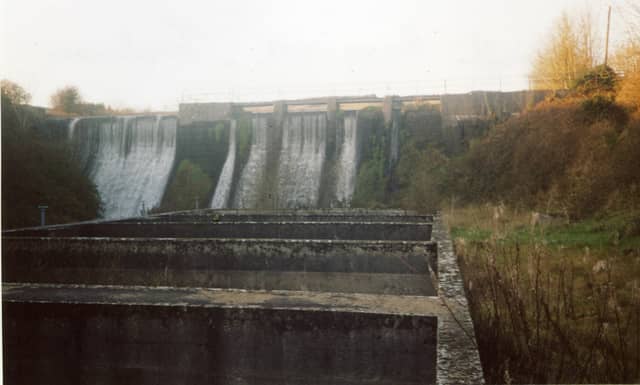

'The transition signified the end of the reservoir in Kilduff'
The following article was prepared by Ann McDonnell for this year's Bournea Reaching Out Historical Society annual.
The annual is currently on sale in business premises in the locality.
The reservoir at Kilduff was situated within a tranquil valley. The large concrete structure did not seem to disturb the surrounding area.
From the late 1800s Templemore Town Councillors had been actively seeking funding from the British Government for a new water supply.
Medical professionals had criticised the poor quality of water linking it to diseases and deaths such as typhoid.
A proper water supply was essential for the British Army Barracks in the town, as well as attracting industry and accommodating the growing population.
In 1899 engineers were hired, plans were drawn up and fieldwork was completed. Tenders were processed. Grange Brothers from Belfast were chosen as the contractors.
The Kilduff site was identified as the most suitable location due to a stream flowing from the nearby hills, which was recognised as a major water source for the new dam.
The construction of the reservoir began on June 8,1903. Workers came from Belfast to commence the work, were well paid at four pennies an hour and were accommodated at Michael Coffey’s farm beside the site for over a year.
Local skilled workers and labourers were also hired on this major project, bringing great employment to the area and injecting welcome revenue to the town.
The construction of the reservoir consisted of a large masonry wall approximately 40 - 50 feet high with a sloped design to allow excess water flow over the wall.
The wall also featured a pathway on top approximately 4-5 feet wide with iron rails on each side.
This allowed workers to safely monitor the water levels. Rain water and stream water was collected within the reservoir and the surplus was utilized during the summer.
Concrete steps were constructed from the road to the base of the reservoir with a hand railing.
A road was built a few yards away to enable lorries to enter the yard.
A store house was also built.
Four rectangular filter beds were constructed at the base of the wall to facilitate the water treatment process.
Before the water reached our taps it had to be purified by screening out particles such as leaves, sticks, moss and small fish.
This was done by filtering the water through sand and gravel.
The silica sand used in this process was sourced from Drogheda and Wexford.
Each filter bed had a valve that permitted individual beds to be filled with water or all four beds could be filled depending on conditions.
Two sluice gates were installed on the wall.
These gates played a crucial role in managing water levels from the reservoir and safeguarding against wastage and flooding the filter beds.
Stevens and Co. from Scotland was commissioned to supply the cast iron used for the installation of piping from the reservoir to Templemore.
Installing water mains along the public roads to Templemore was physically challenging and required the hard work and dedication of the skilled labourers.
Providing water mains to all residences and Richmond Barracks posed a logistical challenge. By 1931 the Town Council was seeking funding from the Irish Government to facilitate the cleaning of the filter beds to remove any contamination and to safeguard the quality of water coming into their taps.
In 1940 funding was granted by our Irish Government to build a chloramine plant. A company called Wallace & Tiernan was commissioned to install the plant.
The chloramine would further safeguard the water and protect it from invisible bacteria. The years 1939 and 1940 were particularly challenging for the reservoir.
The population had increased by 1,000 due to the Emergency. Irish soldiers were assigned to the former British Army Barracks now renamed McCan Barracks in response to the events of WW2.
Two very warm summers and a prolonged drought put immense pressure on the reservoir causing major water issues and water restrictions.
In 1954 John McDonnell was appointed caretaker for the reservoir, and plumber for the town. John would remain working for the Urban District Council for the next 34 years becoming town foreman.
During his tenure John and all the staff working for the Urban Council encountered numerous challenges.
The growth of factories, schools, housing estates and the establishment of the Garda Training College at McCan Barracks put significant strain on the reservoir’s capacity to meet the town’s water demand.
The quality of water has been consistently monitored.
In 1964 damage was done to the reservoir due to a cloudburst which caused flooding and the damage caused the loosening of some concrete slabs.
The 70s and 80s were challenging too, marked by low water pressure and water restrictions. The Town Council explored every avenue available to find extra water capacity.
A new source from the River Suir in Borrisnoe was piped to the reservoir but it did not alleviate the problem. The people of the town were demanding a proper new modern water scheme.
After years of tireless lobbying by the Urban Councillors and the County Councillors funding was granted by the Government for a new water source at College Hill and a new treatment plant.
The work was completed on the 13th of September, 1995.
The transition signified the end of the reservoir in Kilduff.