
Martin Quinn on Irish National Stroke Audit
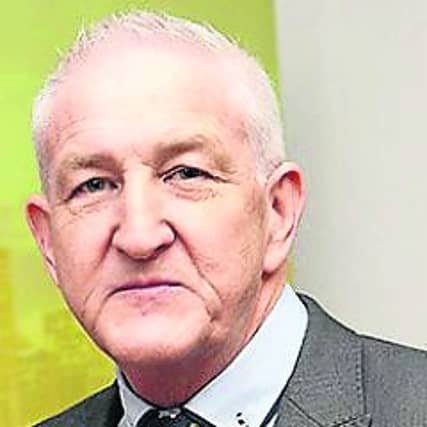

Frightening: 57% of all strokes are in males under the age of 65
Professor Joe Harbison, National Clinical Lead for the Irish National Audit of Stroke (INAS) this week launched the Irish National Audit of Stroke National Report 2020 at a virtual meeting hosted by the National Office of Clinical Audit (NOCA).
There are approximately 6000 strokes admitted to Irish hospitals per year - this report analysed data on 5,153 stroke patients. While stroke is looked upon as a disease of the older person, over a quarter of the cases were aged under 65 years - 57% of all cases were male.
Stroke is a medical emergency which requires urgent treatment. The sooner a person arrives to hospital, is assessed by a doctor and receives a brain scan, the less damage is likely to happen. This results in better outcomes and less disability.
Only 50% of patients arrived at hospital within 3 hours of onset of stroke symptoms.
Launching this year’s report, Professor Joe Harbison said: "This years' report is the largest and most complete we have produced in the last 10 years despite the challenges of compiling it during the COVID-19 pandemic. It shows continued improvement in some areas, especially in getting patients to urgent treatment faster. In other areas, such as admission to stroke units and provision of therapies, substantial room for improvements remain."
I am very pleased to have the opportunity to contribute a message, to the Irish National Audit of Stroke (INAS) Annual Report and Summary Report for 2020, as a public and patient interest representative.
I am a stroke survivor, having suffered a stroke in 2013 while I was doing an interview on local radio. The experience of hospitalisation and recovery left me with a desire to advocate on behalf of stroke survivors and their families, and I have been active with the Irish Heart Foundation (IHF) in many of their campaigns for better services and awareness for stroke survivors.
I was really pleased to be nominated by the IHF to serve on the INAS Governance Committee and to contribute to its valuable work.
In any health-related forum, the voice of the patient should never be overlooked so as to ensure that the interests of the patient and the public are best served. It should never be forgotten that the patient is the central figure in healthcare, and the patient’s voice must always be heard, as it is by the INAS Governance Committee.
In providing a message for this report, highlighted a number of points. In November 2019, I – along with my colleagues Dr Rónán Collins, and Mr Chris Macey of the IHF – met with then Minister for Health Mr Simon Harris TD to discuss a number of issues in relation to stroke. However, a general election followed in February 2020, which resulted in a change of Minister and therefore a loss of opportunity to follow up directly with the then Minister.
As a public and patient interest representative, I call on Minister for Health, Mr Stephen Donnelly TD to follow up with us so that we can further discuss the issues raised in November 2019.
One of those issues raised, and one that I am very passionate about, is that of a stroke awareness campaign. As also indicated in this year’s annual report, the INAS continues to highlight the need to increase public awareness of the symptoms of stroke and the importance of seeking immediate emergency care. I fully agree with the INAS recommendation that a stroke awareness campaign should be funded as a priority in order to ensure that patients can access care as quickly as possible. We need a firm commitment to implement this by the end of 2022.
Another issue discussed in the November 2019 meeting was the piloting of a large vessel occlusion bypass model that would enable patients within the catchment area of specified Dublin and Munster hospitals to be redirected from their nearest hospital directly to the endovascular thrombectomy (EVT) stroke centre in Beaumont Hospital or Cork University Hospital. As in the annual report for 2019, INAS continues to recommend this pilot scheme and I would very much welcome its implementation in 2022.
I am very pleased that these and other issues – such as improving the level of swallow screening and ensuring that all hospitals offering a stroke service provide psychology services – are included as some of the key recommendations in the INAS annual report for 2020.
I am delighted to be a member of the INAS Governance Committee, representing and advocating for public and patient interests in stroke care, and ensuring that the patient’s voice is always heard and listened to.