
Tipperary farmer represents Ireland at European Milk Forum roundtable in Brussels
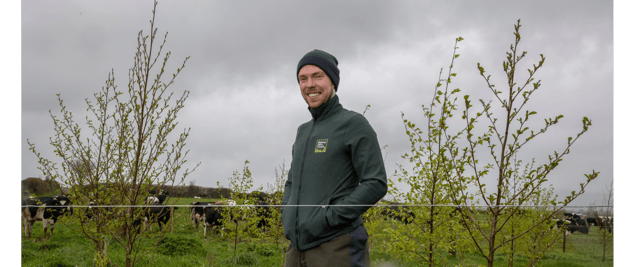

Event was part of campaign to educate and share knowledge about yogurt and dairy
Brendan Walsh, a dairy farmer from Ballylooby, Tipperary, was invited by the National Dairy Council (NDC) to represent Ireland at the European Milk Forum roundtable in Brussels.
The event, organised by the European Milk Forum, is part of a three-year campaign to educate and share knowledge about yogurt and dairy, highlighting their sustainability and role in a healthy diet.
Succession and generational renewal are a growing concern for the dairy sector in Ireland and across Europe. Brendan is part of a new generation of young farmers committed to securing the future of family farming. His participation at the European Milk Forum demonstrates how Ireland’s next generation of dairy farmers is blending innovation, sustainability and careful stewardship to maintain viable farms.
The roundtable provided a platform for young dairy farmers from across Europe to exchange ideas, share innovations and discuss best practices. The aim was to showcase the cohesion of the European dairy sector and its collective efforts toward more sustainable production methods.
Brendan spoke about practical approaches to sustainability in dairy farming, sharing insights from his family farm in Tipperary. He is a seventh-generation farmer, with his family farming this land since 1800 and operating the current farm for over 100 years. He studied Dairy Business at University College Dublin (UCD) and was the overall winner of the 2024 Teagasc/FBD Environmental Sustainability Awards.
Brendan farms with his father on a 107-hectare family farm, supplying milk to Dairygold, and keeps 170 dairy cows plus replacements along with 40 beef animals. Operating a grass-based system, with cows at grass for 280–290 days per year, their farm focuses on producing high-quality milk and reducing environmental impact and maintaining long-term viability.
“At our farm, one of the most important changes we’ve made is reducing nitrogen use,” Brendan explained. “We’ve cut back from around 200 kg per hectare to 115, largely through the reintroduction of clover”.
He also emphasised the value of knowledge transfer.
“Farmer discussion groups are a huge support. These are peer-to-peer meetings where we share experiences and solutions. Research support and peer-to-peer knowledge exchange are probably the two biggest supports for implementing new technology or innovation on our farm”.