
KILDARE WILDLIFE COLUMN: Italian monks brought snowdrops to Ireland

Nuala Madigan of the Bog of Allen Nature Centre
Spring bulbs are beginning to bloom. Walking around our communities, the yellow flowers of Daffodils and the mixed colours of Crocus are bringing colour after the long winter months.
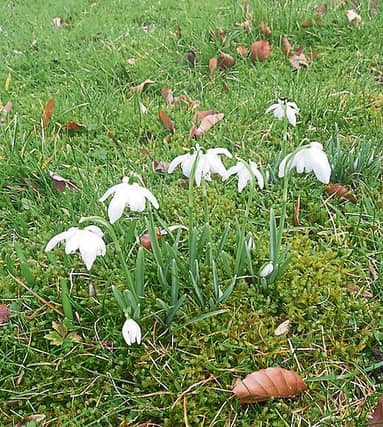
One delicate white spring flower that has also bloomed is the Snowdrop (Plúirín sneachta as Gaeilge).
I think it is fair to say that this is one of the most recognisable spring flowers. Although it is not believed to be a native plant in Ireland, it is widespread and as it has no negative impact on native Irish flora, it is now considered naturalised.
It is native to Central and Southern Europe and was believed to be first brought to Eastern Europe by Italian monks in the 15th century to be planted in the gardens of monasteries.
Snowdrops are low growing and can be found in parks, woodlands, stream edges since its escape from gardens. The flowers consist of three white petals that droop towards the ground supported by a leafless stem. The leaves are linear, dark green and narrow.
According to the wildflowers of Ireland website each bulb produces three leaves. Its name and flower colour may make you think that the Snowdrops name has something to do with snow, but reading a little online apparently its name comes from a type of earring!
The bulb is poisonous but an extract called galantamine, which is naturally occuring within Snowdrops is said to be used to treat symptoms of Alzheimer’s disease in some countries.
Over the coming weeks there are going to be many wildflowers emerging, the buds are going to begin to burst on trees, frogs are making their way to local wetlands to start spawning, and here at the Bog of Allen Nature Centre we have noticed our garden birds becoming very vocal as they begin to prepare their nests for the spring and summer seasons ahead.
The darker and colder winter months appear to be behind us for another year although you never know with our Irish weather.
If you spot a local wildlife species and would like to learn more send your wildlife image to [email protected].