
'Decarbonising Zone' for Laois where 'stock take' of emissions is ordered


Green Party Government leader Eamon Ryan is set to meet officials at County Hall in Portlaoise to find out how Laois County Council is tackling climate change in Laois and what plan it is going to come up with to accelerate its actions.
His intention to visit the county is confirmed in the announcement of guidelines for Laois and other counties on how climate change is going to be tackled by county councils to deliver Ireland's climate action programme targets.
Minister Ryan, who oversees Environment, Climate and Communications, has launched a set of statutory guidelines which his Department says will assist Laois County Council and other local authorities to prepare local authority climate action plans within a year.
As part of this Laois will get a 'Decarbonising Zone' and a 'stocktake' of emissions in Laois will be carried out.
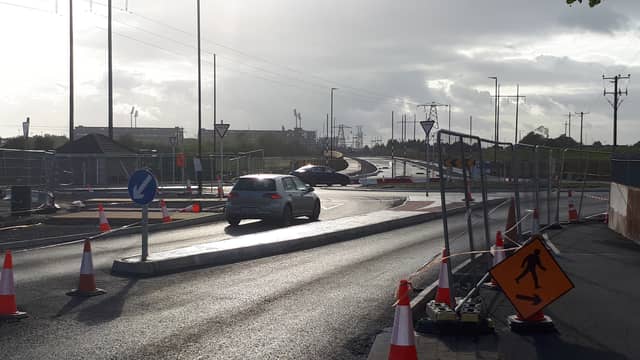
Laois County Council received nearly €3 million in 2019 under a pilot programme which saw Portlaoise designated as a low-carbon town. A substantial amount of the money went to building a road to take traffic away from the town centre.
A statement said that under the Climate Action and Low Carbon Development (Amendment) Act 2021, each local authority is required to prepare a local authority climate action plan for its administrative area. The Department says that once adopted the Laois plan will be valid for five years and is subject to update at least every five years. The plan must be developed over the next 12 months.
The Department says Laois County Council and other councils are key drivers in advancing climate policy at the local level. It says the local authority climate action plans will help Laois and other councils to address the mitigation of greenhouse gas emissions and climate change adaptation and strengthen the alignment between national climate policy and the delivery of effective local climate action.
Minister Ryan's Department says each plan must do the following:
- provide a strong emphasis on a place-based approach to climate action, delivering a better understanding of greenhouse gas emissions and climate-related risks at a local level;
- address context-specific conditions and support locally-tailored policy-making;
- deliver evidence-based and integrated climate action through adaptation and mitigation measures, centred around a strong understanding of the role of the local authority in climate action;
- provide strategic direction at local and community levels on the delivery of the national climate objective.
There are some specific actions outlined including the identifying and delivery of a Decarbonising Zone (DZ) to act as a test bed for a range of climate mitigation, adaptation and biodiversity measures in a specifically defined.
Laois County County Council must also carry out a "stocktaking of its emissions" levels through a Baseline Emissions Inventory. Each plan will also include a climate change risk assessment to understand climate change impacts and raise awareness at the local level.
It is added that local engagement and collaboration in Laois and other counties will play a vital role in the drafting of successful plans, ensuring stakeholders are involved in climate decisions that affect them.
Commenting on the guidelines, Minister Ryan spoke about the guidelines and confirmed he is doing a nationwide tour to find out for himself what work is happening.
“This is a new chapter for our climate ambitions and for local authorities, where for the first time, they will create a specific climate action plan for their city or county, reflecting national climate objectives but making them real at a local level. Over the past year I have visited 12 local authorities and aim to visit the remainder this year.
"In my visits, I have been given an insight in the progressive thinking at local level on areas like energy, housing and transport, and the work that is already well underway to ensure a more sustainable future for people across the country. My Department looks forward to working with the local authorities and the County and City Management Association on pulling this work together into local climate action plans over the next year,” he said.
John McLoughlin spoke on belalf of the County and City Management Association (CCMA).
“The local authorities are pleased to begin the development of their individual climate action plans. The plans will provide an opportunity to build on the extensive work that has already been achieved by the sector in the areas of climate adaptation and mitigation, in consultation and collaboration with our elected members and communities. As leaders for climate action, we will continue to support the Government in meeting the national climate objectives and look forward to contributing to a sustainable future for all,” he said.
The Department says local authority climate action plans are given statutory authority through the provisions of the Climate Action and Low Carbon Development (Amendment) Act 2021. It says they are intended to provide "robust guidance" to local authorities in preparing their plans and to ensure a coherent and consistent approach.
The Department says the guidelines have been developed with the knowledge that each local authority is coming from differing starting points on climate action planning. It says the guidelines are premised to encourage greater ambition on climate action, to build consistently and progressively over time.
There are four Climate Action Regional Offices (CAROs) situated within four local authorities which provide for a coordinated regional approach on climate action across the local government system, with input from the County and City Management Association (CCMA). These offices were established to coordinate and oversee the delivery of the Local Authority Sectoral Adaptation Strategies under the National Adaptation Framework in 2018 to support the local government sector. Following their establishment, funding of €10 million over a five-year period was announced.
The Department of the Environment, Climate and Communications has a Service Level Agreement with the four lead local authorities to host the regional offices and deliver an annual work programme.