
Longford Farming: Tips for making good quality baled silage

Ciaran Beatty, Teagasc Advisor Castlerea
As silage season is now in full swing across the region, here are some topical tips to ensure that you make the best silage possible:
· Aim to mow when the grass is dry and thus easier to preserve. Ideally, cut grass in the afternoon when sugars are at their highest. Monitor the weather forecasts and try to gauge for 2 – 3 fine days together. When planning your silage cut, wait until the dew has evaporated to help with the wilt.
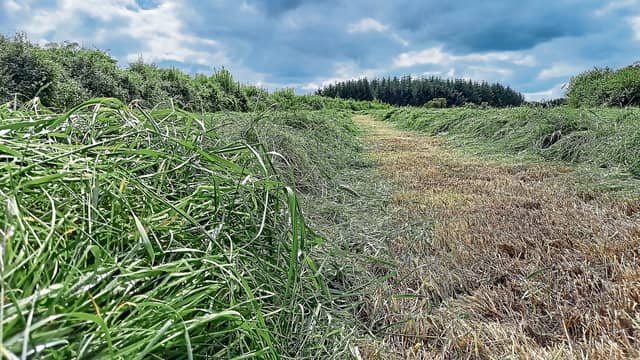
· Aim for a wilt of 24 – 36 hours to improve preservation and reduce effluent production. It also has the benefits of reducing the number of bales per acre and thus reducing costs in the long run. If the grass crop is heavy or drying conditions limited, use the spreading out / tedding option which maximises the quantity of grass exposed to the air and sun.
· Aim to produce dense well shaped bales, try to ensure that the sward is full width when entering the mouth of the baler. Aim to wrap bales within 2 – 3 hours after baling and ensure adequate plastic film is used. You may wish to consider extra plastic layers if you want a longer shelf life for the bale.
· Ideally transport your bales to the storage area and wrap them there but unfortunately this is not always practical on Irish farms today with both pressure on farmer and contractor to complete. It is vital to move wrapped bales to storage area immediately as this will reduce the risk of bird damage in the field. Many farmers paint their bales in a bid to repel the threat of bird damage but quick removal is the best option.
· Under Cross Compliance Regulations, Round bales cannot be stored within 20 metres of a Waterbody and can only be stored 2 bales high in the absence of adequate facilities for the collection and storage of any effluent that may arise. Store bales on a level smooth hard surface preferably concrete or hard-core with good access so that bales can be easily retrieved.
· Inspect bales as soon as possible for any damage and repair immediately using appropriate adhesive tapes. Noticing bales at time of feeding is a little late!
· The quality of silage made on farms is determined by the grass it is made with. Grass that has been recently reseeded and harvested at the correct time will produce high quality digestible and leafy silages with good dry matter digestibility of 70% plus. Unfortunately we are still producing too much poorer silages that are too strong, overgrown and stemmy on our farms today barely hitting a 60% dry matter digestibility.
Remember that the costs of producing excellent silage or poor silage is the same when you are paying your contractor. On a final note, try to notify your silage contractor in plenty of time and make him aware of your plans as they are under a lot of pressure this time of year especially with the broken nature of our current summer.
Teagasc provides a Local Advisory and Education service to farmers. They have offices based in Roscommon Town (Tel: 090 6626166), Castlerea (Tel: 094 9620160) and Longford Town (Tel: 043 3341021), You can find us on Facebook @Teagasc roscommonlongford and twitter @teagascRNLD. Email; RoscommonLongford [email protected]