
10 of the best Eurovision looks throughout the years
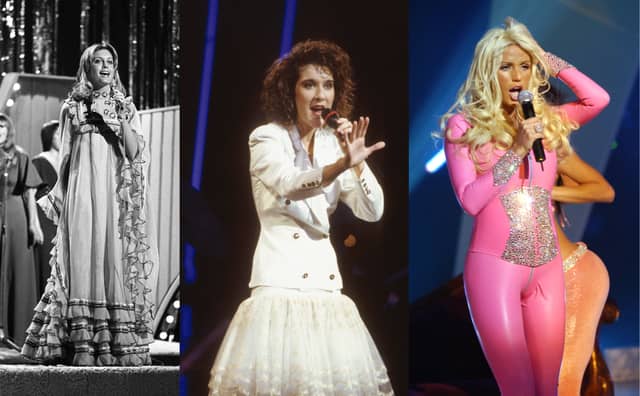

Perhaps the second most anticipated fashion statement of May (closely following the Met Gala) – the Eurovision Song Contest isn’t just about the music.
Over the years, it’s become a spectacle of sequins, shoulder pads and national pride – where costume choices can be just as memorable as the songs themselves.
From ABBA’s disco flares in 1974 to Katie Price’s hot pink all in one – Eurovision style has long reflected the bold, bizarre and brilliantly camp.
As we prepare for another year of costume drama, here’s a look back at some of the most unforgettable Eurovision outfits over the years.
1. Cliff Richard, 1968
Eurovision has been held annually since 1956, making it the longest-running international TV music competition in the world. It has churned out a whole host of rising stars within the industry, and in 1968, Cliff Richards – known as the British Elvis Presley – took to the stage and performed ‘Congratulations’.
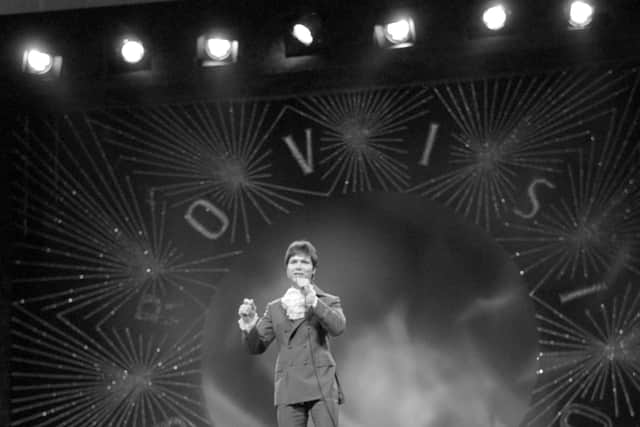
For the occasion, Richard wore a navy, double-breasted suit with a flouncy white lace jabot collar.
With this look, he kick-started the dandy styles that became synonymous with the competition.
2. Olivia Newton-John, 1974
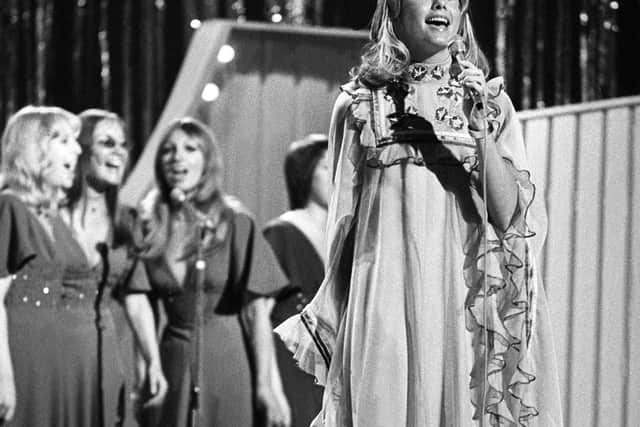
She performed in the same year that saw ABBA take the crown.
3. ABBA, 1974
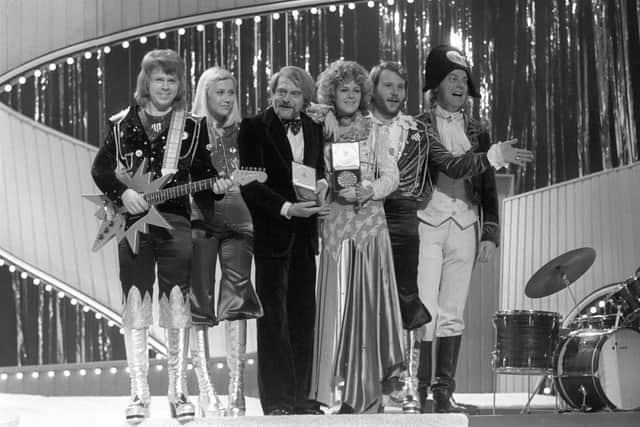
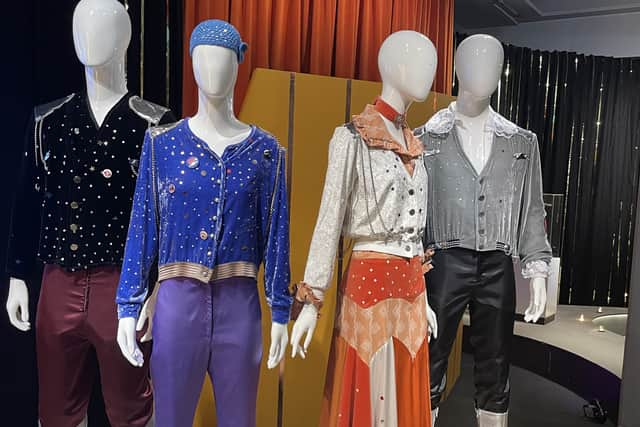
In metallic shades of blue, orange and silver, their futuristic outfits earned them more than just douze points – they became part of Eurovision history.
4. Beano, 1977
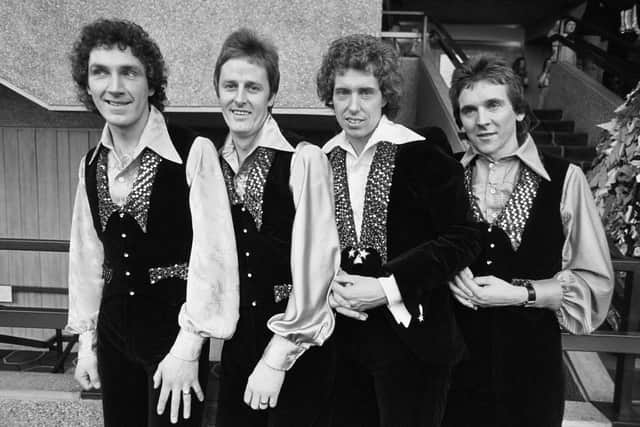
Perhaps more memorable than their song was their ensemble, as the four men, aged between 27-29, wore matching tailored suits and waistcoats with shimmering embellishments on the broad Seventies lapels.
Their look was part Bee Gees, part working men’s club – a glitzy interpretation of Merseyside charm, complete with flared trousers and coiffed hair.
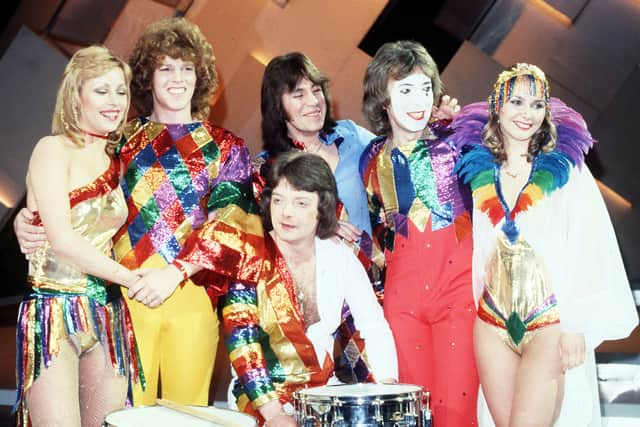
The following year, Britain dialled up the drama – both with their performance and attire. The pop group Co-Co performed the song “The Bad Old Days”, which was finally placed 11th of the 20 entries, which at the time was the worst showing ever for a UK entry. It would not be until 1987 that any British song fared worse in Eurovision.
Co-Co, which included future Bucks Fizz member Cheryl Baker, embraced the glam-meets-disco fashion of the late Seventies. Pluming rainbow collars, sparkling sleeves and metallic fringe had enough glitz to rival the glitter ball above them, making their performance feel part pop concert, part pantomime.
6. Celine Dion, 1988

Sporting a white double-breasted blazer paired with a frilly mini tutu, Dion’s look was a bold blend of power dressing and playful glamour – characteristic of the decade.
Her performance of Ne Partez Pas Sans Moi (“Don’t Leave Without Me”) won by just one point, set the stage for an international career that would soon soar.
7. Guildo Horn, 1998

During the performance, he climbed the stage’s lighting gantries, played cowbells and even ventured into the audience to ruffle the hair of former Eurovision hostess Katie Boyle.
This over-the-top and eccentric show secured Germany a seventh-place finish with 86 points and rekindled national interest in the contest.
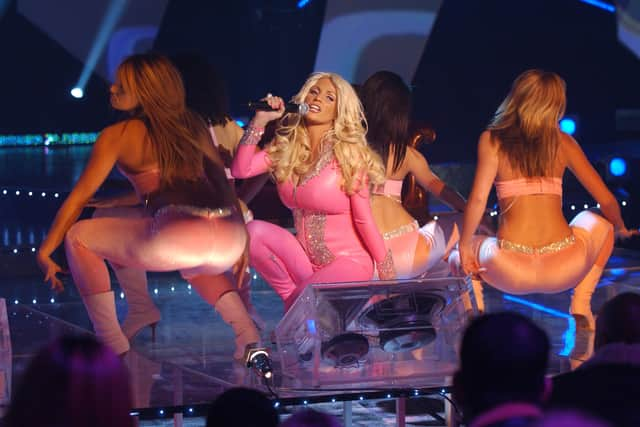
Also known by her stage name ‘Jordan’, glamour model and reality TV star Katie Price made a memorable bid to represent the UK in the 2005 Eurovision Song Contest.
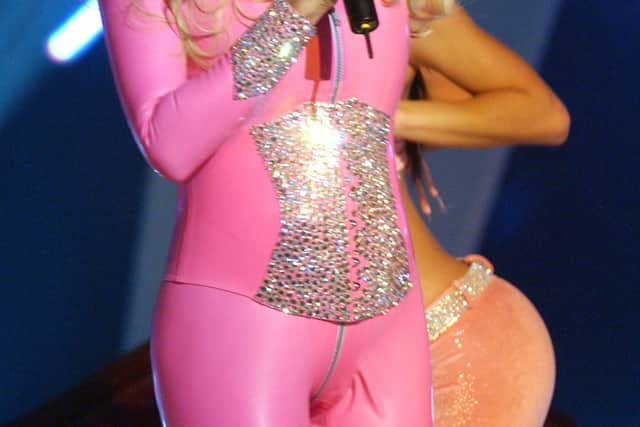
Her performance was as much about spectacle as it was about song. Wearing a hot pink latex catsuit adorned with diamante detailing, Price’s outfit drew attention – and criticism.
She later reflected on her attire, humorously describing herself as looking like “a pink condom.” Despite the bold fashion choice, her vocal performance was met with mixed reviews, and she ultimately lost out to Javine Hylton, who went on to represent the UK with “Touch My Fire.”
9. Scooch, 2007
The UK’s 2007 entry was the band Scooch with the song “Flying The Flag (For You)”.
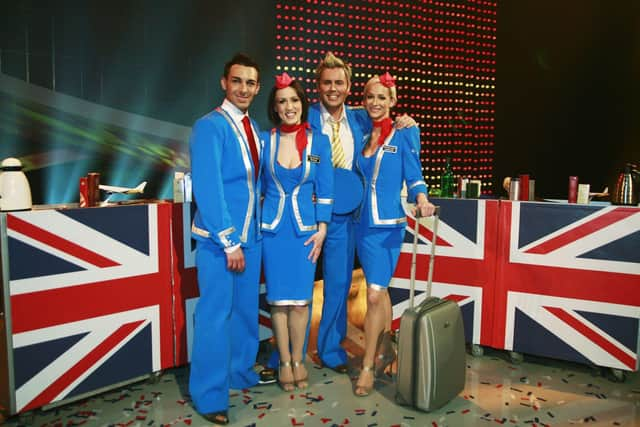
Critics derided “Flying The Flag (For You)” as outdated and overly gimmicky, accusing the UK of not taking the competition seriously – especially compared to other nations that were beginning to see Eurovision as a platform for polished, contemporary pop.
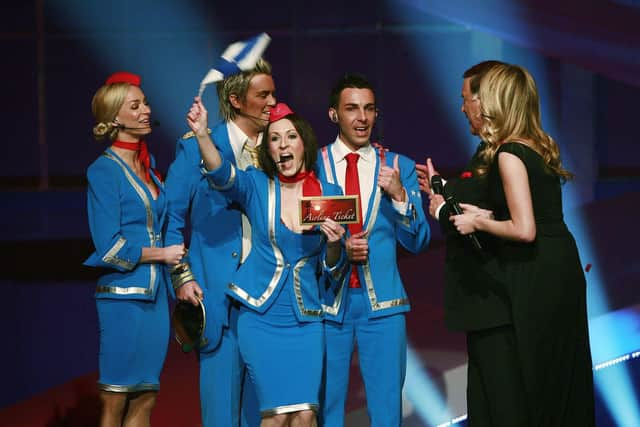
There was also controversy during the national selection process: viewers believed phone voting may have been mishandled when Scooch narrowly beat singer Cyndi to represent the UK, prompting the BBC to clarify the result.
10. Sam Ryder, 2022
The UK had seemingly been on a downward trajectory within the Eurovision Song Contest, but in 2022, Sam Ryder revitalised the UK’s presence with his performance of “Space Man,” securing second place – the UK’s best result since 1998.
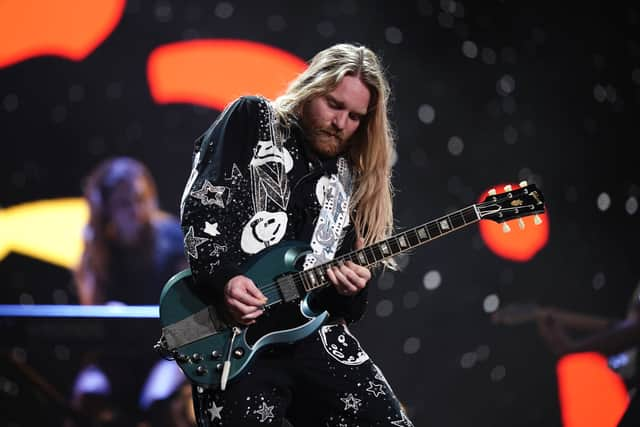
This design drew inspiration from Britain’s musical heritage, including figures like Ziggy Stardust, Freddie Mercury and Elton John, aiming for a galactic ‘space man’ aesthetic without resorting to literal interpretations.
Following the contest, Ryder’s jumpsuit was displayed at the British Music Experience in Liverpool, highlighting its significance in his musical journey and the UK’s Eurovision history.